
President Bola Tinubu has ordered a comprehensive reform of Nigerian football, declaring that the problems facing the game are structural and must be confronted beyond another change of administrators.
The directive moves the current crisis around the Nigeria Football Federation beyond resignations and elections and into a wider examination of how the country’s football system is governed, developed and held accountable.
Tinubu made the diagnosis explicit: “The problems are structural, and our response must address them.”
The reform follows what the President described as repeated failures to qualify for major regional, continental and world tournaments.
Reform Goes Beyond Changing Names
Tinubu said the overhaul must strengthen governance and administration, improve stakeholder representation and accountability, rebuild development pathways and strengthen domestic competitions.
That pushes the reform agenda directly into the machinery behind Nigerian football.
The issue is no longer simply who occupies the offices at the NFF. It is how decisions are made, who is represented, how players move through the development system, how domestic competitions are administered and where responsibility sits when the system fails.
The President’s position is that Nigeria has never lacked football talent, passion or support.
What has been missing, in his diagnosis, are institutions capable of converting those advantages into sustained performance.
NFF Transition Raises the Stakes
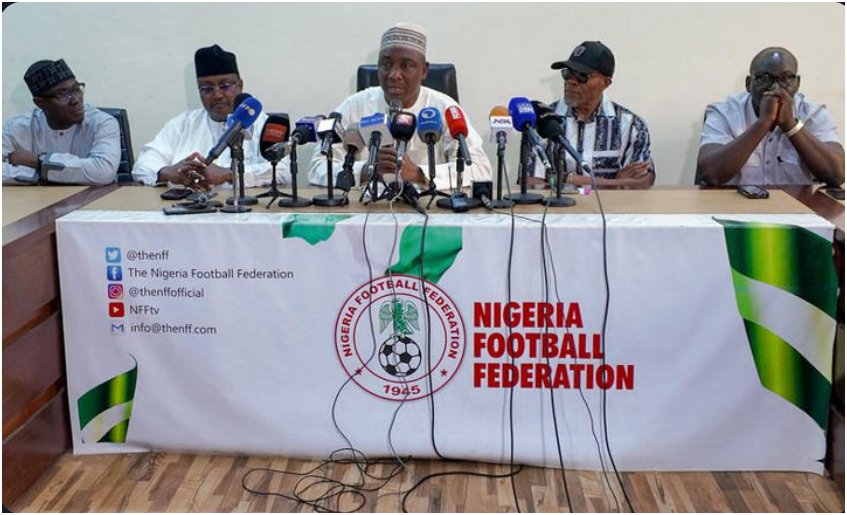
The reform order comes during a major transition inside the NFF.
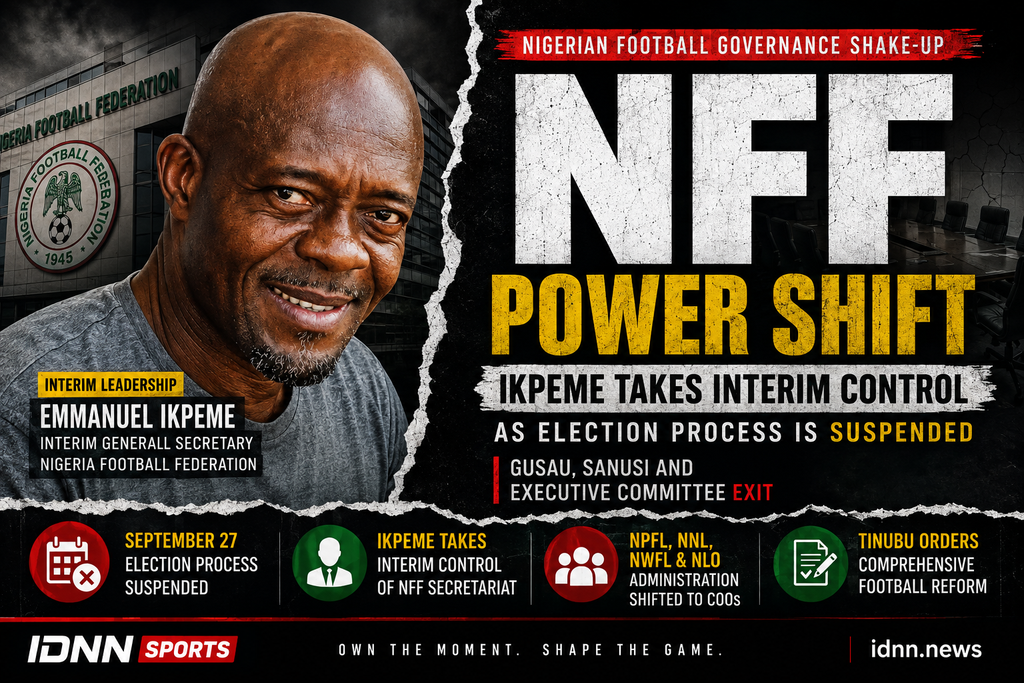
President Ibrahim Musa Gusau, General Secretary Mohammed Sanusi and members of the federation’s Executive Committee have resigned.
Emmanuel Ikpeme has been endorsed to oversee the NFF Secretariat on an interim basis, while the electoral process for the September 27 Congress has been suspended.
The NFF has also directed administrators across the Nigeria Premier Football League, Nigeria National League, Nigeria Women Football League and Nationwide League One to hand administration to their chief operating officers under interim arrangements.
That means the reform process is beginning while the football system is still required to function.
National Sports Commission Takes Central Role
Tinubu directed the Chairman of the National Sports Commission to work with the NFF Secretariat and relevant football stakeholders to maintain continuity in essential football administration and facilitate a broad reform process.
The task is therefore twofold.
The system must keep national teams, competitions and federation operations moving while the structure around them is being reconsidered.
That tension will define the early phase of the overhaul.
“The problems are structural, and our response must address them.”
FIFA and CAF Engagement Will Matter
Tinubu also said the process will include appropriate engagement with FIFA and the Confederation of African Football while safeguarding Nigeria’s obligations within the international football framework.
The NFF has similarly said a fresh electoral process will begin after the anticipated reforms and will be undertaken in consultation with FIFA and CAF.
That distinction matters.
FIFA and CAF engagement does not mean a specific reform model has already been approved. It means Nigeria’s restructuring will have to operate within the wider international framework governing national football associations.
There is still no published final roadmap, no new electoral date and no detailed public structure setting out exactly how the proposed reforms will be implemented.
Those gaps now become part of the accountability test.
Performance Failure Becomes a Governance Question
For years, poor tournament outcomes have often produced demands for new coaches, new players or new administrators.
Tinubu’s directive shifts the pressure deeper into the system.
If the problems are structural, then results cannot be separated from governance, development pathways, competition administration and institutional accountability.
That is what makes this reform different in scope from a routine leadership reset.
It is not only about who comes next.
It is about what system they inherit.
The Real Test Comes After the Directive
The reform agenda is broad: stronger governance, better administration, wider stakeholder representation, improved development pathways, stronger domestic competitions and greater accountability.
The language is clear.
Execution will decide everything else.
Nigeria now has an interim NFF leadership, a suspended electoral process and a presidential directive stating that the problems run deeper than the names occupying federation offices.
The test is whether that diagnosis produces institutions capable of matching the talent, passion and national investment Nigerian football already commands — or whether another reform cycle ends with the same structures wearing different names.
