
French Pundit Turns on Michael Olise After France’s World Cup Exit
Michael Olise has become one of the first names dragged into France’s World Cup fallout after their semi-final defeat to Spain — and the criticism has been brutal.
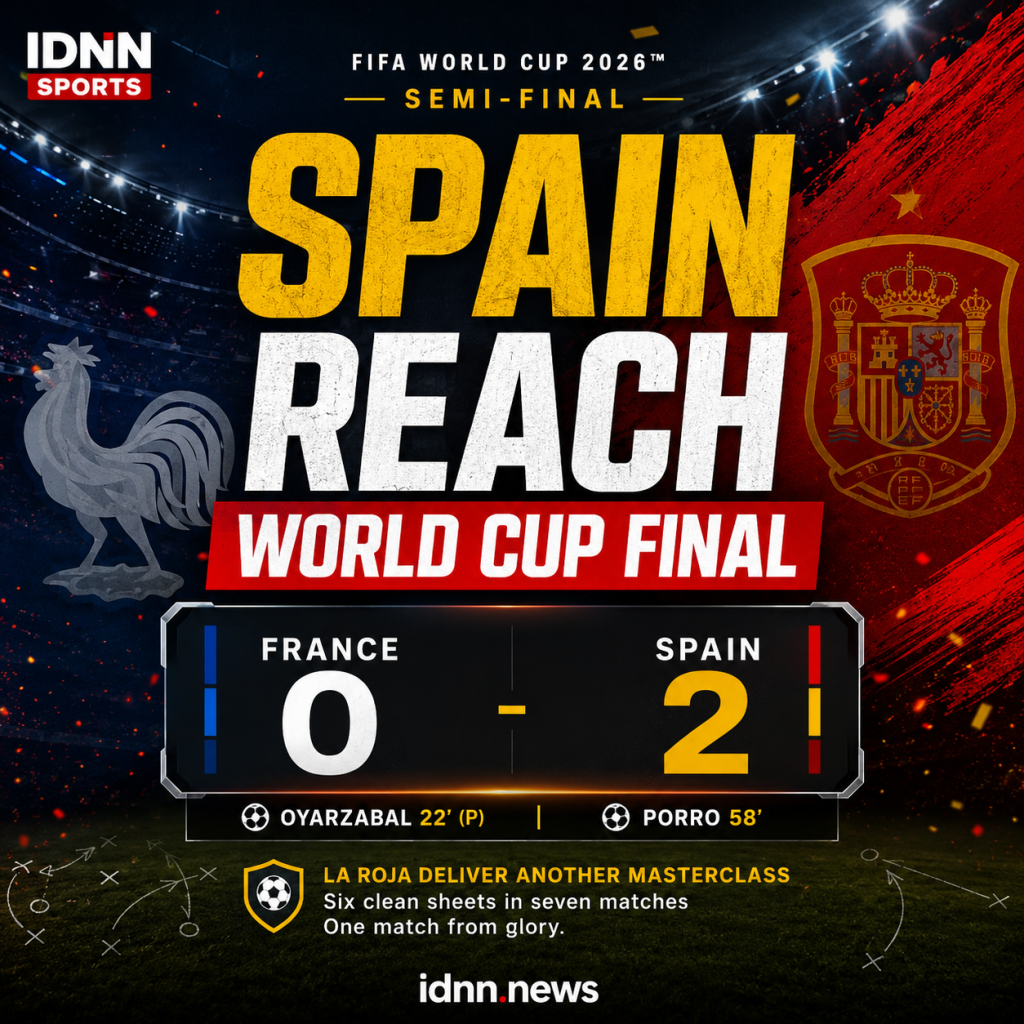
Spain beat France 2-0 in the World Cup semi-final, ending a run that had carried heavy expectation around one of the tournament’s most dangerous attacks. For France, the defeat was not only a tactical failure. It also triggered a backlash against the hype that had built around their attacking players.
Olise has taken much of that heat.
French reports said the Bayern attacker struggled to impose himself before being substituted in the 72nd minute. He reportedly had only one touch in Spain’s penalty area and did not complete a pass into the dangerous zone for a teammate.
French media were also unforgiving. The report said both L’Équipe and Le Figaro rated Olise two out of 10 after what was described as one of his weakest performances of the year.
- Abia Reviews Draft Ageing Policy for Senior Citizens
- Bauchi Police Hunt Suspect After 24-Year-Old Suffers Severed Wrist
- Eight Arraigned Over Alleged ₦710m Proof-of-Funds Fraud in Lagos
- Kwara Police Hunt Truck Driver, Motor Boy Over Student’s Death
- Borno Court Jails Woman for Procuring Teenager for Sexual Exploitation
Riolo admits France hype went too far
Daniel Riolo’s criticism cut through because it was not only aimed at Olise. It was also a confession that the wider praise around France had gone too far.
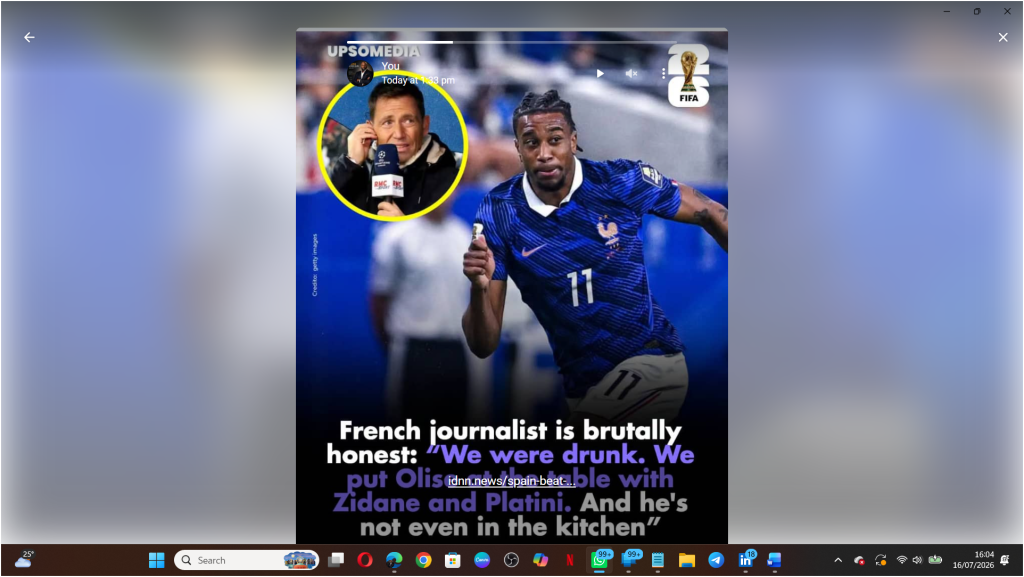
Speaking on RMC’s After Foot, Riolo admitted that the programme had been carried away by the excitement around France’s attacking structure. He said they had “got carried away” and “said anything” while believing in the four-man attacking formula.
Then came the line that has travelled.

Le10Sport reported that Riolo said Olise had been placed “at the table of Zidane and Platini” even though he was “not even in the kitchen at the moment.”
It was a sharp attack, but the bigger issue is the pressure behind it: France built part of their tournament belief around Olise’s rise, only for the semi-final to expose how quickly hype can collapse when the match turns against a team.
Olise caught in France’s hype crash
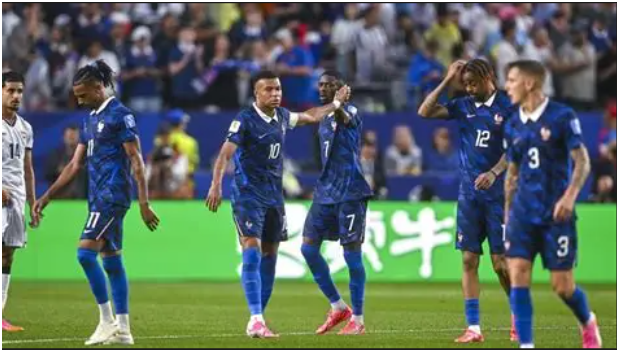
Olise was not the only France player to struggle against Spain, but he has become one of the easiest symbols of the defeat.
Before the semi-final, praise around him had grown quickly. His technical quality, creativity and connection with France’s attack had fed comparisons with elite French playmakers. That sort of praise can lift a player. It can also trap him.
Riolo’s point was not simply that Olise had played badly. It was that France’s public conversation had moved too quickly from promise to coronation.
The criticism lands because Zidane and Platini are not casual reference points in French football. They are symbols of control, genius and national memory. Once Olise was pulled into that conversation, the standard around him changed.
Spain made France look ordinary
The defeat to Spain gave the criticism its oxygen.
France did not lose a chaotic match. They were beaten by a team that controlled the rhythm, limited the danger and forced Les Bleus into discomfort.
That matters because Olise’s role depends on influence. He needs touches in dangerous zones, runners around him and enough time to turn possession into chances.
Against Spain, France did not create the kind of match that allowed that influence to breathe. When the team failed, the individual hype collapsed with it.
The four-man attack came under fire
Riolo’s criticism also targeted the structure France trusted.
French media reported that he said the enthusiasm around France’s attacking formula had pulled everyone in. He argued that France had believed too strongly in playing without a stronger midfield base, and that Spain’s performance exposed the limits of that plan.
That is the deeper story for France.
This was not just about Olise having a quiet game. It was about whether France’s balance was right, whether Didier Deschamps’ team had enough midfield control, and whether the excitement around the attack blinded observers to problems that Spain eventually punished.
France’s fallout is only beginning
France now have two problems to manage.
The first is tactical. Spain’s win exposed issues in how France handled control, pressure and chance creation in the biggest match of their tournament.
The second is emotional. Players like Olise, who arrived with rising public belief, now face the other side of that attention. The same spotlight that celebrates a breakthrough can become unforgiving after elimination.
For France, the lesson is not to bury Olise. It is to reset the conversation around him.
Olise is not Zidane. He is not Platini. He is also not finished because France lost to Spain.
But after this World Cup exit, the hype has been checked — and in France, that check has arrived loudly.
