
The Decapitation Strike
Iran supreme leader killed — the confirmation has detonated the central pillar of the Islamic Republic’s power architecture.
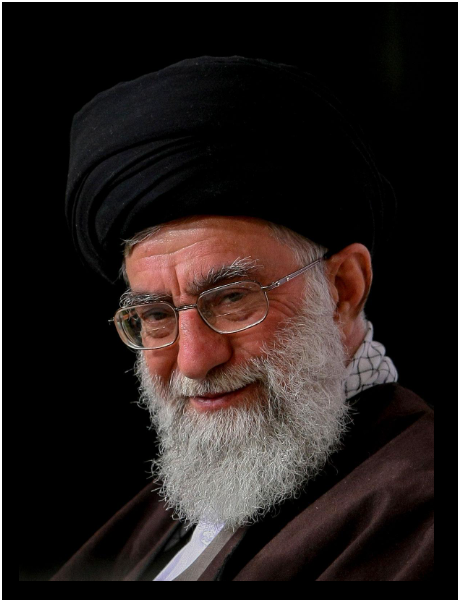
Ayatollah Ali Khamenei, who ruled for more than three decades as Iran’s ultimate political and military authority, was reported killed in large-scale coordinated strikes by the United States and Israel targeting strategic command nodes in Tehran.
The removal of a supreme leader during active hostilities is not symbolic. It is structural.
In Iran’s governance system, the supreme leader is commander-in-chief of the armed forces, final arbiter of state policy, and the axis binding military, clerical, and political factions. Eliminating that axis during bombardment creates immediate command stress.
The Constitutional Pivot
Iran’s constitution anticipates succession.
The Assembly of Experts is empowered to select a new supreme leader. Until that process concludes, a three-member interim council — comprising the president, the judiciary chief, and a senior cleric — has assumed temporary stewardship.
The announcement projects continuity.
But projection is not consolidation.
The succession process now unfolds under missile fire, disrupted communications, and retaliatory military operations. In wartime conditions, institutional mechanisms operate under compression. That accelerates factional alignment and hardline consolidation.
Power vacuums do not remain vacant.
They are filled — either by constitutional choreography or by force alignment.
Retaliation Without Borders
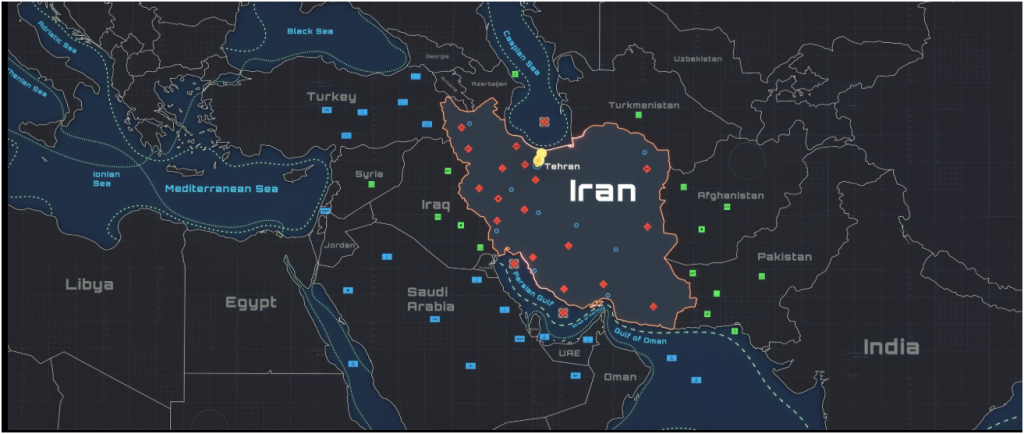
Within hours of the strike, Iranian forces launched retaliatory missile and drone operations across the region.
Targets were described as US-linked assets and military facilities. Explosions were reported in Gulf capitals hosting American bases.
The Gulf Cooperation Council states condemned the attacks and asserted their right to respond.
That language matters.
For decades, Gulf states positioned themselves as insulated commercial hubs amid regional turbulence. Missile activity over Doha, Dubai, Manama and surrounding corridors fractures that insulation narrative.
The region’s stability premium is now under pressure.
Washington’s Escalation Frame
President Donald Trump stated operations would continue until US objectives are achieved. He acknowledged American casualties and warned further losses were possible.
However, the strategic justification narrative faces scrutiny.
The central question inside Washington is no longer whether Iran is an adversary.
It is whether this was pre-emptive necessity or escalation choice.
That distinction will shape domestic political tolerance if the conflict widens.
The Escalation Ladder (Next 72 Hours)
- Succession Consolidation: Tehran must demonstrate unified command authority or risk perception of fragmentation.
- Gulf Posture Decision: GCC states must choose between active defensive engagement or calibrated restraint.
- Energy Corridor Stability: Even without physical chokepoint closure, perception risk can disrupt markets rapidly.
- Diplomatic Channel Viability: Leadership transition complicates negotiation lines — who speaks for Iran now carries weight.
Escalation in this phase is less about volume of fire and more about strategic signalling.
THE REGIONAL PRESSURE SYSTEM
Leadership decapitation during live conflict historically increases probability of systemic expansion.
When the highest sovereign authority of a state is removed externally, three pressures intensify simultaneously:
- Internal legitimacy consolidation
- External deterrence signalling
- Allied reassurance demands
This combination compresses decision cycles and narrows off-ramps.
That is why this event transcends a strike headline. It recalibrates the architecture of Middle East state stability.
The Regional Equation
Iran’s interim leadership must now balance revenge rhetoric with survivability calculus.
Gulf governments must defend territory without appearing co-belligerent.
Israel must sustain operational advantage without triggering multi-front saturation.
Washington must justify continuation without open-ended entanglement.
Each actor’s next move influences all others.
This is no longer a contained exchange.
It is a pressure system.
CONSEQUENCE LOCK
Iran supreme leader killed is not the conclusion of confrontation.
It is the ignition of transition under pressure.
If succession stabilises swiftly, resilience narrative hardens.
If internal friction appears, escalation probability rises.
If Gulf states enter direct retaliatory engagement, the theatre expands.
If energy flows destabilise, economic shock compounds military escalation.
Power vacuums do not remain neutral.
They are filled by structure — or by force.
The next move will reveal which.
This is IDNN. Independent. Digital. Uncompromising
