A foreign proposal sparks domestic suspicion
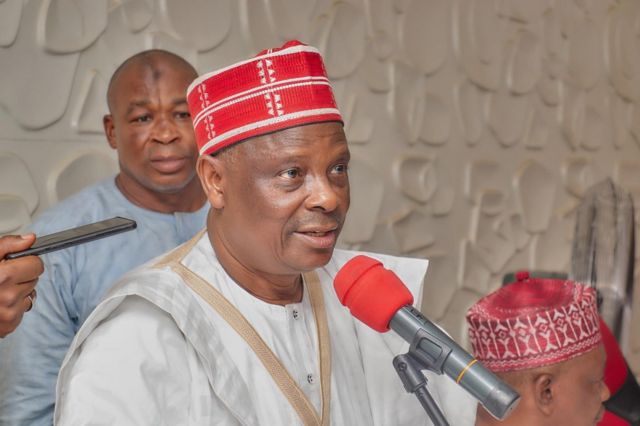
Former Kaduna State Governor Nasir El-Rufai has cast doubt on the rationale behind a proposed U.S. bill that names former Kano Governor Rabiu Musa Kwankwaso for possible sanctions.
Speaking during a television interview, El-Rufai described the inclusion as “most unfair,” arguing that multiple northern states implemented Sharia within constitutional frameworks and that Kano was not uniquely responsible.
“Why single out Kwankwaso?”
The proposed legislation, titled the Nigeria Religious Freedom and Accountability Act 2026 (HR 7457), recommends visa bans and asset freezes on individuals and entities alleged to be linked to religious freedom violations.
El-Rufai questioned why other northern leaders who oversaw similar legal reforms were not referenced in the draft bill.
“I cannot think of anyone else… because 12 northern states implemented Sharia. The first state to do so was Zamfara,” he said, adding that Kano’s implementation was not among the strictest.
The suggestion of hidden political calculus
El-Rufai further suggested that the move could be influenced by domestic political considerations, including Kwankwaso’s refusal to join the ruling All Progressives Congress.
He speculated that rumours of Kwankwaso’s possible political realignment may have contributed to the development, though he provided no evidence to substantiate that claim.
Such remarks have amplified debate around the intersection of international legislative processes and Nigeria’s evolving political alignments.
When US politics intersects Nigerian fault lines
El-Rufai characterised the bill as potentially reflective of U.S. domestic political dynamics, particularly engagement with evangelical constituencies.
Analysts note that foreign legislative initiatives often carry both diplomatic signalling and domestic political considerations.
However, until the bill advances through legislative stages, its provisions remain proposals rather than enacted policy.
The broader diplomatic equation
If passed, the bill could empower U.S. authorities to impose targeted sanctions under the Global Magnitsky framework.
Even without enactment, the naming of specific Nigerian figures in legislative drafts may affect reputational standing and bilateral dialogue.
As Nigeria approaches another electoral cycle, narratives linking foreign policy actions to domestic political competition could intensify scrutiny of both local actors and international partners.
This is IDNN. Independent. Digital. Uncompromising.
