
As President Tinubu orders another comprehensive football reset, Nigeria’s sports writers have reopened the 2022–2032 Galadima Masterplan — raising a harder question about what became of the reforms already approved.
By IDNN Sports Desk
Nigeria is talking about fixing its football again.
But the country already has a football reform plan — and it is only four years into its intended 10-year lifespan.
The Sports Writers Association of Nigeria (SWAN) has now formally called for implementation of the 2022–2032 Nigeria Football Development Masterplan, reopening an uncomfortable question at a critical moment for the country’s most popular sport:
What happened to the reform blueprint Nigeria already approved?
The demand emerged from SWAN’s 2026 Triennial National Delegates Congress in Kaduna, under the leadership of National President Isaiah Benjamin.
In the Congress communiqué signed by SWAN Secretary-General Ikenna Okonkwo ANIPR, the association threw its weight behind implementation of the 10-Year Football Development Plan produced by the committee led by the late Ibrahim Galadima.
SWAN said there was “no better time than now” to enforce the recommendations and urged football stakeholders to place the long-term development of the Nigerian game above sectional and personal interests.
The intervention comes at an extraordinary moment.
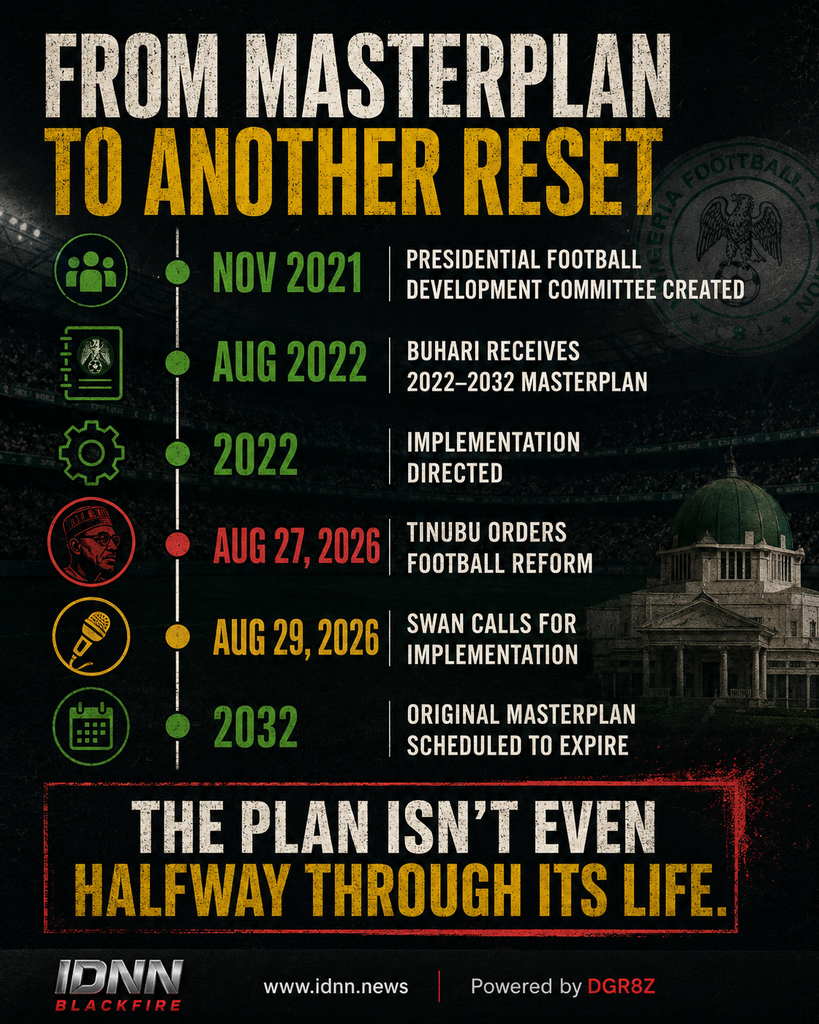
Just two days earlier, on August 27, President Bola Ahmed Tinubu ordered a comprehensive reform of Nigerian football, citing longstanding weaknesses in governance, administration, stakeholder representation, development pathways, domestic competitions and accountability.
Nigeria therefore enters another reform cycle with a crucial piece of unfinished business sitting in plain sight.
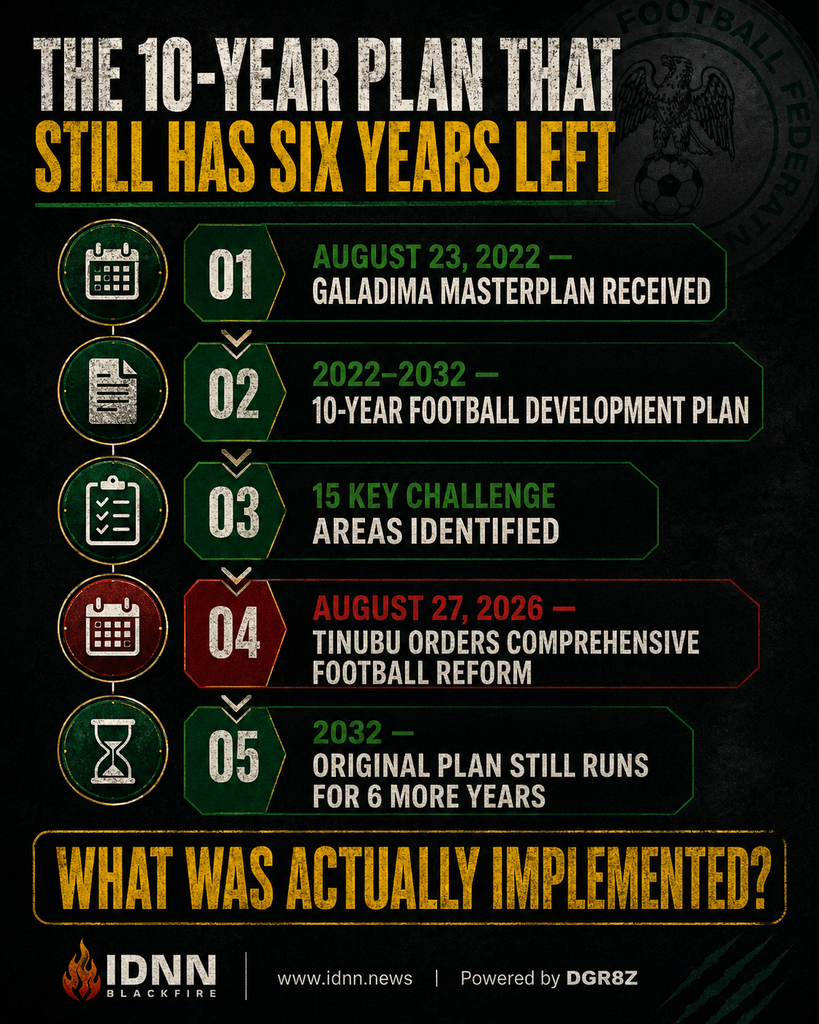
The Blueprint Nigeria Already Had
The Galadima Masterplan was no informal policy suggestion.
Former President Muhammadu Buhari formally received the document at the State House on August 23, 2022, after a 16-member presidential committee spent six months developing proposals for the future of Nigerian football.
The plan was designed to run from 2022 to 2032.
According to the Presidency, it identified 15 key areas of challenge affecting Nigerian football and proposed practical recommendations for addressing them.
Buhari subsequently directed that implementation of the short- and medium-term components should begin and instructed the Nigeria Football Federation to take ownership of the masterplan under government supervision.
The scope was substantial.
The recommendations touched governance, football’s legal framework, stakeholder relationships, youth development, coaching, academies, club administration, business opportunities and reforms to the composition of the NFF Congress and Executive Committee.
Then Sports Minister Sunday Dare also made an important promise about the document.
It was supposed to outlast the administration that produced it and provide Nigerian football with a sustainable long-term development framework.
Four years later, that promise matters.
Nigeria has changed presidents.
It has changed the structure of federal sports administration.
It has entered another turbulent period in football governance.
But the masterplan itself should still have six years left to run.
Tinubu Orders Another Football Reset
President Tinubu’s August 27 directive was sweeping.
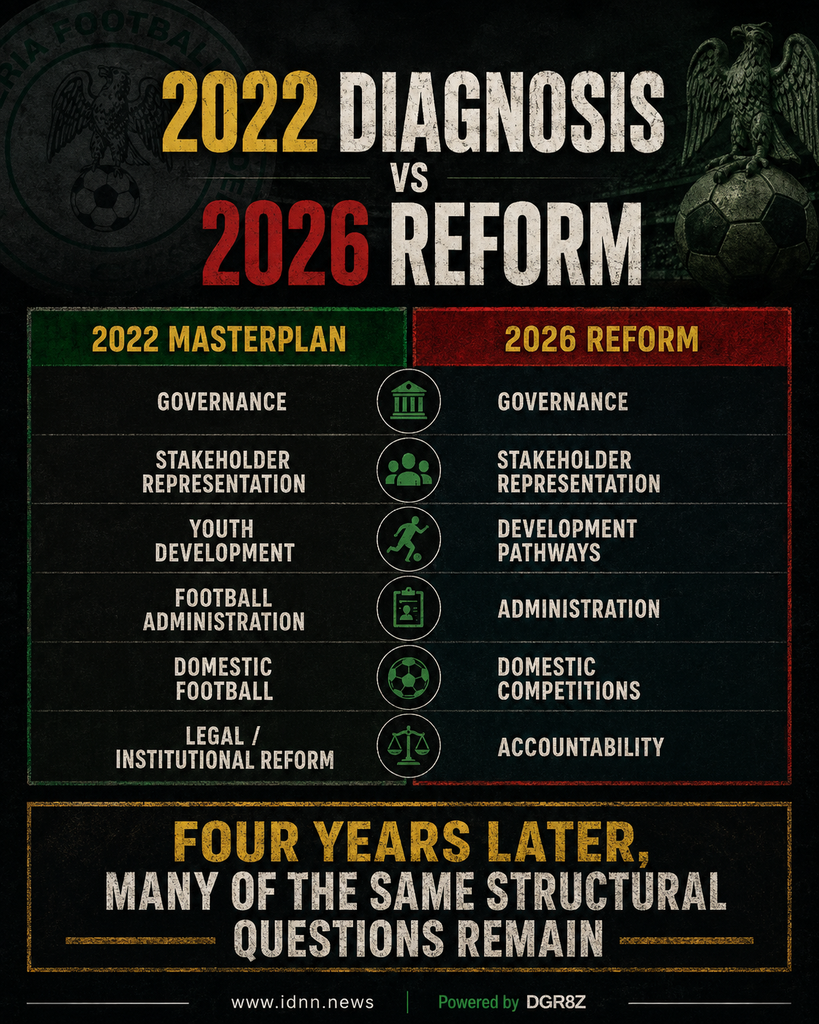
The President said Nigerian football continued to struggle with structural deficits despite progress recorded in other sports and ordered reforms addressing governance, administration, stakeholder representation, development pathways, domestic competitions and accountability.
He directed the Chairman of the National Sports Commission to work with the NFF Secretariat and relevant football stakeholders on a broad consultative process, including appropriate engagement with FIFA and CAF.
The language immediately invites comparison with 2022.
Governance was already on the masterplan agenda.
Stakeholder representation was already on the agenda.
Grassroots and youth pathways were already on the agenda.
Football administration and legal structures were already on the agenda.
Domestic football development was already on the agenda.
Four years later, many of those structural concerns are again at the centre of a presidential reform intervention.
That does not establish that nothing in the Galadima Masterplan was implemented.
There have been changes within Nigerian football since 2022.
But it does establish the question Nigerian football authorities must now answer:
How much of the 2022–2032 Football Development Masterplan was actually implemented?
SWAN Reopens the File
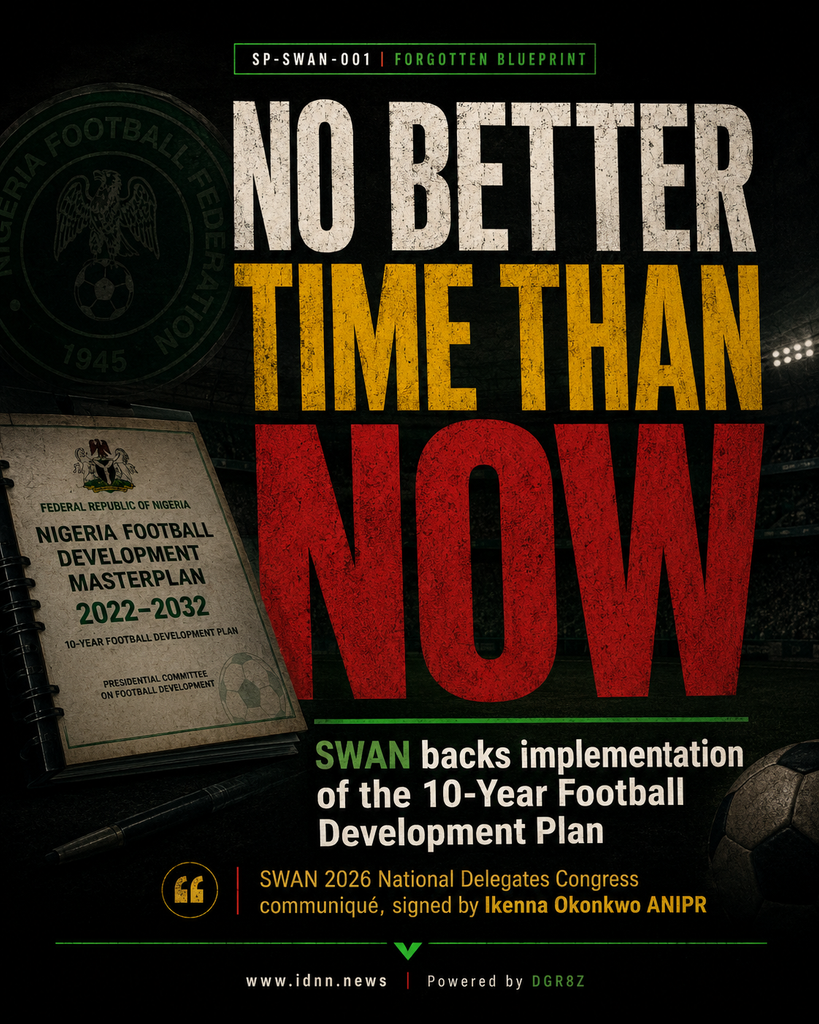
That is what makes the position adopted by SWAN’s National Delegates Congress more consequential than a routine endorsement of presidential reform.
The association is effectively saying that Nigeria does not necessarily need to approach the present crisis from a blank sheet.
A national football blueprint already exists.
The task now should include establishing what happened to it.
SWAN’s demand places the issue directly before the National Sports Commission, the NFF and the wider football establishment.
Will President Tinubu’s reform process adopt the Galadima Masterplan?
Will it revise it?
Will parts of it be discarded or replaced?
Or will Nigeria simply produce another reform framework without first accounting for implementation of the previous one?
Those distinctions matter.
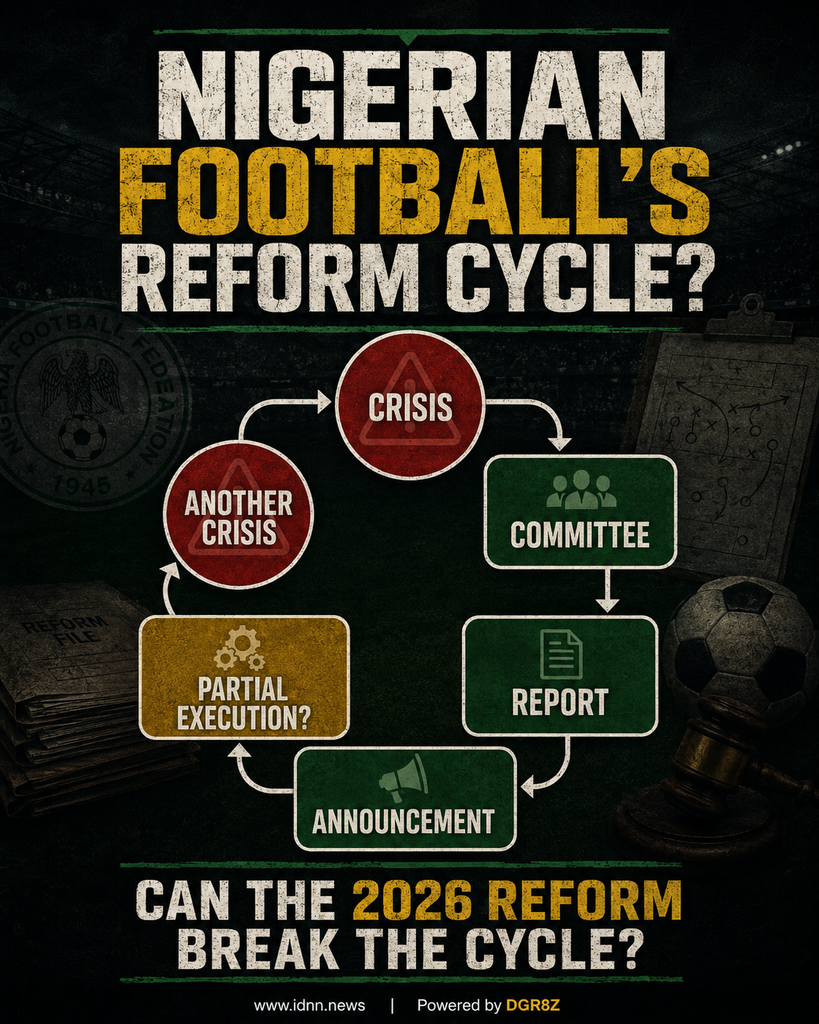
Because without institutional memory, Nigerian football risks falling into an expensive and familiar pattern:
Crisis → Committee → Report → Announcement → Partial Execution → Another Crisis.
Reform Problem — Or Implementation Problem?
Nigeria has rarely suffered from a shortage of football committees.
It has had reviews, task forces, reform proposals, technical reports and administrative interventions across different governments and football administrations.
The harder challenge has been sustaining policy beyond the people who created it.
That was precisely what the 10-Year Masterplan was supposed to change.
If a strategy specifically designed to survive changes in government requires resurrection only four years into a 10-year lifespan, Nigerian football must establish whether its deepest problem remains policy design — or policy execution.
That is why the current reform moment offers an opportunity beyond another institutional reset.
Before writing a new blueprint, authorities could audit the existing one.
Which recommendations were implemented?
Which were partially implemented?
Which were never acted upon?
Which became impractical?
Which have been overtaken by developments in Nigerian and international football?
And critically, who was responsible for delivering each recommendation?
The Galadima Scorecard Nigeria Needs
A transparent implementation audit could reduce the debate to five simple classifications:
- Implemented
- Partially implemented
- Not implemented
- Superseded
- Unverified
That exercise would establish whether Nigerian football actually followed the reform path approved in 2022.
It would also provide a measurable foundation for Tinubu’s new intervention.
The new process could build on what worked, correct what failed and replace only what has become obsolete.
That is a stronger reform methodology than simply beginning another cycle of diagnosis.
Three Institutions. Three Questions.
For the NFF
Which recommendations of the 2022–2032 Football Development Masterplan were implemented, and what evidence demonstrates their implementation?
For the National Sports Commission
Will the current presidential football reforms adopt, revise or replace the Galadima blueprint?
For SWAN
Which specific recommendations does the association believe should now receive immediate implementation?
Those answers would turn the current conversation from another declaration of intent into an accountability exercise.
Nigeria already diagnosed many of the structural weaknesses in its football.
It already commissioned experts.
It already produced a 10-year plan.
It already received presidential approval for implementation.
The document is supposed to run until 2032.
Nigeria is not even halfway through it.
Before Nigerian football celebrates another reform blueprint, it deserves an account of what happened to the one it already had.
www.idnn.news | Powered by DGR8Z
