
Trump’s Comments Still Reverberate
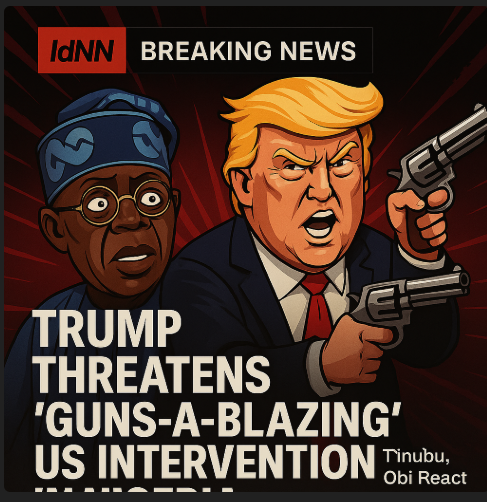
Nearly a week after U.S. President Donald Trump accused Nigeria of tolerating “Christian genocide,” the aftershocks are still being felt across political, religious, and diplomatic circles.
The comment, initially dismissed by the Tinubu administration as “ill-informed,” has since evolved into a defining test of how Africa’s largest democracy manages faith-based narratives in international diplomacy.
At the core of the tension lies a familiar paradox: the need to defend national sovereignty while maintaining strategic U.S. cooperation on counterterrorism and trade.
The Faith Divide Inside Nigeria’s Response
The Nigerian Supreme Council for Islamic Affairs (NSCIA) remains unwavering in its rejection of Trump’s accusation.
“It is reckless and unfair to brand Nigeria as a genocidal state,” said Prof. Is-haq Oloyede, the council’s Secretary-General.
“Our crisis is one of economic deprivation and insecurity — not faith.”
Meanwhile, the Pentecostal Fellowship of Nigeria (PFN) has doubled down on its claim that Christians face targeted attacks.
“Trump only said what many fear to say aloud,” PFN President Bishop Wale Oke told worshippers in Ibadan. “The killings have names and victims, not just numbers.”
The exchange has reignited an old debate: are Nigeria’s faith-based bodies speaking from data or emotion?
Diplomacy, Sovereignty, and Spin Control
For President Bola Ahmed Tinubu, the controversy arrives at a delicate moment.
Nigeria’s foreign ministry has quietly intensified engagement with Washington to prevent any escalation of rhetoric into policy.
“The President’s strategy is to absorb the shock, clarify the narrative, and avoid a direct confrontation,” a senior official at the Ministry of Foreign Affairs told IDNN.
Within diplomatic circles, the United States Embassy in Abuja has avoided direct comment, but officials privately describe Trump’s remarks as “politically charged, not policy-bound.”
Political analyst Chidi Onwumere interprets Nigeria’s measured reaction as “strategic restraint.”
“Tinubu understands the optics. Fighting the White House publicly would play into the narrative of defiance, while silence would look like guilt,” he said.
Faith Diplomacy and Nigeria’s Global Image
The fallout is reshaping Nigeria’s image abroad.
Faith-based narratives — amplified by social media and diaspora lobbies — now influence how investors, humanitarian agencies, and think tanks view Nigeria’s stability.
The government’s next move will be crucial: balance diplomacy without appearing weak, and protect sovereignty without appearing defensive.
In the global theatre of politics and faith, perception often overshadows proof.
This is IDNN. Independent. Digital. Uncompromising.
