
🔴 Tinubu Says Nigeria Can No Longer Sustain A “Fake Life” Economy
Bola Ahmed Tinubu has strongly defended his administration’s economic reforms, insisting that painful measures such as fuel subsidy removal and foreign exchange restructuring were necessary to prevent Nigeria from sliding into deeper fiscal and economic crisis.
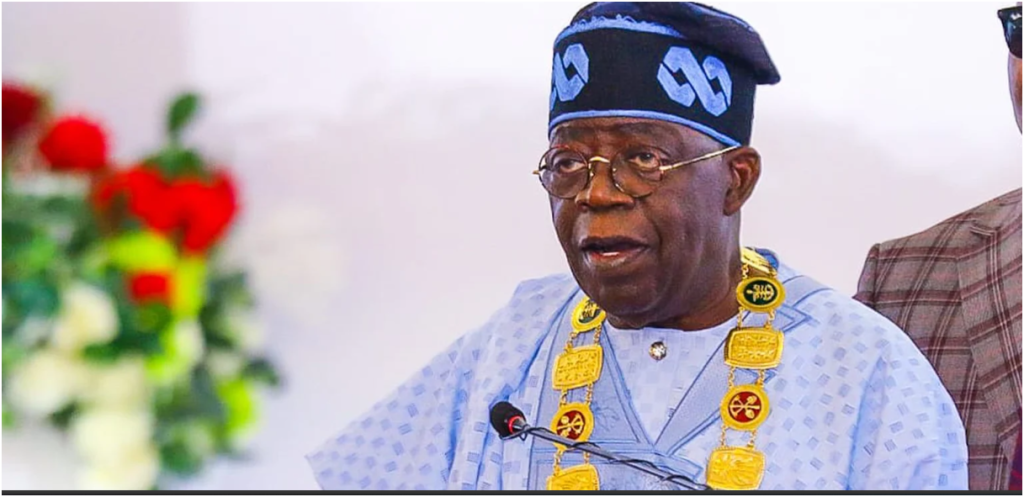
Speaking during an interview session at the Africa CEO Forum in Kigali, Rwanda, Tinubu argued that Nigeria had reached a dangerous point where continuing old subsidy structures would have amounted to mortgaging the future of unborn generations.
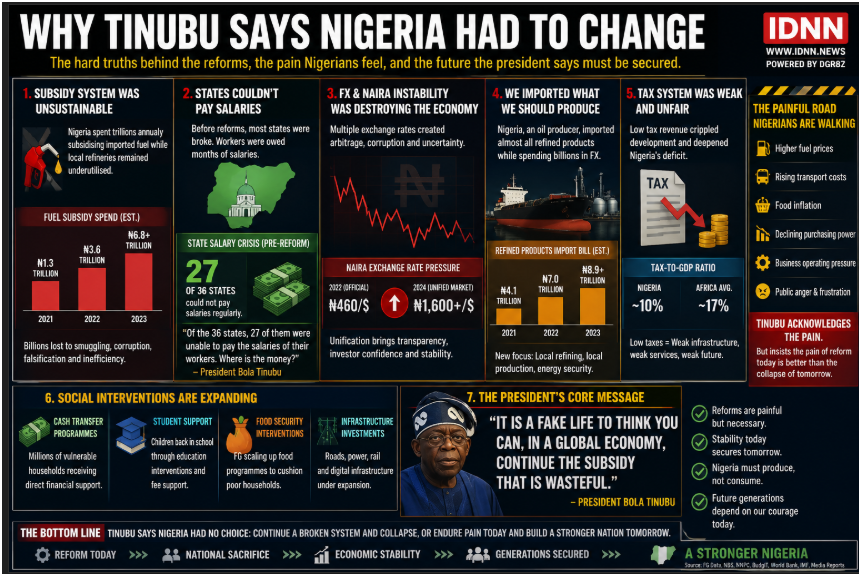
“It is a fake life to think you can, in a global economy, continue the subsidy that is wasteful,” the president said.
The remark immediately became one of the defining moments of his Kigali appearance as the president attempted to justify reforms that have triggered widespread public hardship, inflation pressure, and growing political criticism across Nigeria.
🟨 “Painful But Necessary” — Tinubu Defends Economic Gamble
Tinubu acknowledged that the reforms have imposed severe pressure on many Nigerians but insisted the government had little choice but to dismantle what he described as an unsustainable economic structure.
“The reform is a very difficult decision, but necessary for the country,” he said.
The president described the subsidy regime as a system that encouraged:
- smuggling
- corruption
- falsification
- fiscal waste
- economic distortion
“Of the 36 states, 27 of them were unable to pay the salaries of their workers. Where is the money?” Tinubu asked.
He said Nigeria could not continue operating as an oil-producing country without functional refining capacity while simultaneously spending heavily on imported fuel subsidies.
“You are oil producing, you are earning, you are given fuel, you have no refinery that is functional. It is not possible to continue that trend,” he stated.
According to him, the country was approaching a dangerous financial point before the reforms were introduced.
🔴 Tinubu Frames Economic Hardship As National Sacrifice
The president repeatedly framed the current economic pain as part of a longer-term national survival strategy.
Using a childbirth analogy, Tinubu argued that temporary suffering would eventually produce national economic recovery.
“It is difficult, it is painful, but it is just like the human reproduction process. A woman carries a pregnancy, enjoys the pain of labour, and has a very big smile when she sees a live child,” he said.
That framing reflects the administration’s broader political calculation:
👉 endure present hardship
👉 pursue structural reforms
👉 hope long-term stability eventually restores public confidence
But the gamble remains politically risky.
Millions of Nigerians continue facing:
- rising food prices
- inflation
- transport costs
- energy pressure
- declining purchasing power
That reality has transformed economic reform into one of the most politically sensitive issues confronting the Tinubu administration.

🟨 Taxation, Local Industry And Economic Control
The Tinubu economic reforms Nigeria debate also expanded into taxation and industrial policy.
The president defended taxation as essential for development, arguing that citizens demanding modern infrastructure and social services must also contribute financially through taxes.
“Nobody wants to pay taxes ordinarily. But how do you protect the future of the children? How do you research and develop?” he asked.
Tinubu also stressed the importance of supporting domestic industries capable of creating jobs and reducing import dependence.
Referring to Dangote Refinery and BUA Group, he said the government deliberately backed local industrial capacity to strengthen Nigeria’s economy.
“What should my government do? Support him, encourage him,” Tinubu said while discussing support for local refining.
He revealed that crude oil sales to the Dangote Refinery in Naira were approved to ease foreign exchange pressure and reduce operational complications.
🔴 Tinubu Is Quietly Betting His Presidency On Reform Success
Despite growing criticism, the president insisted the reforms were already beginning to stabilize the economy.
“Today there is a very bright light at the end of the corner; the economy is stable, the Naira is stable, predictable,” he said.
The administration also pointed to:
- cash transfer programmes
- student support schemes
- industrial investments
- infrastructure projects
as part of broader efforts to cushion economic hardship.
But analysts say the political stakes surrounding the reforms continue rising because the success or failure of the Tinubu economic reforms Nigeria agenda could ultimately determine:
- investor confidence
- public trust
- inflation stability
- political survival
- the administration’s long-term legacy
That means the current reforms are no longer merely economic adjustments.
They are rapidly becoming:
👉 a national endurance test
👉 a governance credibility battle
👉 and a high-risk political gamble tied directly to Nigeria’s economic future
This is IDNN. Independent. Digital. Uncompromising.
