
Committee Announced After Closed-Door Session
The Senate on Thursday constituted a seven-member ad hoc committee to collate, harmonise and distil lawmakers’ contributions to the proposed amendment of the Electoral Act.
The decision followed a prolonged closed-door executive session during which senators conducted a deeper review of the bill’s provisions.
Leadership and Membership
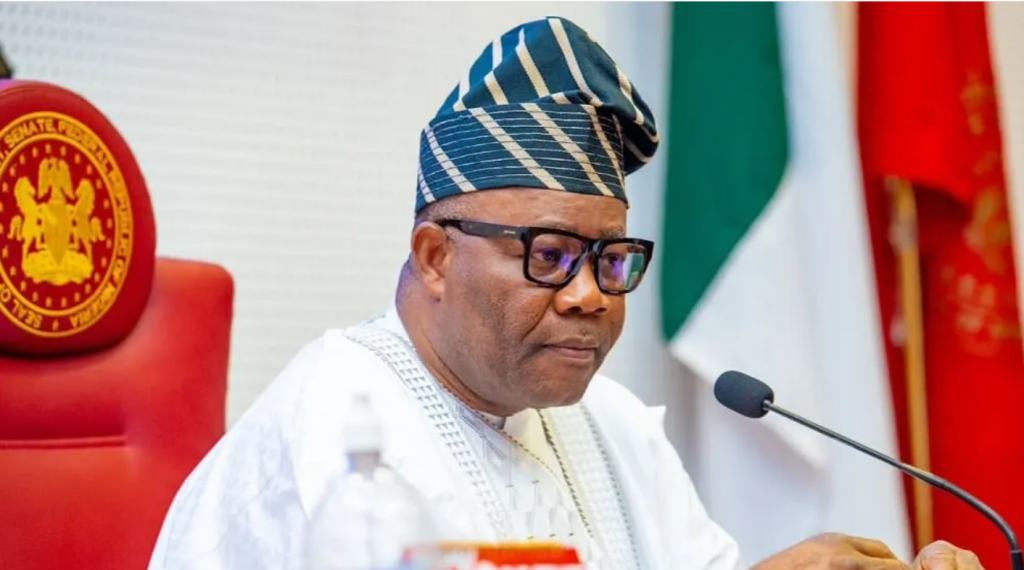
Announcing the outcome of the session, Godswill Akpabio said the committee would be chaired by Niyi Adegbonmire, Chairman of the Senate Committee on Judiciary, Human Rights and Legal Matters.
Other members of the panel are Adamu Aliero, Aminu Tambuwal, Adams Oshiomhole, Danjuma Goje, Tony Nwoye and Titus Zam.
Akpabio said the committee has a maximum of three days to complete its assignment and submit a consolidated report to the Senate.
Why the Bill Was Stepped Down
The Senate had earlier stepped down consideration of the Electoral Act (Repeal and Re-enactment) Bill to allow for more rigorous scrutiny, despite the House of Representatives having already passed the bill.
Akpabio stressed that the upper chamber must exercise due diligence given the far-reaching implications of the legislation for Nigeria’s electoral process.
“This is a very important bill, especially as we approach another election cycle. We must take our time to ensure justice is done to all, so that we do not end up at the tribunal,” he said.
Scope of the Proposed Amendments
Earlier deliberations in the Senate indicated that the proposed amendments aim to strengthen electoral integrity, enhance transparency and boost public confidence in elections.
Key proposals include tougher sanctions for electoral offences such as vote-buying, stricter penalties for result falsification, provisions for electronic transmission of results, and measures to expand voter participation.
The reforms are intended to take effect ahead of the 2027 general elections, subject to concurrence by the House of Representatives and approval by at least two-thirds of state Houses of Assembly in line with constitutional requirements.
This is IDNN. Independent. Digital. Uncompromising.
