
A financial weapon, not a diplomatic gesture
When the United States Treasury’s Office of Foreign Assets Control (OFAC) designates an individual, it is not issuing a political opinion. It is activating a legal and financial mechanism.
Placement on the Specially Designated Nationals (SDN) list freezes any assets under US jurisdiction and prohibits American persons and institutions from conducting transactions with the named individual. Because the US dollar dominates cross-border clearing systems, the effect can extend far beyond American territory.
Sanctions, therefore, operate as financial isolation tools — cutting access to formal banking rails, correspondent channels and global liquidity.

Nigeria’s counter-insurgency has a financial spine
Nigeria’s counter-insurgency framework is not solely military. It includes:
- The National Counter Terrorism Centre (NCTC), which coordinates strategic response.
- The Nigerian Financial Intelligence Unit (NFIU), which analyses suspicious transaction reports.
- Domestic sanctions mechanisms that can freeze assets under Nigerian law.
- Law enforcement and prosecutorial agencies empowered under terrorism financing statutes.
This financial layer is critical because extremist organisations rely on money — for recruitment, logistics, procurement and operational mobility.
Where US designations meet Nigerian enforcement
An OFAC designation can intersect Nigeria’s system in three principal ways:
- Compliance pressure: Nigerian banks, especially those linked to international correspondent networks, tighten screening against listed names.
- Intelligence conversion: Details within sanctions notices — aliases, identifiers, network links — can become investigative leads.
- Domestic action: Nigerian authorities may initiate local asset tracing, restraint or prosecution where evidence supports action under national law.
The designation itself does not arrest anyone in Nigeria. It creates pressure. The domestic system decides whether that pressure becomes disruption.
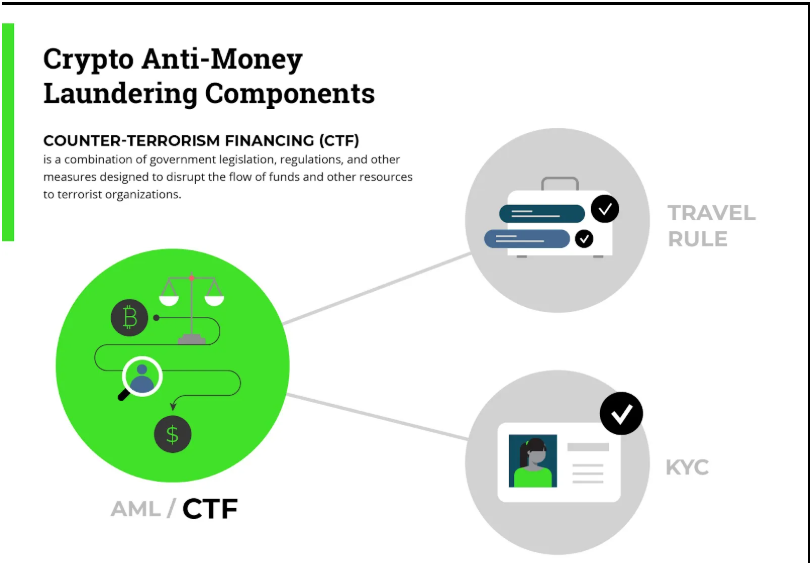
Terror financing as a strategic battlefield
Boko Haram and affiliated factions have historically relied on blended funding streams — informal value transfer, cross-border networks, trade channels and, at times, digital or cyber-enabled pathways.
By targeting alleged financiers, the US seeks to constrict these financial arteries. However, effectiveness depends on whether sanctioned individuals maintain exposure to international financial systems.
If assets are offshore or dollar-dependent, disruption can be significant. If funding networks are entirely informal or cash-based, the impact may be narrower.
The compliance ripple effect
Once a name enters the SDN list, global banks and corporations screen aggressively. Transactions may be halted. Accounts scrutinised. Cross-border deals questioned.
This can strengthen enforcement — but it can also push activity into informal or harder-to-trace systems, creating a new layer of intelligence and policing challenges for Nigerian authorities.
Financial counter-terrorism is therefore not a single event. It is a dynamic contest between restriction and adaptation.
Beyond headlines — what determines real impact
Sanctions generate immediate reputational and legal consequences. Yet long-term effect hinges on coordination.
For Nigeria’s counter-insurgency architecture, the decisive question is whether foreign designations are integrated into domestic investigations, prosecutions and sustained monitoring.
If alignment is strong, sanctions become operational leverage.
If alignment is weak, they remain largely symbolic signals.
In the modern security landscape, the battlefield is not only territorial. It is financial.
And that battlefield runs through both Washington and Abuja.
This is IDNN. Independent. Digital. Uncompromising.
