
Full Analysis
From stability to sudden escalation
The Nigerian Army budget surge did not begin in 2026. It began a year earlier.
In 2024, the Army allocation stood at roughly ₦787 billion. By 2025, that figure jumped to approximately ₦1.48 trillion — an increase of nearly 88 percent in a single fiscal cycle.
For 2026, the National Assembly approved just over ₦1.5 trillion — a marginal increase that signals consolidation rather than expansion.
The spike was dramatic. The follow-up was restrained.
3-Year Nigerian Army Budget Comparison (₦)
| Fiscal year | Nigerian Army allocation (₦) | Source basis | YoY change (₦) | YoY change (%) |
|---|---|---|---|---|
| 2024 | ₦787.81bn | Published dataset summary (open source) | — | — |
| 2025 | ₦1.48trn | Breakdown shared from budget allocation reporting | +₦692.19bn | +87.9% |
| 2026 | ₦1.504251trn | National Assembly committee approval/endorsement figure | +₦24.25bn | +1.6% |
Sources: 2024 figure via StatiSense budget series ; 2025 Army allocation figure (₦1.48trn) via TheCable Index post ; 2026 exact endorsed figure via NALTF (₦1,504,251,069,722) , plus mainstream confirmation of ~₦1.5trn approval ..
The year the curve bent upward
The 2025 leap represented a strategic recalibration. Nigeria was confronting layered insecurity: insurgency in the northeast, banditry in the northwest, farmer-herder clashes, and emerging cross-border militant infiltration from the Sahel.
The fiscal message was clear: security would take priority.
Yet a funding surge alone does not equal operational transformation. The 2026 figure suggests the government has reached what may be a near-term ceiling — or is reassessing return on investment.
Plateau after pressure
A ₦24 billion rise between 2025 and 2026 — roughly 1.6 percent — is statistically modest compared to the previous year’s expansion.
That flattening invites scrutiny.
Has the surge stabilised operational capacity?
Or has fiscal reality imposed restraint?
The answer may lie not in the size of allocation but in the speed and structure of disbursement.
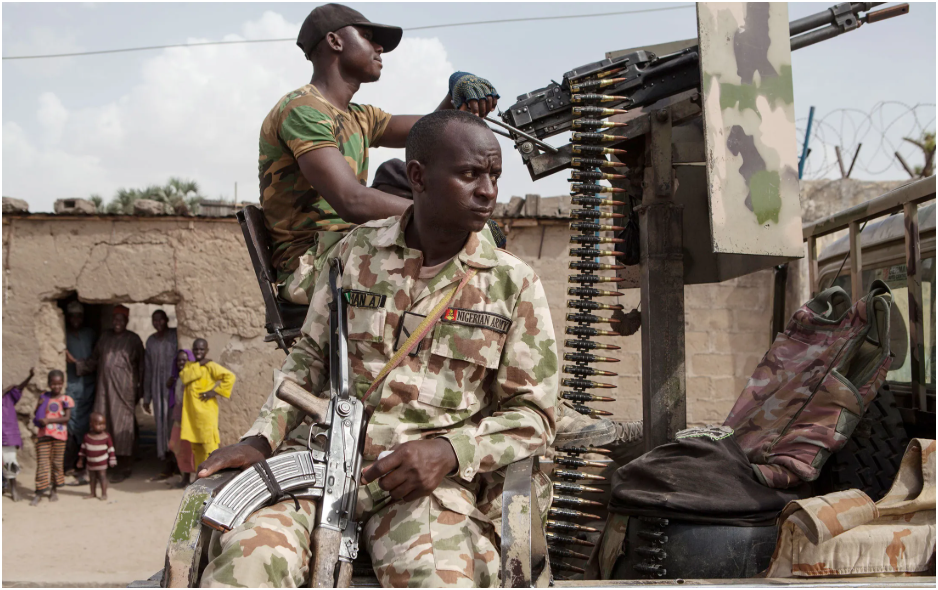
Allocation versus execution
Security experts consistently point to one structural weakness: delays in fund releases.
Budget approval is legislative intent.
Cash release is executive action.
Operational impact depends on both.
When procurement cycles stall, logistics pipelines slow. When troop welfare funding lags, morale shifts. When intelligence upgrades await payment, tactical advantage diminishes.
The Nigerian Army budget surge of 2025 was significant. But without seamless execution, fiscal muscle weakens before it reaches the field.
The system beneath the numbers
Nigeria’s broader fiscal framework shapes defence performance. Debt servicing obligations, subsidy reforms, currency volatility and revenue fluctuations all influence how quickly allocations translate into usable capital.
Security budgeting exists inside that architecture.
Which means the debate is no longer “Are we funding the war?”
It is: “Are we funding it efficiently, predictably and transparently?”
If spending no longer rises
Should insecurity persist while defence allocation plateaus, pressure will intensify on both military command and political leadership.
If outcomes improve, consolidation may prove strategic.
If outcomes stagnate, the 2025 surge will face retrospective interrogation.
The numbers show a sharp climb, then a pause.
The next chapter will not be written by appropriation alone — but by measurable security results.
