
By IDNN Business Desk
Nigeria’s Gross Domestic Product (GDP) expanded by 4.23% year-on-year in Q2 2025, according to the National Bureau of Statistics (NBS). The figure — the fastest growth since 2021 — outpaced the 3.48% recorded in Q2 2024, buoyed by higher oil output and steady non-oil sector gains.
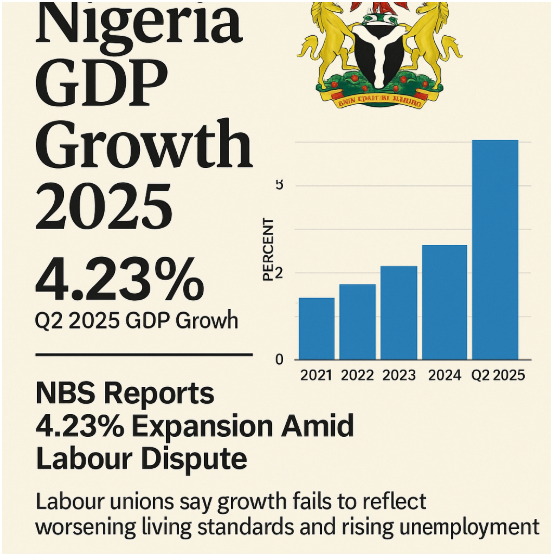
However, the Nigeria Labour Congress (NLC) challenged the report, dismissing it as “growth without development.” One senior official told IDNN: “Do you see the 4.23% GDP growth in your life? I don’t. Conditions are worsening, workers are suffering.”
Economic Realities Behind the Growth
The NBS attributed much of the improvement to rebased GDP estimates using 2019 as the new benchmark. Oil production climbed to 1.68 million barrels per day, lifting the oil sector’s real growth to 20.46%. Non-oil sectors, led by agriculture, trade, finance, and telecoms, grew 3.64%.
“If manufacturing remains challenged, we risk growth for big firms but death for small businesses.”
Yet, organised labour argued that unemployment data pegged at 4% is “falsehood,” pointing to widespread hardship and collapsing small businesses.
What This Means for Ordinary Nigerians
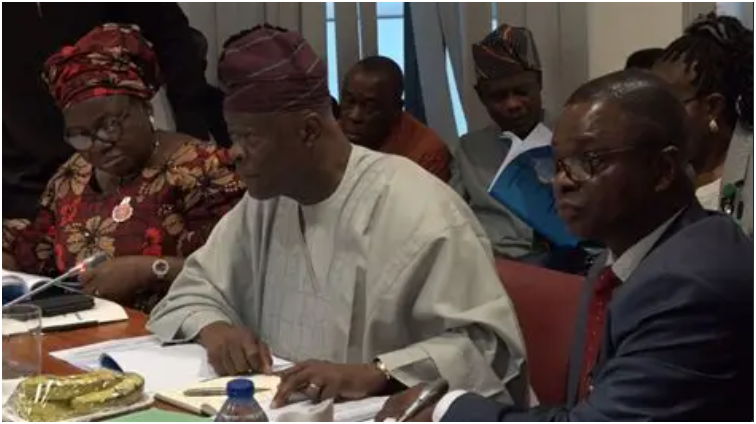
Economists hailed the figures as a sign of recovery, but the organised private sector warned that macro growth is not translating into tangible benefits. Dr. Femi Egbesola of the Association of Small Business Owners warned: “If manufacturing remains challenged, we risk growth for big firms but death for small businesses.”
With Finance Minister Wale Edun insisting Nigeria must hit 7% annual growth to truly lift citizens, the GDP rebound remains fragile and contested.
Footnote: This is IDNN. Independent. Digital. Uncompromising.
