
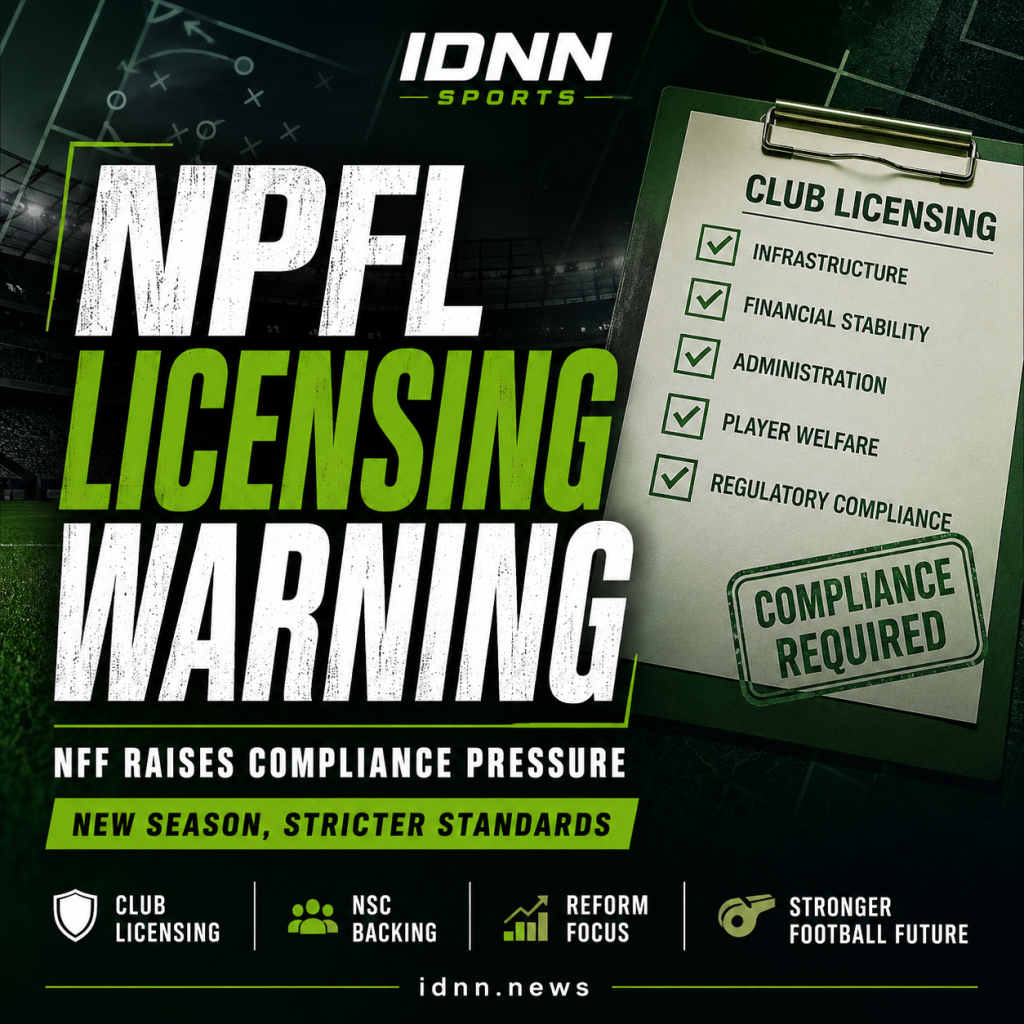
The Nigeria Football Federation has warned Nigeria Premier Football League clubs to comply fully with club licensing regulations ahead of the 2026/27 season, raising the pressure on domestic football administrators as reform talk moves from ambition to enforcement.
The warning is contained in the NFF official communiqué from its Executive Committee meeting held at Best Western Plus Hotel, Asaba, on Saturday, 11 July 2026. In the communiqué, the Committee hailed the National Sports Commission’s readiness to support strict enforcement of Club Licensing regulations and to shun any attempt by any club to circumvent the provisions.
That warning turns the 2026/27 NPFL season into a test of structure, not just fixtures. For years, Nigerian football reform has been discussed through player welfare, weak club finances, poor commercial returns and inconsistent administration. The licensing push now places club standards at the centre of the league’s next phase.
Reform Pressure Moves Beyond Licensing
The official communiqué also records the NFF Executive Committee’s appreciation to the Federal Government, through the National Sports Commission, for a special intervention fund committed to the NPFL to shore up the league’s profile, boost its commercial value and engineer a stronger football economy.
The Committee also noted the government’s promise to extend similar intervention to the Nigeria Women Football League and appealed for support to be extended to the Nigeria National League and the Nigeria Nation-Wide League One.
The licensing development comes amid a wider debate over whether Nigerian clubs can match reform ambition with financial capacity. Recent reform discussions around improved prize money and a proposed higher minimum player salary have sharpened questions over sponsorship, broadcast value, commercial structure and long-term club sustainability.
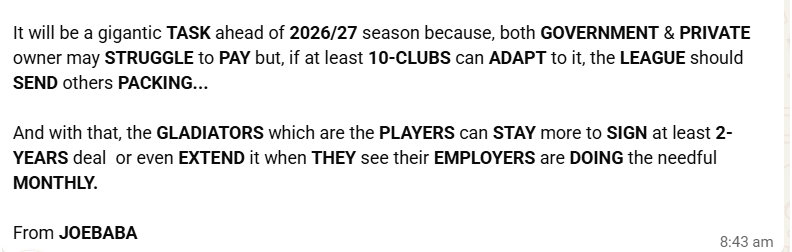
Those questions now sit beside the NFF’s licensing warning. For the NPFL, the issue is no longer only about how much clubs spend, but whether they are structurally ready for stronger professional standards.
WIDER FOOTBALL PROIRITIES AND CONSEQUENCIES
The Executive Committee’s communiqué also touched on wider football priorities, including Nigeria’s hosting of CAF events, welfare planning for the Super Falcons ahead of the Women’s Africa Cup of Nations, preparation for the Falconets at the FIFA U20 Women’s World Cup, the Flamingos’ qualification for the FIFA U17 Women’s World Cup, Nigeria’s restoration to the CAF A-License Convention, and the creation of an interim Beach Soccer and Futsal board.
But the club licensing line may carry the most immediate consequence for the domestic league. If enforcement becomes harder, clubs will face sharper scrutiny over governance, administration and compliance before the new campaign.
For the NPFL, the licensing warning now sits beside three linked questions: can clubs meet professional standards, can they afford better player welfare, and can Nigerian football build enough commercial weight to support the reforms it is announcing?
The answer will determine whether the new season becomes another calendar cycle — or the start of a harder reset for the domestic game.
