
Political dominance is easiest to mistake for permanence—until it’s tested.
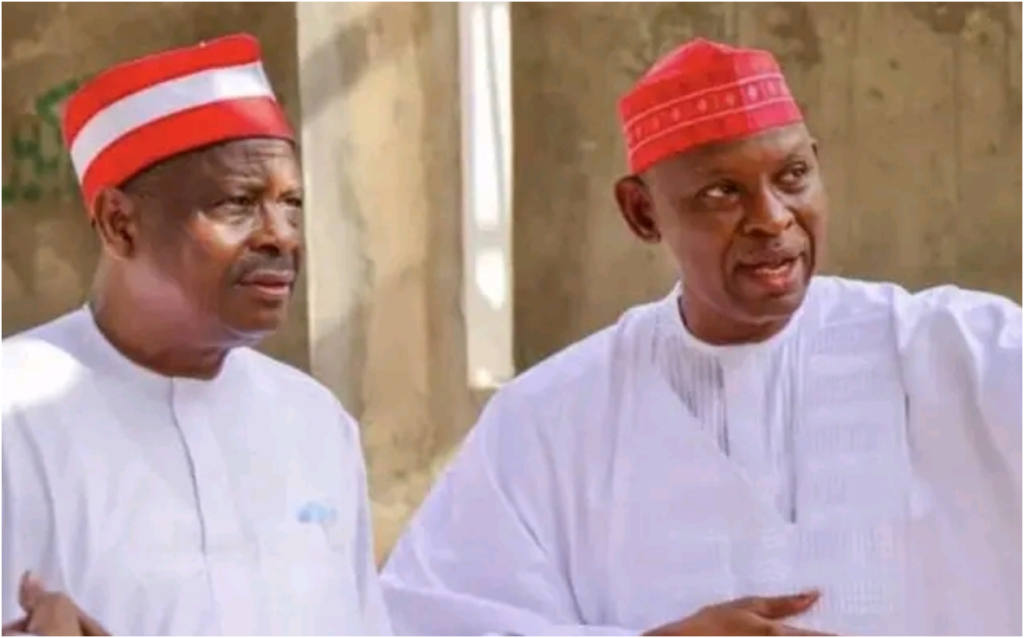
For years, Rabiu Musa Kwankwaso has been the central gravitational force in Kano politics, building a movement that blended personal loyalty, symbolic branding, and grassroots mobilisation. The defection of Governor Abba Yusuf now raises an uncomfortable question: was the structure stronger than the man, or the man stronger than the structure?
When succession stopped being automatic
Abba Yusuf’s rise was widely seen as an extension of Kwankwaso’s influence. His emergence followed the familiar Kano pattern: political inheritance reinforced by endorsement, mobilisation, and movement identity.
Defection breaks that pattern. It converts succession into competition—and loyalty into negotiation.
What Kwankwasiyya was built on
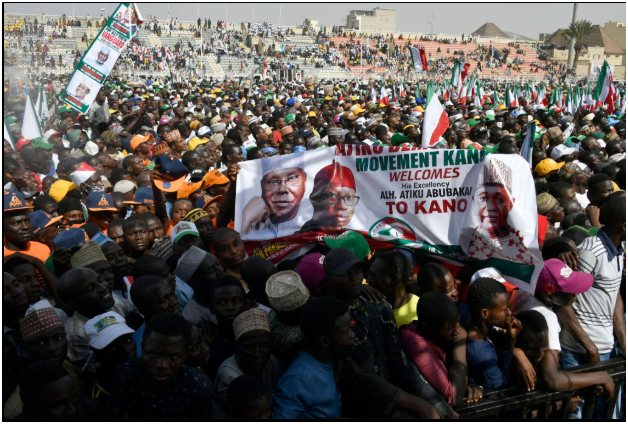
The Kwankwasiyya movement has always been more than party affiliation. It functioned as a political culture—rooted in symbolism, welfare-driven rhetoric, and a deep emotional bond with a segment of Kano’s electorate.
But movements anchored heavily on personality face a recurring test: how they behave when power fragments.
Why incumbency changes the balance
As governor, Abba Yusuf now controls state resources, appointments, and day-to-day political access—advantages no former leader can fully replicate.
Incumbency introduces an alternative centre of gravity. Over time, that gravity attracts defectors, pragmatists, and fence-sitters who prioritise proximity to power over ideological loyalty.
What party labels now matter less
Kano voters have historically shown flexibility in party alignment, often following personalities rather than platforms. That history complicates predictions.
If Yusuf succeeds in projecting competence and continuity, party switches may matter less than governance performance—especially as local political networks recalibrate.

Why this isn’t a collapse—yet
Kwankwaso retains formidable assets: name recognition, a loyal base, and national relevance. Political movements do not evaporate overnight.
However, sustained influence requires relevance within current power structures. The longer separation lasts, the more expensive loyalty becomes to maintain.
What the next election cycle will expose
By 2027, Kano politics will answer a critical question: can Kwankwasiyya operate without commanding the state apparatus, or does it need incumbency to stay dominant?
That answer will not come from speeches—but from defections, grassroots behaviour, and who controls the levers of mobilisation.
Why this matters beyond Kano
Kano often previews national political trends. If a personality-driven movement struggles once power shifts, it reinforces a broader lesson for Nigerian politics: charisma mobilises, but institutions endure.
What this split quietly decides
If Kwankwaso adapts—by broadening alliances and institutionalising his movement—his influence may endure. If not, Kano may be witnessing the slow transition from personal dominance to competitive pluralism.
Either way, the defection has already changed the equation.
This is IDNN. Independent. Digital. Uncompromising.
