
Former Kaduna Governor’s 2023 Loss Spurs Rethink of Political Power
By IDNN News Department
Malam Nasir El-Rufai, former Governor of Kaduna State, has publicly acknowledged a pivotal lesson from the 2023 general elections: the true power in Nigerian elections rests with the people, not with political figures or governors. Despite his determined efforts to secure victory for then-APC presidential candidate Bola Ahmed Tinubu, El-Rufai lost Kaduna State to the opposition-a result he says fundamentally changed his perspective25.
“A Governor Has Only One Vote”-El-Rufai’s New Political Philosophy
Speaking with journalists in Kano, El-Rufai reflected, “I was the governor of Kaduna State. I fought hard to deliver President Tinubu in my state, but I lost. That taught me a hard lesson-that elections are ultimately decided by the people, not by political figures.” He emphasized that even the influence of a sitting governor is limited: “A governor has only one vote. Nigerians have many more votes than one governor or even 36 governors combined”2.
Opposition Coalition: Grassroots Over Governors
Now a key player in a coalition of opposition parties, El-Rufai has shifted his strategy. He argues that the coalition’s prospects for 2027 do not depend on the support of state governors but on direct engagement with voters. “We are trying to offer Nigerians a real alternative-something different from what they have seen before,” he stated, underscoring a people-driven approach24.
El-Rufai’s recent defection from the APC to the Social Democratic Party (SDP) marks a significant realignment in Nigerian politics. His move, motivated by disillusionment with the APC’s direction under President Tinubu, positions him as a formidable opponent with deep northern support and a reputation for challenging the status quo4.
Political Fallout and Party Responses
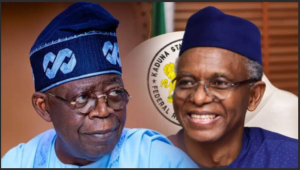
El-Rufai’s defection has sparked debate within political circles. While some APC leaders downplay his influence, citing losses under his governorship, others warn that his departure could energize the opposition and reshape the political landscape ahead of 202757. The PDP Governors’ Forum, meanwhile, has rejected coalition overtures, vowing to rebuild the party independently, even as some governors and key figures defect to rival parties.
“Governors do not determine election results. The people do.”
Nasir El-Rufai
Analytical Perspective
El-Rufai’s candid admission and strategic pivot signal a broader shift in Nigerian politics: the era of top-down electoral control is waning, replaced by a renewed focus on grassroots mobilization. As opposition forces regroup and alliances shift, the 2027 elections are shaping up to be a contest where the voice and vote of ordinary Nigerians could prove decisive.
For in-depth analysis and updates on Nigeria’s evolving political landscape, follow IDNN News.
