
Gusau referee reforms moved from policy talk to real controversy on Wednesday after the Nigeria Football Federation president tied the future of officiating in the country to three hard demands: train at least 10 referees in VAR before year-end, stop recruiting older entrants into the profession, and treat computer literacy as non-negotiable. The comments, made at the NFF secretariat in Abuja while he received the new executive of the Nigeria Referees Association, have now pushed the refereeing crisis back into the centre of Nigerian football debate.
When Gusau referee reforms stopped sounding polite
The sharpest line was the one that turned reform into argument. Ibrahim Gusau said no serious recruitment drive should accept people above a certain age and went further by arguing that bringing in anyone above 14 wastes the time of both the system and the individual because the pathway to Grade 1 and then FIFA level becomes too short. In the same statement, he said referees now file reports that run to many pages and asked how any computer-illiterate official could cope with modern demands.
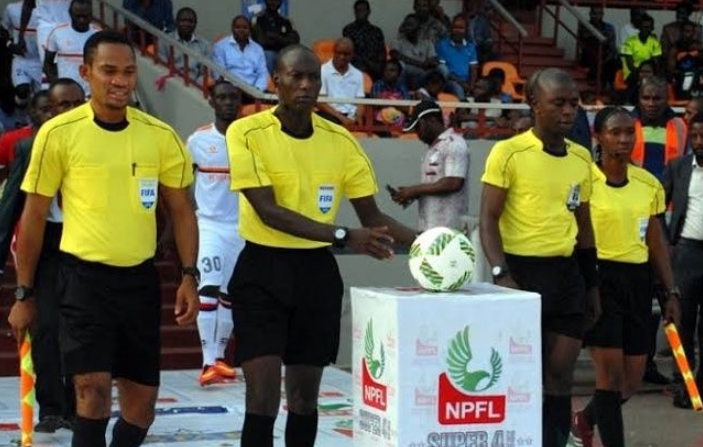
The federation is no longer talking only about bad calls on matchday. It is defining officiating as a pipeline problem. In Gusau’s framing, the weakness starts with who gets recruited, how early they start, what skills they have, and whether the system is serious enough to prepare them for modern tools like VAR. That changes the argument from isolated refereeing errors to a deeper question about whether the domestic structure itself has been allowed to decay.
Where the pressure now turns inward
The NFF also used the moment to say aloud what many within the domestic game have complained about for years. General Secretary Mohammed Sanusi said Nigerian referees are capable of performing at the highest level, including the FIFA World Cup, but argued that they are too easily influenced, to the detriment of their own careers. That matters because it shifts the issue from pure competence to credibility. A league can survive mistakes; it struggles when trust in the people making the calls starts to weaken.
The arrival of the new NRA leadership gave the federation the right stage for that message. Acting president Kelechi Mejuobi, who assumed office after the death of former NRA president Sani Zubair, promised stricter sanctions for indiscipline and unethical conduct. Gusau, for his part, linked support to seriousness: the NFF is willing to back reforms, but the referees’ leadership must carry those measures to congress and turn them into binding resolutions. In other words, this was not pitched as advice. It was framed as an institutional reset.

What the promise really ties to power
The pledge to train 10 referees in VAR before the end of 2026 sounds technical, but the politics around it are bigger than the number. VAR training is being presented as proof that the federation wants Nigerian officiating to move closer to international standards, yet the same statement makes clear that technology alone is not the fix. Gusau paired the VAR promise with age limits, literacy demands and academic qualifications, while Sanusi paired it with a warning about outside influence. That combination is the real story: the NFF is trying to sell reform as both a skills upgrade and a moral clean-up.
That creates the next pressure point for the federation. Once the NFF has publicly attached its name to VAR training, recruitment discipline and literacy standards, the refereeing conversation can no longer be managed with vague promises. The public will now ask who gets trained, what rules get passed, how quickly enforcement starts, and whether poor officiating in the domestic game actually declines. If those answers do not come, Gusau’s remarks will harden into another headline about intent without delivery. If they do, this meeting may be remembered as the moment Nigerian football finally admitted that refereeing weakness is not a side issue but a systems failure that can damage the credibility of the entire game.
This is IDNN. Independent. Digital. Uncompromising.
