
The room where reform stalled
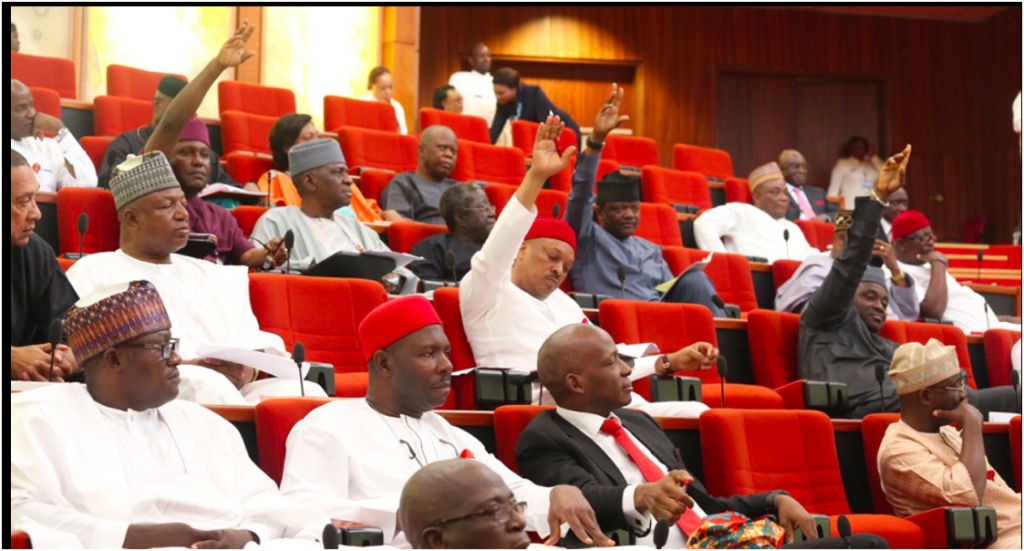
The Electoral Act harmonisation deadlock did not erupt in a shouting match.
It happened in silence.
Senators arrived.
House members delayed.
A meeting was called.
It dissolved.
No agreement. No joint position. No reconciled clause.
At stake was Clause 60(3) — a provision whose impact extends far beyond legislative drafting.

The two words dividing the chambers
The House insisted on mandatory real-time transmission of results directly from polling units to the Independent National Electoral Commission’s portal.
The Senate removed “real-time.”
Electronic transmission would remain — but implementation would carry discretion.
In ordinary legislation, such wording differences are technical.
In electoral reform, they are seismic.
Where law meets memory
Electronic transmission is not just infrastructure.
It is reassurance.
For many voters, the phrase “real-time” represents insulation against post-poll manipulation, delayed uploads and collation controversies.
Removing it may be defensible in administrative terms.
Politically, it risks appearing as dilution.
Restoring it signals reform certainty.
Rejecting it invites suspicion.
This is the psychological terrain beneath the legal drafting.
Now the calendar itself trembles
As the clause debate intensified, another proposal entered the chamber: moving the 2027 general elections from February to January to avoid Ramadan overlap.
If enacted, both transmission mechanics and election timing would shift simultaneously.
Two institutional levers — process and schedule — adjusted within the same legislative window.
That convergence raises stakes.

Pressure moves from chamber to gate
Outside the National Assembly, civil society groups returned to demand full real-time transmission and the elimination of manual fallback collation.
Security personnel restricted access.
Protesters held position.
Inside, harmonisation stalled.
Outside, reform expectations hardened.
The deadlock is no longer procedural. It is symbolic.
Where incentives quietly diverge
Behind the Electoral Act harmonisation deadlock lies a quieter reality: different institutional interests may align differently with each wording outcome.
Mandatory real-time transmission provides clarity and uniformity. For reform advocates and civil society groups, it represents predictability. For opposition parties, it narrows the space for post-election dispute narratives.
Discretionary transmission, by contrast, offers administrative flexibility. For electoral managers, it may reduce exposure to logistical failure in remote or unstable network areas. For incumbents at federal or state levels, flexible wording may lower the risk of system breakdowns that could delegitimise results in their strongholds.
Neither position is inherently unlawful. Both can be defended within statutory reasoning.
But each distributes risk differently.
The calculus of political exposure
If real-time transmission is restored, the burden shifts to implementation capacity. Any technical failure would be highly visible and difficult to explain.
If it remains discretionary, the burden shifts to perception. Legal challenges and public suspicion may intensify, even if results are administratively sound.
In that sense, the harmonisation debate is less about technology than about where political exposure should sit — in infrastructure reliability or in public trust management.
Why timing amplifies the stakes
The potential shift of the 2027 election date compounds the equation.
An earlier election compresses campaign cycles and administrative timelines. Incumbents may benefit from reduced opposition mobilisation windows. Challengers may view compressed calendars as structural disadvantage.
Conversely, aligning the timetable away from major religious observances may broaden turnout comfort and reduce tension.
Again, both arguments carry procedural legitimacy.
The question is how they intersect.
When reform becomes a power instrument
The Electoral Act harmonisation deadlock has therefore moved beyond drafting language.
It now sits at the junction of reform design and political advantage.
The final wording of Clause 60(3) will not merely determine upload speed.
It will determine where institutional accountability rests if controversy arises in 2027.
And in electoral politics, accountability placement often shapes the stability of outcomes.
This is IDNN. Independent. Digital. Uncompromising.
