
🔴 Northern Political Pressure Is Intensifying Around Atiku
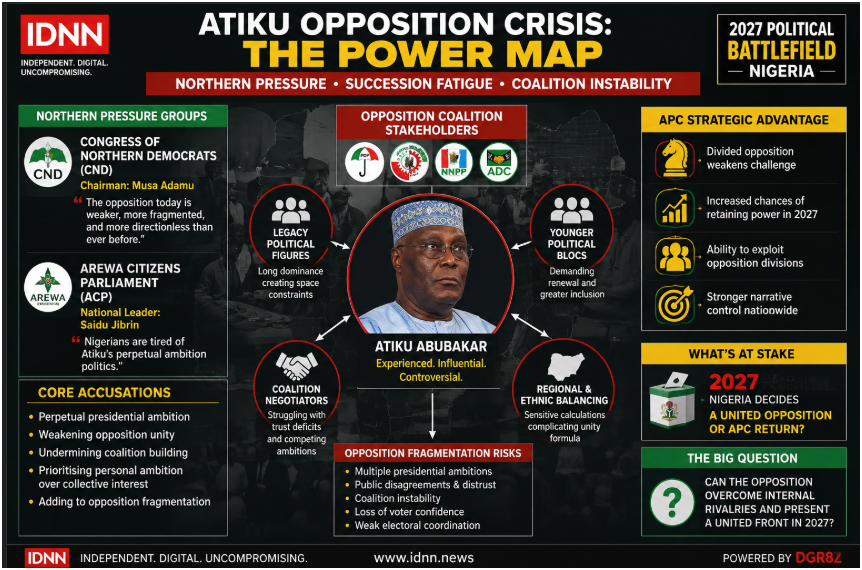
Fresh northern criticism directed at Atiku Abubakar is exposing growing tension inside Nigeria’s opposition space as coalition discussions ahead of 2027 become increasingly fragile.
The Congress of Northern Democrats accused Atiku of contributing to opposition instability through what it described as repeated presidential ambition and prolonged dominance of coalition politics.
According to the group’s chairman, Musa Adamu, the opposition is becoming weaker because of unresolved leadership struggles and internal fragmentation.
“The opposition today is weaker, more fragmented, and more directionless than ever before,” Adamu reportedly said.
The criticism adds fresh pressure to ongoing coalition calculations among opposition figures attempting to build a stronger political alliance capable of challenging the ruling All Progressives Congress ahead of the next presidential election cycle.
🟨 “Perpetual Ambition” Narrative Is Becoming Politically Dangerous
At the centre of the growing backlash is the increasingly sensitive “perpetual ambition” narrative now circulating within sections of northern political circles.
Critics argue that repeated presidential contests involving long-established opposition figures are creating:
- coalition fatigue
- trust erosion
- leadership stagnation
- succession frustration
- strategic fragmentation
A similar position was echoed by the Arewa Citizens Parliament, whose National Leader, Saidu Jibrin, reportedly questioned whether Nigeria’s opposition could successfully renew itself under recurring political leadership structures.
The phrase “perpetual ambition” has therefore evolved beyond ordinary political criticism.
It is now becoming a coded debate about:
👉 leadership renewal
👉 generational transition
👉 and the future direction of opposition politics in Nigeria

🔴 Coalition Talks Are Quietly Entering A Fragile Phase
The Atiku opposition crisis is unfolding at a delicate period when several political actors are exploring coalition possibilities and strategic alignments ahead of 2027.
However, analysts say deep structural tensions continue threatening opposition unity, including:
- competing ambitions
- regional balancing pressures
- unresolved mistrust
- influence rivalry
- succession calculations
Those pressures are increasingly generating fears that the opposition may struggle to consolidate effectively against the APC if internal fragmentation continues deepening.
The latest northern criticism therefore reflects more than dissatisfaction with one political figure.
It signals wider concern about whether the opposition can:
👉 manage internal competition
👉 maintain coalition discipline
👉 and prevent leadership rivalry from weakening strategic coordination before 2027
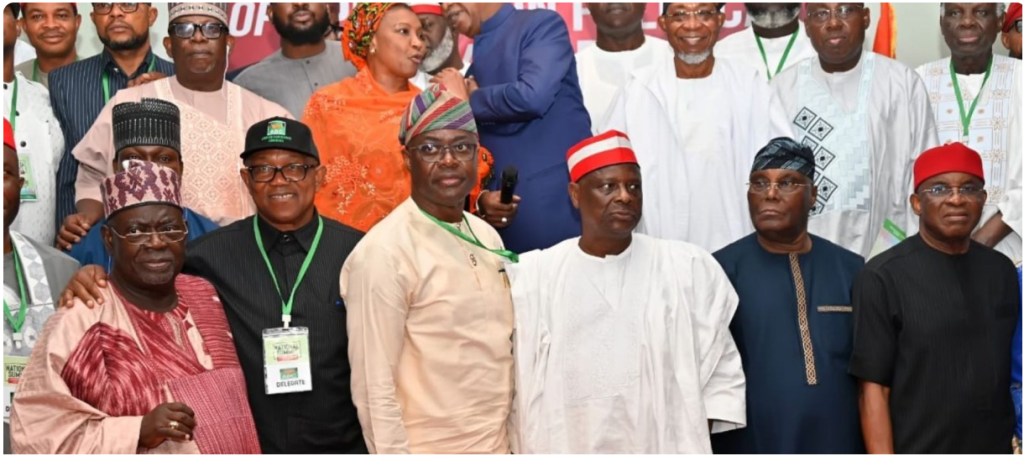
🟨 Generational Pressure Is Quietly Reshaping Opposition Politics
The deeper issue emerging from the Atiku opposition crisis debate is generational transition inside Nigeria’s opposition ecosystem.
Younger political blocs and emerging coalition actors are increasingly demanding:
- leadership renewal
- strategic restructuring
- broader participation
- reduced dependence on legacy political figures
That atmosphere is gradually transforming opposition politics into a wider struggle between:
👉 established political influence
👉 and demands for generational political reset
Political observers say this pressure is becoming particularly sensitive within northern political calculations, where questions surrounding coalition identity and future leadership remain highly influential.
🔴 APC Could Benefit If Opposition Fragmentation Deepens
Analysts warn that unresolved coalition instability could ultimately strengthen the APC’s political advantage heading toward future elections.
They argue that:
- repeated public disagreements
- leadership mistrust
- succession tension
- fragmented alliances
could weaken public confidence in the opposition’s ability to present a coordinated national alternative.
That reality means the growing backlash against Atiku carries implications beyond one politician.
It is rapidly evolving into a larger battle over:
👉 who controls the opposition’s future
👉 who defines coalition leadership
👉 and whether the opposition can unite before 2027 political tensions fully escalate
This is IDNN. Independent. Digital. Uncompromising.
