
₦68.323 trillion—and a clock that moved too fast?
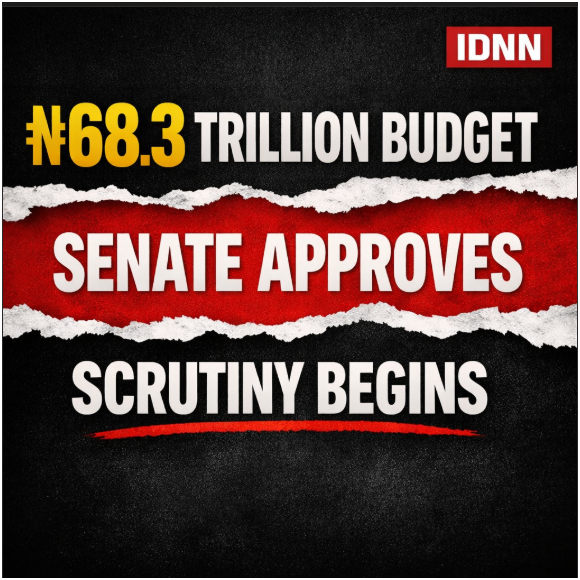
Nigeria’s Senate passes revised 2026 budget at ₦68.323tn following an upward request by President Bola Ahmed Tinubu, but attention has quickly shifted from the scale of the budget to the speed of its approval.
What should have been a fiscal milestone has become a governance flashpoint.
Opposition voices argue that the timeline between request and passage raises concerns about whether adequate legislative scrutiny matched the size and complexity of the budget.
Political pressure builds as opposition questions process
Opposition-aligned figures and minority lawmakers have raised concerns over what they describe as a compressed review window.
Supporters of Peter Obi and Atiku Abubakar have consistently warned in recent fiscal debates that rapid approvals risk weakening oversight.
Opposition lawmakers argue that “a budget of this magnitude requires rigorous, line-by-line scrutiny—not accelerated passage.”
Within the National Assembly, minority blocs also questioned whether committees had sufficient time to interrogate key assumptions tied to oil revenue, exchange rates, and borrowing projections.
Civil society flags transparency and execution risks
Accountability organisations have reinforced these concerns, focusing on transparency and implementation.
BudgIT has repeatedly warned that expanding public spending without strengthening transparency frameworks could undermine fiscal discipline.
Similarly, SERAP has called for stronger legislative oversight, arguing that approval must be matched by enforceable accountability mechanisms.
Civil society advocates stress that “oversight must not end at approval—execution is where credibility is tested.”
The numbers behind the decision—and the risks they carry
At ₦68.323tn, the revised budget represents one of Nigeria’s largest fiscal plans, built on assumptions that analysts say remain fragile.
Economic experts, including Bismarck Rewane, have consistently emphasised that fiscal stability depends on revenue realism rather than spending ambition.
“The risk is not the size of the budget—it is whether the assumptions behind it can hold,” analysts say.
Key pressure points include:
- oil production and price stability
- non-oil revenue performance
- rising debt servicing obligations
Borrowing pressure intensifies as fiscal space tightens
The expanded budget is expected to increase reliance on borrowing, particularly if revenue projections fall short.
Policy commentators such as Pat Utomi have argued that expansionary budgets must be matched by structural reforms in revenue collection and public sector efficiency.
Analysts warn that “once revenue underperforms, borrowing becomes inevitable—tightening fiscal space further.”
This dynamic places Nigeria’s fiscal outlook at a delicate balance between ambition and sustainability.

Government defence: urgency over delay
Government officials have defended the speed of approval, arguing that delays could disrupt funding for critical sectors.
The administration maintains that the revised budget reflects current economic realities, particularly rising security costs and infrastructure commitments, and that timely passage is necessary to sustain policy momentum.
The real question is no longer size
The budget has passed—but the scrutiny has only begun.
If revenue assumptions hold, the expansion could sustain growth and stability.
If they fail, the consequences will be immediate: higher debt, tighter fiscal space, and deeper economic pressure.
The question now is not how big the budget is—
It is whether Nigeria can afford the assumptions behind it.
This is IDNN. Independent. Digital. Uncompromising.
