
Nigerian Football Mourns Another Icon
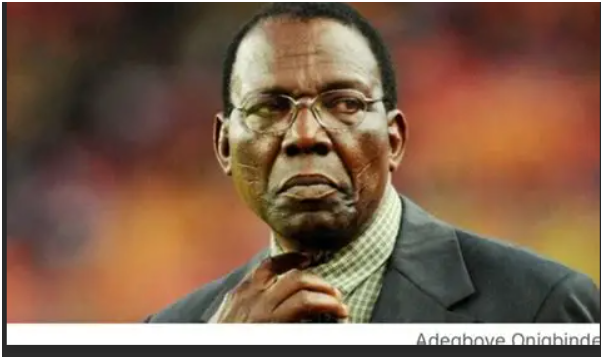
Another wave of grief swept through Nigeria’s sporting community Monday night as veteran football tactician Adegboye Onigbinde passed away at the Obafemi Awolowo University Teaching Hospitals Complex, close to his ancestral home in Modakeke, Osun State.
The Adegboye Onigbinde death comes during a sombre period for Nigerian sport, following the recent passing of sports administrator Chamberlain Nnamdi Dunkwu and respected journalists Niyi Oyeleke and Tonex Chukwu.
For many within the game, Onigbinde represented an entire generation that helped lay the early foundations of Nigerian football.
A Chance Meeting That Changed A Life
Onigbinde’s journey into football was not originally planned.
In a 2022 interview with Sports Village Square, he traced the turning point of his career to a chance encounter in the early 1960s with Nigerian football legend Teslim Balogun, popularly known as “Thunder.”
At the time, Onigbinde was working as a Grade III teacher.
Balogun encouraged him to pursue football more seriously — advice that would ultimately reshape his life.
“I was a Grade III teacher when he spotted me in Ife and advised me to take up football,” Onigbinde recalled.
That encounter led him to St. Luke’s College in Ibadan, where he pursued his Grade II Teachers’ Course in 1961 and captained the school football team.
Liberty Stadium And The Birth Of A Coach
The early 1960s proved decisive for Onigbinde’s future in football.
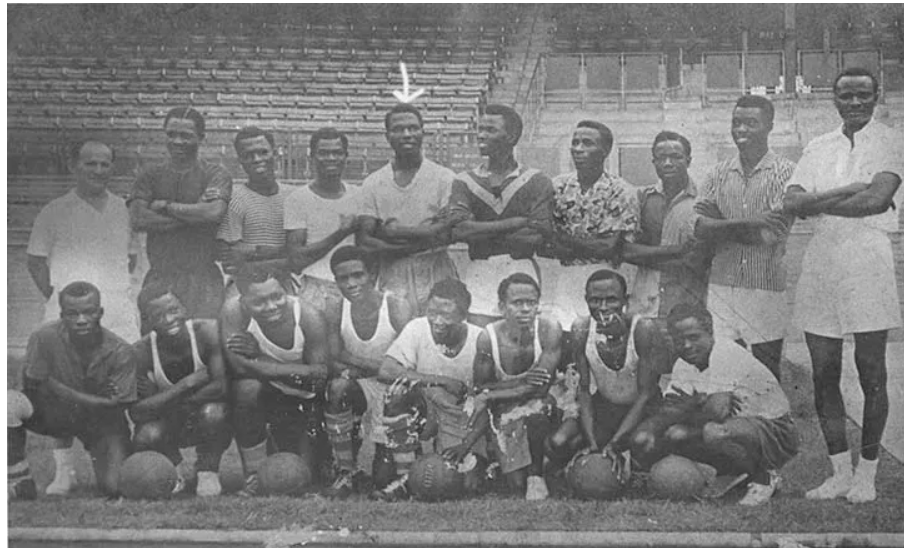
Teslim Balogun, working alongside national team coach Moshe-Jerry Beit haLevi, organised a Grade B coaching course under the Western Regional Council of the Nigeria Football Association.
The programme ran at Liberty Stadium in Ibadan — now the Obafemi Awolowo Stadium — from June 26 to July 16, 1961.
Among the participants were individuals who would later shape Nigerian football, including Niyi Akande, Ayo Adeniji, Godwin Etemeke, and Onigbinde himself.
He would later participate in another coaching programme organised by Balogun in March 1969, further strengthening his technical foundation.
Coaching Across Western Nigeria
Armed with those formative experiences, Onigbinde began travelling across the then Western Region of Nigeria, coaching young players in schools and community teams.
His career soon expanded into club management, including a stint with the now-defunct Water Corporation FC of Ibadan.
But it was at Shooting Stars Sports Club (3SC) that he achieved wider recognition.
Under his leadership, the Ibadan-based club reached the final of the 1984 African Cup of Champions Clubs, one of the major milestones in the club’s continental history.
A National Team Moment In 1984
The same year marked another landmark in Onigbinde’s coaching career.
He guided the Green Eagles, as the national team was then known, to the 1984 Africa Cup of Nations final, where Nigeria finished as runners-up.
For many players who passed through his teams, Onigbinde was known as a disciplined tactician and teacher of the game.
From Nigeria To The Caribbean
Onigbinde’s influence extended beyond Nigeria.
In the early 2000s, he worked with the Trinidad and Tobago Football Association as a technical instructor and youth coach, helping to develop the country’s under-17 programme.
He left the role in late 2001 after assembling a promising youth team that competed against local professional clubs.
The Historic 2002 World Cup Return
Shortly after leaving Trinidad and Tobago, Onigbinde returned to Nigeria and was appointed coach of the Super Eagles.
He went on to guide the national team to the 2002 FIFA World Cup, becoming the first indigenous coach to lead Nigeria to the global tournament.
Although Nigeria did not advance beyond the group stage, the achievement marked a significant milestone in the country’s football history.
The Legacy Of A Teacher-Coach
Beyond titles and tournaments, colleagues and players often described Onigbinde as a disciplined mentor and thoughtful student of the game.
His life journey — from a classroom teacher to a national team coach — reflected the story of Nigerian football itself during its formative decades.
When A Generation Of Builders Fades
With the Adegboye Onigbinde death, Nigerian football loses not only a respected tactician but also a living bridge to the era when the structures of the country’s football culture were first being built.
For many within the sport, his legacy will endure in the generations of players and coaches who learned from his methods, discipline and belief in the power of football to shape lives.
This is IDNN. Independent. Digital. Uncompromising.
