
A new police chief steps into command
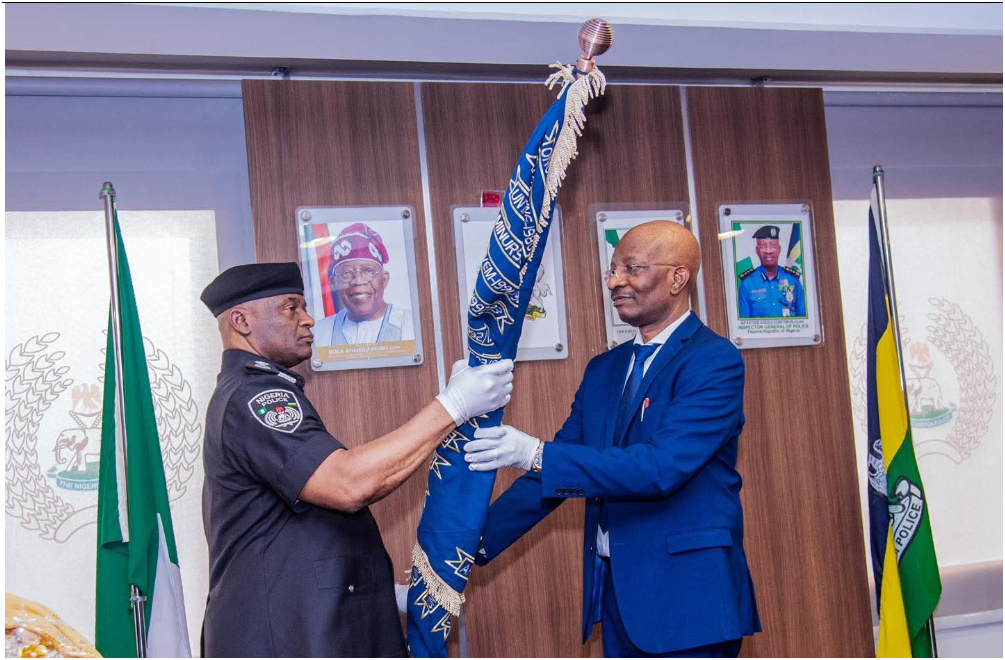
President Bola Ahmed Tinubu swore in Tunji Disu as Nigeria’s 23rd Inspector-General of Police, formally placing the seasoned law enforcement officer at the helm of the country’s police force.
The ceremony took place on Wednesday at the Council Chambers of the State House in Abuja, where senior government officials gathered for the oath-taking event ahead of the first Federal Executive Council meeting of the year.
Disu’s swearing-in signals a leadership transition at a time when Nigeria continues to grapple with complex security challenges ranging from terrorism and banditry to urban crime and cyber threats.
A ceremony tied to broader federal appointments
Beyond the appointment of the new police chief, the event also saw President Tinubu administer the oath of office to six commissioners of the Revenue Mobilisation Allocation and Fiscal Commission (RMAFC) and two commissioners of the Federal Civil Service Commission (FCSC).
Among those present at the ceremony were Vice President Kashim Shettima, Secretary to the Government of the Federation George Akume, Chief of Staff to the President Femi Gbajabiamila, the National Security Adviser, and the Head of the Civil Service of the Federation, Esther Walson-Jack.
The ceremony was immediately followed by a meeting of the Federal Executive Council (FEC), signalling the administration’s return to full policy activity for the year.
The weight of the office
The position of Inspector-General of Police carries enormous operational and institutional responsibilities. As head of the Nigeria Police Force, the IGP oversees nationwide law enforcement operations, internal discipline within the force, and coordination with other security agencies.
In recent years, the office has also become central to debates about police reform, accountability, and the future structure of policing in Nigeria, including the growing national conversation about decentralised or state-level policing.
Disu’s tenure will therefore be closely watched both within security circles and among policymakers seeking to strengthen Nigeria’s internal security framework.

A system under pressure to adapt
Nigeria’s security environment has become increasingly complex over the past decade.
Multiple overlapping threats — insurgency in the North-East, banditry across the North-West, separatist tensions in the South-East and organised criminal networks in urban centres — have placed intense operational demands on the national police force.
Security experts argue that effective policing now requires stronger coordination between federal agencies, improved intelligence systems, modern technology deployment and deeper collaboration with communities.
The appointment of a new IGP therefore carries implications beyond personnel change; it often signals shifts in operational strategy and institutional priorities within the security sector.
A leadership transition with national implications
For President Tinubu’s administration, the swearing-in of Tunji Disu represents another step in shaping the leadership structure of key national institutions.
Security leadership appointments are particularly significant because they influence how the government responds to internal threats, manages law enforcement reform and coordinates national security policy.
As Disu assumes command of the Nigeria Police Force, attention will turn to how his leadership approach, operational priorities and reform agenda unfold in the months ahead.
What the new command structure could mean
Leadership transitions within security institutions often mark the beginning of new strategic directions.
If the new Inspector-General successfully strengthens operational coordination, modernises policing systems and rebuilds public trust, the impact could extend far beyond the police headquarters in Abuja.
But if structural challenges within the force remain unresolved, the appointment will simply become another chapter in Nigeria’s long struggle to reform and stabilise its internal security architecture.
This is IDNN. Independent. Digital. Uncompromising.
