
A constitutional line is drawn
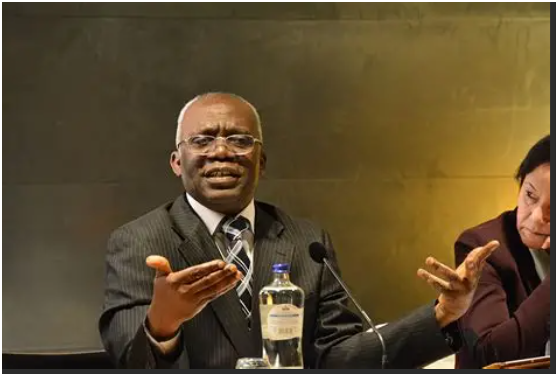
Senior Advocate of Nigeria and human rights lawyer Femi Falana has stated that military officers accused of plotting a coup against President Bola Tinubu’s administration must be prosecuted in civilian courts, not through military tribunals.
Speaking during a television interview, Falana argued that Nigeria’s return to democratic rule fundamentally alters how crimes against the state should be handled.
“We are under a democratic government, and as far as the constitution is concerned, we have to take them to a high court,” he said.
Why court-martial no longer applies
Falana explained that court-martial proceedings are designed primarily to address breaches of military discipline within the armed forces, not crimes that seek to overthrow an elected civilian government.
“The soldiers cannot be court-martialed. They are not trying to remove a military dictator,” he said. “This is an attempt to remove an elected government, a constitutional government.”
According to him, offences such as treason and treasonable felony are clearly defined under Nigerian law and fall squarely within the jurisdiction of civilian courts.
Democracy changes the legal pathway
The senior lawyer warned that prosecuting alleged coup plotters through military tribunals in a democratic setting could undermine constitutional supremacy and weaken public confidence in the rule of law.
He stressed that while the military maintains internal disciplinary mechanisms, actions that threaten Nigeria’s constitutional order transcend the armed forces and become crimes against the state itself.
“Trying such offences outside civilian courts would be inconsistent with democratic principles,” Falana said.
As public debate intensifies
Falana’s comments come amid heightened public discussion following reports of alleged coup threats and arrests. While security agencies have not publicly detailed the scope of the allegations, the debate has revived questions about how democracies balance national security with constitutional safeguards.
The lawyer noted that Nigeria’s legal framework already provides sufficient tools to prosecute such offences without resorting to extraordinary measures.
What the precedent could shape
Legal analysts say how Nigeria handles alleged coup cases could set an important precedent for civil-military relations. A civilian-court approach reinforces constitutional authority, while deviation could reopen historical anxieties tied to military rule.
As Nigeria approaches another election cycle, observers argue that adherence to constitutional process may prove as significant as the outcome of any single case.
This is IDNN. Independent. Digital. Uncompromising.
