
⚠️ US Flags Terror Risk in Fresh Advisory
A new US security warning Nigeria has triggered heightened attention after the U.S. Department of State cautioned its citizens over potential security threats, including risks of terrorist activity and possible attacks in high-density locations.
The advisory, which referenced areas including the capital, Abuja, urged increased vigilance and in some cases reconsideration of movement, reflecting what analysts describe as intelligence-driven caution.
Such alerts are typically based on evolving threat assessments involving surveillance, intelligence intercepts, and security pattern analysis.

🏛️ FG Pushes Back, Labels Advisory ‘Exaggerated’
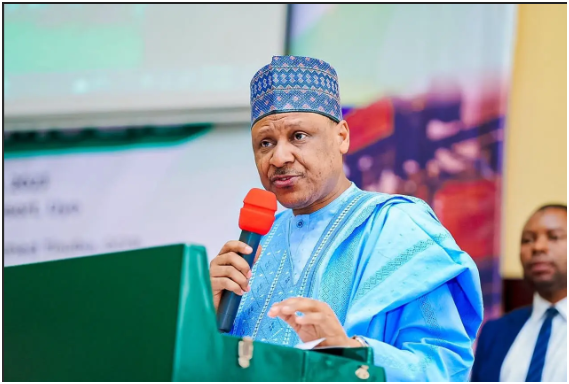
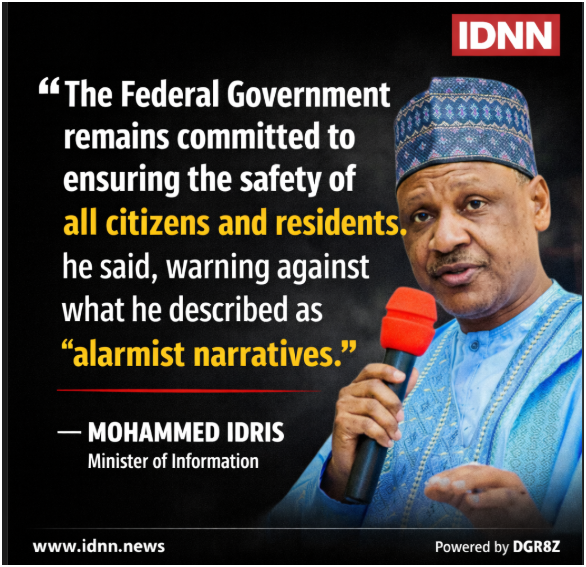
Nigeria’s Minister of Information and National Orientation, Mohammed Idris, rejected the warning, describing it as exaggerated and capable of creating unnecessary alarm.
He maintained that security agencies remain fully in control and warned against what he termed “alarmist narratives” that could distort public perception.
“The Federal Government remains committed to ensuring the safety of all citizens and residents,” he said, urging Nigerians to continue their daily activities without fear.
🧭 Two Narratives, One Question
The divergence between Washington’s caution and Abuja’s reassurance has placed Nigerians at the centre of a critical question:
👉 Who should they believe?
On one side, a global intelligence power is signalling risk.
On the other, national authorities are projecting control and stability.
The gap between these positions has intensified uncertainty around the true state of security.
🔍 What Did the US Actually See?
While U.S. officials did not disclose specific intelligence, security advisories of this nature are rarely issued without underlying indicators.
Experts note that such warnings may be triggered by:
- Intercepted communications
- Suspicious movement patterns
- Elevated threat chatter among extremist groups
The absence of detailed disclosure, however, leaves room for interpretation—and doubt.
⚖️ Between Intelligence Caution and Political Reassurance
Security analysts argue that the contrast reflects two different operational logics.
Foreign advisories tend to adopt a precaution-first approach, prioritising worst-case scenarios to protect citizens abroad.
Governments, by contrast, often balance security messaging with the need to prevent panic, maintain economic confidence, and project authority.
This creates an inherent tension between external intelligence caution and internal political reassurance.
🔥 Timing Raises Further Questions
The advisory comes amid renewed security concerns following recent incidents in parts of the country, including insurgent activity in the North-East.
Observers say this timing suggests that the warning may be linked to broader threat patterns rather than isolated intelligence.
Why This Matters Now
The clash between the US advisory and FG response highlights deeper structural tensions:
- Information Asymmetry: Different access to intelligence inputs
- Narrative Control: Competing efforts to shape public perception
- Trust Gap: Growing difficulty in reconciling conflicting official signals
Together, these dynamics point to a more complex security communication environment.
🚨 What Comes Next
For Nigerians, the immediate challenge is navigating between caution and reassurance in an environment of incomplete information.
While no specific incident has been confirmed, the divergence in messaging raises important questions about preparedness, perception, and trust.
With two powerful voices offering sharply different assessments, Nigerians are left confronting a blurred line between risk and reassurance—one that may define public confidence in the days ahead.
🟥 This is IDNN. Independent. Digital. Uncompromising.
