
UEFA is reported to have opted against introducing automatic red cards for players who cover their mouths while speaking to opponents in its competitions.
The decision means the rule is not expected to apply in the Champions League, Europa League or Conference League next season, despite football lawmakers allowing competition organisers to adopt it.
The International Football Association Board approved the measure in April, stating that any player who covers his mouth in a confrontational situation with an opponent may be shown a red card at the discretion of the competition organiser.
That wording is important. The rule is not compulsory across football. It gives each competition organiser the power to decide whether to use it.
UEFA Chooses Referee Judgement
Current reports say UEFA will not make mouth-covering an automatic red-card offence in its European competitions. Instead, referees are expected to judge incidents on their own merits.
That does not mean players can hide communication without consequence.
A player could still face action if the gesture is judged to be unsporting, abusive, discriminatory or connected to misconduct. Reports also say disciplinary proceedings may still follow where evidence supports a case.
The safer distinction is this: UEFA is not removing punishment. It is rejecting automatic dismissal.
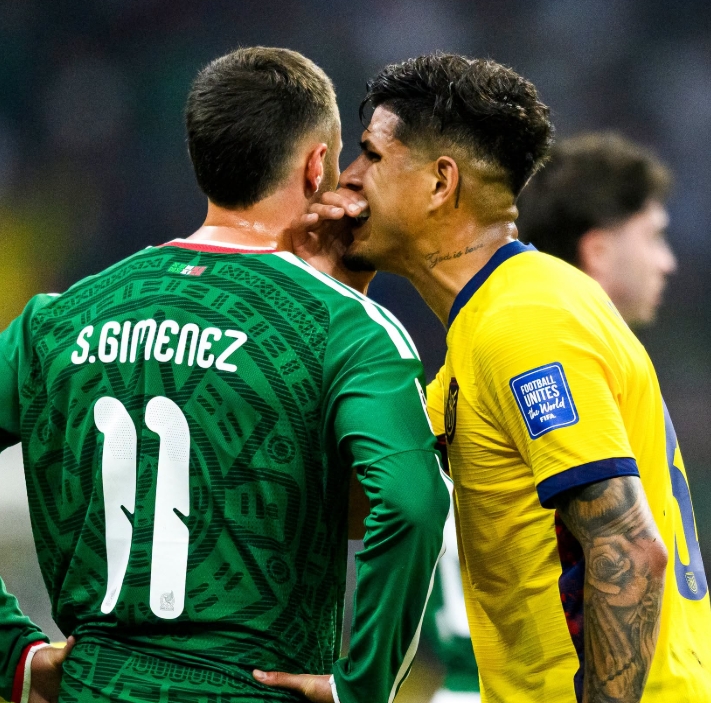
World Cup Rule Fuels Debate
The issue became a major talking point after FIFA applied the optional IFAB-approved measure at the 2026 World Cup.
The rule was designed to deter players from concealing abusive, offensive or discriminatory language during confrontations. FIFA has also said the measure would apply in its competitions, including the World Cup.
The strongest confirmed example so far is Paraguay’s Miguel Almiron, who became the first player sent off under the rule after covering his mouth during an altercation against Turkey.
Other reported World Cup incidents have added to the debate, but the wider argument is now bigger than one dismissal.
Supporters believe the rule gives football a stronger deterrent against hidden abuse. Critics argue that automatic red cards risk punishing players before anyone has clearly established what was said.
That is the line UEFA appears unwilling to cross.
Abuse Cases Still Remain Serious
The mouth-cover debate gained force after recent disciplinary cases raised concerns about players hiding abusive language from cameras and officials.
But UEFA’s reported approach keeps the burden on referees, investigators and disciplinary bodies rather than treating the gesture alone as enough for an automatic sending-off.
That matters because abuse and discrimination still require serious punishment when proven. At the same time, football authorities must avoid creating a rule that can be exploited by opponents during heated confrontations.
For European competitions, the message is now clearer: covering the mouth may still bring scrutiny, but it will not automatically mean a red card.
UEFA’s challenge will be enforcing that balance without weakening the fight against discriminatory conduct.
