
Mercy in a Fractured Republic
When President Bola Ahmed Tinubu approved a sweeping list of 174 pardons under the Presidential Prerogative of Mercy, Nigeria’s moral fault lines cracked open once more.
The list — featuring posthumous clemency for nationalist Sir Herbert Macaulay, environmental martyr Ken Saro-Wiwa, and former general Mamman Vatsa — read like a historical reconciliation act. But it also carried a live wire: Maryam Sanda, convicted for murdering her husband in 2020.
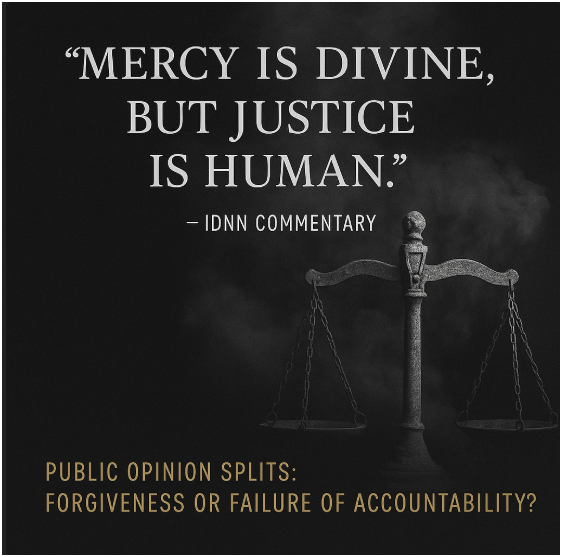
Within hours, hashtags exploded, advocacy groups divided, and the air grew thick with one question — is mercy justice or betrayal?
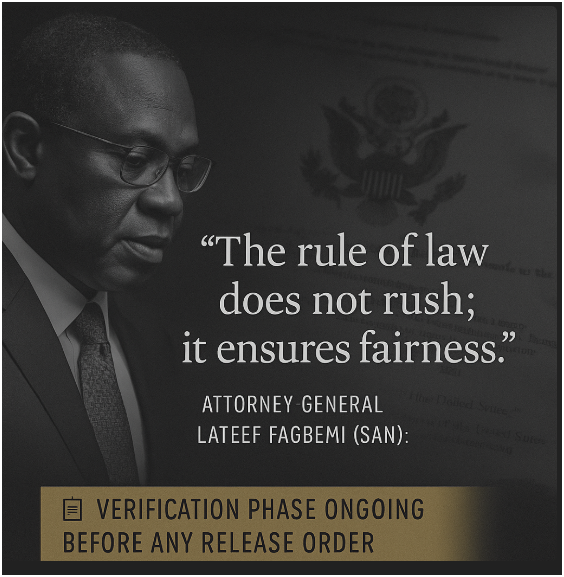
Attorney-General Lateef Fagbemi (SAN) soon stepped in to calm the storm, clarifying that “no inmate has been released yet.”
The Council of State’s approval, he explained, must first pass through rigorous legal verification before any release instrument reaches the Nigerian Correctional Service.
“The rule of law does not rush; it ensures fairness,” Fagbemi said — a quote now defining the administration’s cautious approach.
The Moral Equation
The clemency list re-opened Nigeria’s deepest moral wounds.
To some, Tinubu’s gesture humanised power; to others, it trivialised pain. Rights advocates praised the symbolic rehabilitation of long-dead patriots like Saro-Wiwa as an overdue act of justice.
But the inclusion of living convicts — especially those linked to violent crimes — outraged victims’ families who viewed mercy as political theatre.
Philosophers call this the paradox of forgiveness: a nation desperate for healing often risks reopening the very scars it tries to close.
Nigeria’s religious and cultural foundation celebrates forgiveness, but its justice system still bleeds from weak accountability. Tinubu’s move straddles both worlds — compassion and caution — and the line between them is razor-thin.
Rule of Law vs. Rule of Emotion
Under Section 175 of the 1999 Constitution, the President may grant pardon, commute sentences, or remit penalties — but only “after consultation with the Council of State.”
Legally, the President’s discretion is broad, yet every signature echoes across the judiciary.
Fagbemi’s insistence on due process was not merely bureaucratic. It was a signal — that mercy, to endure, must be lawful.
Constitutional lawyer Dr. Chijioke Madu explains,
“Presidential pardon is a tool of justice, not politics. When misused, it erodes deterrence; when properly applied, it restores faith in reform.”
By slowing the release, the Ministry of Justice may have prevented what analysts feared most — an immediate backlash that could delegitimise the clemency power itself.
Political Optics and Power Calculus
Why now?
Analysts say Tinubu’s decision landed at a sensitive political moment. With economic strain biting and partisan defections reshaping Nigeria’s political landscape, mercy serves as both moral outreach and political calibration.
Granting clemency to historical icons reclaims the moral high ground; extending it to modern convicts risks appearing populist.
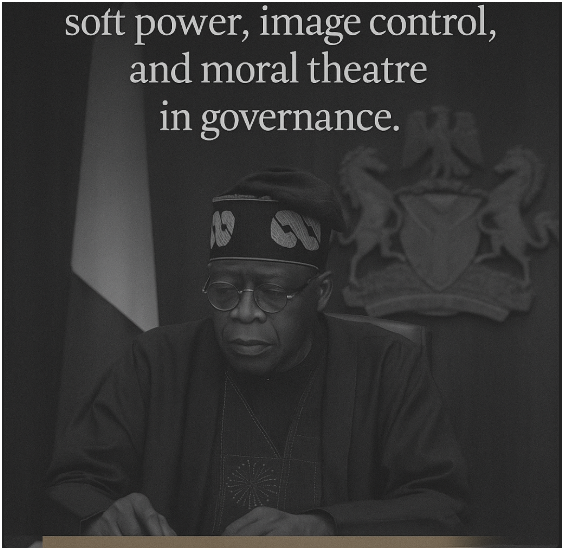
Opposition voices accused the government of “testing moral boundaries,” arguing that selective forgiveness undermines equal justice.
Yet insiders see a larger calculus — a president branding himself as the reconciler-in-chief of Nigeria’s divided conscience.
“Mercy is the soft power of leadership,” one senior policy aide told IDNN. “It projects control without confrontation — that’s the point.”
Social and Economic Undercurrents
Beyond morality, the clemency process touches Nigeria’s governance image.
International partners and investors track the nation’s commitment to due process as closely as they monitor fiscal reform. A transparent mercy process signals legal maturity — a key criterion for multilateral confidence.
The opposite — opaque amnesties or political favors — can trigger reputational and financial costs.
Transparency in justice is not charity; it’s currency. And in an economy seeking stability, credibility remains the most traded commodity.
Voices from the Margins
At the Kuje Correctional Centre, whispers ripple through the cells — who made the list, who didn’t. Some inmates pray harder; others wait in quiet disbelief.
In Port Harcourt, activists in Saro-Wiwa’s hometown speak of symbolic closure.
And in Abuja, the family of a murder victim calls radio stations, asking why mercy must favour the convicted over the bereaved.
For prison reform advocate Kehinde Adeyemi, the debate transcends politics:
“If this process leads to better transparency in how clemency is granted, then even controversy has served justice.”
The Cost of Compassion
Every presidency faces a moral test.
For Tinubu, mercy is that test — a moment to prove that leadership can reconcile empathy with discipline.
If handled lawfully, the exercise could mark a turning point in Nigeria’s justice evolution. If rushed, it could deepen cynicism toward state power.
Ultimately, the question remains: Can a nation heal through mercy without weakening its moral spine?
The answer, like the process itself, must pass the test of time — and law
Human rights groups, donor agencies, and reform-oriented investors will read this as a governance signal. A transparent mercy review strengthens Nigeria’s rule-of-law profile, bolsters international trust, and defines how justice reform ties to national brand equity. The optics are moral — but the stakes are economic.
This is IDNN. Independent. Digital. Uncompromising.
