
Before the ballots move
When INEC warns transport unions, it is not about rhetoric — it is about timing.
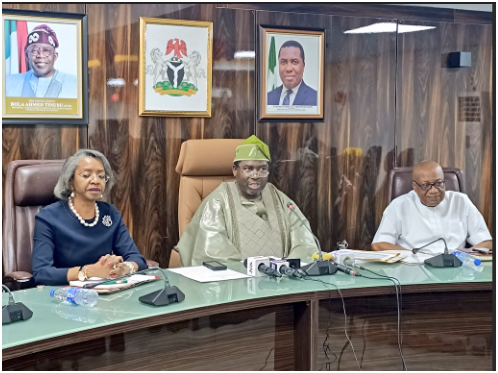
The Independent National Electoral Commission told transport operators responsible for election logistics in the Federal Capital Territory that delays would not be tolerated ahead of Saturday’s area council polls.
The commission described transport deployment as the backbone of electoral credibility.
Dawn departures or disruption
INEC Chairman Prof. Joash Amupitan said vehicles must leave Registration Area Centres as early as 6 a.m. to ensure voting materials arrive at polling units by 7 or 7:30 a.m., allowing voting to commence at 8:30 a.m.
“An election can only be as good as its logistics,” he said, stressing that only sound and serviceable vehicles that meet agreed Memorandum of Understanding specifications would be accepted.
The commission disclosed that about 1,132 vehicles have been engaged to service 2,822 polling units across the FCT’s area councils.
Past lapses haunt present warnings
INEC cited previous elections where unserviceable vehicles were deployed or failed to report for duty, forcing last-minute contingency measures.
Such breakdowns, officials warned, create ripple effects that undermine public confidence in the electoral process.
The commission urged transport unions to deploy internal disciplinary mechanisms to prevent diversion or mishandling of materials.
Why logistics decides legitimacy
Elections hinge not only on ballots cast, but on whether materials arrive intact and on time.
In tightly contested environments, even minor delays can fuel suspicion, litigation and post-election disputes.
Logistics therefore becomes more than movement — it becomes perception management.
The structure behind the tension
Nigeria’s electoral framework assigns INEC operational control of election materials, while relying on contracted transport unions for distribution.
This hybrid model blends state oversight with private-sector execution.
When coordination fails, accountability becomes layered — between electoral officers, transport managers and drivers on the ground.
The warning reflects that structural vulnerability.
If the wheels stall again
If vehicles fail to deploy as scheduled, polling unit openings could be delayed, feeding narratives of inefficiency or manipulation.
If the system runs smoothly, the focus may shift back to voter turnout and candidate performance.
In the FCT — described by INEC as the “heart of Nigeria” — logistics will quietly determine whether the election begins on time or begins under scrutiny.
This is IDNN. Independent. Digital. Uncompromising.
