
Military arraignments linked to national security matters are governed by a distinct legal and institutional framework aimed at balancing state stability with due process. Unlike civilian criminal trials, such proceedings are shaped by military law, internal regulations and constitutional safeguards.
When allegations involving threats to national security arise, the military typically conducts preliminary investigations through authorised internal mechanisms. These investigations assess whether the allegations meet the threshold for formal judicial action.
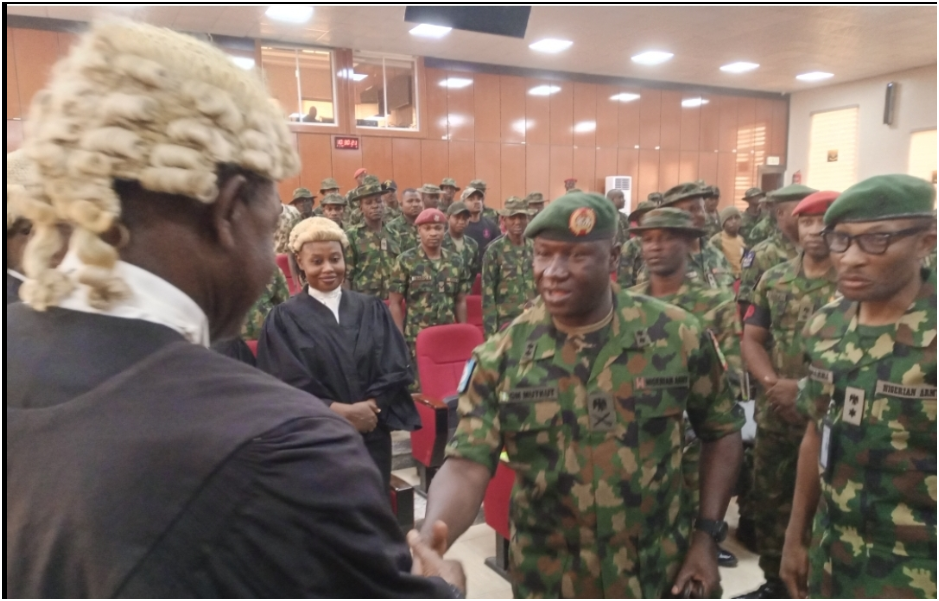
What arraignment actually means
In military justice, arraignment is the formal presentation of charges before a judicial body such as a court-martial. It does not amount to a declaration of guilt. Instead, it signals the transition from investigation to adjudication, where evidence is examined and the accused is granted full rights of defence.
Legal practitioners familiar with military law note that officers facing arraignment are entitled to legal representation, a fair hearing and the presumption of innocence, in line with constitutional provisions.
Why identities and details are often withheld
In national security-related cases, authorities frequently limit public disclosure of names, evidence or operational details. This restraint is intended to prevent interference with proceedings, protect sensitive security information and avoid prejudicing the judicial process.
Military regulations and judicial norms discourage parallel public debate once a matter is before a court or court-martial. Officials say this ensures that decisions are reached strictly on the basis of evidence and law, not public pressure.

Role of court-martial and judicial oversight
Court-martial panels are constituted in accordance with military law and are empowered to hear evidence, evaluate testimony and deliver verdicts. Their decisions may also be subject to review or appeal through established legal channels, depending on the nature of the case.
The process, authorities stress, is designed to reinforce discipline within the Armed Forces while maintaining adherence to constitutional order and civilian oversight.

08112935565, 08161558757
Why official updates are usually limited
In previous national security cases, official communication has typically focused on procedural milestones rather than substantive details. This approach, analysts say, reflects the sensitivity of such matters and the need to maintain public confidence without compromising security or judicial integrity.
Further disclosures are usually made only after judicial determination or at clearly defined stages of the process.
This is IDNN. Independent. Digital. Uncompromising.
