
Five Councils Secured, One Held
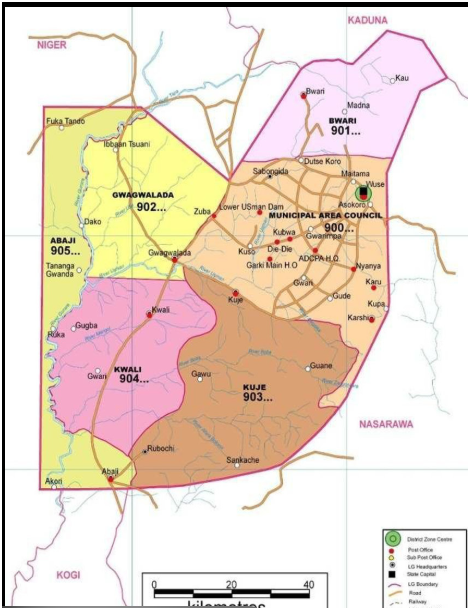
The FCT Area Council Elections 2026 concluded with the All Progressives Congress securing five of the six chairmanship seats across Abuja Municipal Area Council (AMAC), Bwari, Abaji, Kwali and Kuje, while the Peoples Democratic Party clinched Gwagwalada.
In AMAC, incumbent chairman Christopher Maikalangu polled 40,295 votes out of 62,861 valid votes cast. Gwagwalada produced the PDP’s lone victory, where Mohammed Kasim defeated the APC candidate with 22,165 votes.
Across the six councils, INEC recorded 239,210 votes cast out of 1,680,315 registered voters — approximately 15 per cent turnout.
Although largely peaceful, the result has been interpreted less as a local contest and more as an early political signal ahead of the 2027 general elections.
Turnout Data Sparks Democratic Debate
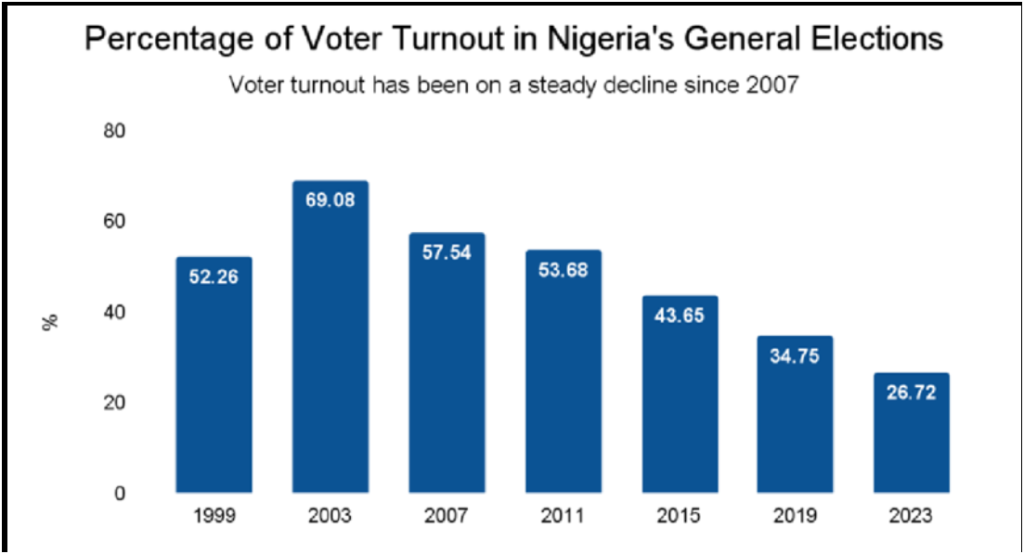
While INEC described the 15 per cent participation rate as an improvement on the 9.4 per cent recorded in 2022, opposition voices characterised the figure as alarming.
Former Vice President Atiku Abubakar described the turnout — particularly the 7.8 per cent recorded in AMAC — as evidence of a shrinking democratic space. According to him, declining participation reflects waning public confidence in electoral outcomes.
The PDP attributed voter apathy to provisions in the Electoral Act 2026, arguing that manual collation fallback provisions weaken public trust in electronic transmission assurances.
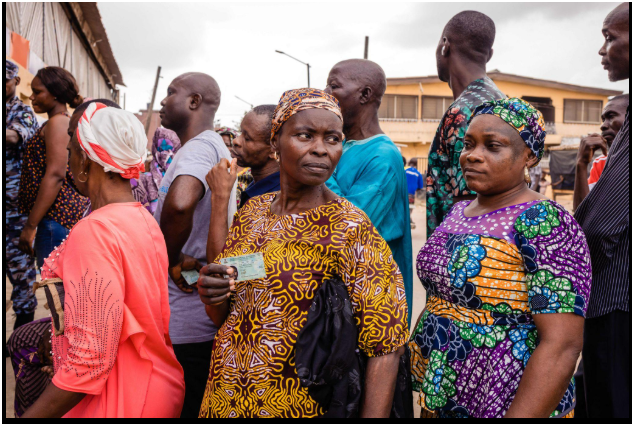
Civil society groups, including CISLAC and TMG, echoed concerns over vote buying, late deployment of materials and accessibility challenges in rural wards.
Electoral Act 2026 Under Intensifying Scrutiny
At the centre of the backlash is the Electoral Act 2026, signed into law days before the polls.
The legislation mandates electronic transmission of results but allows conditional manual transmission in the event of technological failure. Critics argue that the fallback clause risks undermining transparency.
The Catholic Bishops Conference of Nigeria called for mandatory real-time transmission from polling units to INEC’s Result Viewing Portal, warning that declining turnout signals eroding trust.
However, the National Assembly defended the reforms, citing new provisions establishing an election fund for INEC, stronger penalties for electoral offences and compulsory BVAS usage.
Law Enforcement Steps In
The Economic and Financial Crimes Commission arrested 20 suspects for alleged vote buying and selling across Abaji, Gwagwalada, Kuje and Kwali, recovering N17.2 million.
One suspect was apprehended with N13.5 million in a vehicle parked near a polling booth in Kwali. The commission confirmed that the suspects would face prosecution upon conclusion of investigations.
These arrests underscore persistent inducement concerns that continue to shadow Nigerian elections.

A Signal Beyond Local Councils
Though local in scope, the FCT Area Council Elections 2026 now carry national implications.
For the APC, party leaders described the outcome as an endorsement of President Bola Tinubu’s reform agenda and the Renewed Hope framework.
For opposition parties, the low turnout represents a warning sign — a possible foreshadowing of deeper disengagement if trust deficits remain unresolved before 2027.
The Road to 2027 Is Already Forming
With voter participation below one-fifth of registered voters in the nation’s capital, the political narrative is shifting from who won to why so few voted.
If participation trends continue downward, questions of legitimacy may intensify, regardless of who secures numerical victories.
The FCT polls have therefore become more than a council election; they are now a stress test for electoral credibility as Nigeria moves toward 2027.
This is IDNN. Independent. Digital. Uncompromising.
