
The law did not erase electronic transmission — it inserted conditional discretion.
President Bola Tinubu’s assent to the amended Act has reignited debate around transmission integrity. However, the statute does not abolish electronic upload. Instead, it codifies a fallback mechanism where electronic transmission fails due to network or technical limitations.
The operative shift is not abolition.
It is discretion.

What Remains Structurally Intact
Before examining risk, foundational continuity must be acknowledged:
- Voting remains manual.
- Counting remains manual at polling units.
- Form EC8A remains the primary result document.
- Party agents sign results physically.
- Copies are issued at polling units.
These pillars of on-site transparency remain unchanged from 2022.
Comparative Table: Electoral Act 2022 vs 2026
| Issue | 2022 Act | 2026 Amendment | Structural Effect |
|---|---|---|---|
| Voting Method | Manual | Manual | No change |
| Counting | Manual at polling unit | Manual at polling unit | No change |
| Primary Record | EC8A form | EC8A form | No change |
| Electronic Transmission | Recognised but operationally contested | Explicitly recognised | Clarified recognition |
| iReV Upload | Required but implementation disputed | Retained | Continues as audit layer |
| Manual Fallback | Implicit and undefined | Explicit where failure occurs | Codified discretion |
| Court Disqualification | Runner-up may be declared | Fresh election mandated | Reduces judicial substitution |
| Party Primaries | Delegate-heavy | Broader direct primaries allowed | Expands participation |
| Notice Period | 360 days | 300 days | Alters election timeline |
The vulnerability zone has not moved — it has narrowed to a trigger point.
Historically, election integrity risk has existed after results leave polling units. The amended law keeps counting at source. The risk node now concentrates on one question:
Who determines transmission failure?
If fallback activation lacks documentation standards, discretion widens.
If activation requires certification, time stamps, and public reporting, redundancy becomes resilience.
Implementation will define outcome.
Infrastructure Dispute: Data Versus Doubt
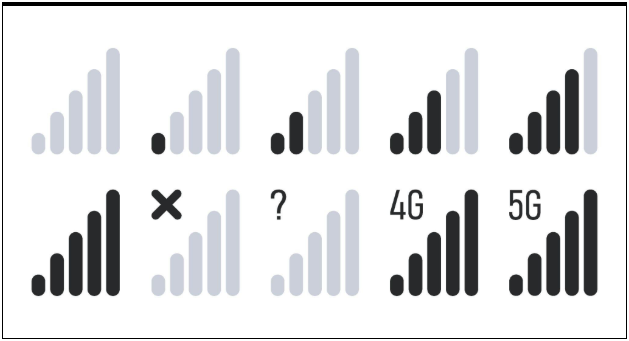
The presidency raised concerns about broadband capability. Telecommunications operators under ALTON countered that over 70% of Nigeria has 3G/4G coverage, with 5G expanding.
The Independent National Electoral Commission has previously maintained that delayed uploads transmit once connectivity is restored.
This divergence is technical, not ideological.
Transmission integrity must therefore be measured against verified NCC data, not generalised claims.
System Explanation: Where Manipulation Would Have To Occur
Under the amended Act, result manipulation would require:
- Triggering fallback without genuine transmission failure.
- Weak chain-of-custody enforcement during collation.
- Absence of post-failure upload verification.
- Failure of public comparison between EC8A copies and iReV records.
The law does not eliminate oversight mechanisms.
It concentrates scrutiny on fallback certification.
This is the system pivot.
2027 INTEGRITY METRICS TO TRACK
- % of polling units uploading electronically
- % invoking fallback
- Time lag between counting and upload
- Public audit access to iReV vs EC8A
- Sanctions for certification abuse
Democracy will not be tested at assent — it will be tested in regulation.
The statute alone does not determine transparency.
INEC’s implementing regulations will determine:
- Documentation standards for network failure.
- Time limits for upload once connectivity resumes.
- Public disclosure of fallback incidents.
- Mandatory audit comparisons.
- Sanctions for procedural breach.
Regulatory clarity will decide whether fallback is a shield or a gap.
2027 Implication Matrix
Before the 2027 elections, three measurable indicators will determine democratic confidence:
- Frequency of fallback activation.
- Percentage of polling units successfully uploading electronically.
- Public accessibility of upload comparison data.
If fallback becomes rare and documented, transparency strengthens.
If fallback becomes frequent and opaque, suspicion intensifies. Reform, Regression, or Hybrid?
Electoral Act 2026 explained in structural terms reveals neither collapse nor triumph.
It is a hybrid reform.
Electronic transmission remains embedded.
Manual fallback is codified under conditional triggers.
The democratic risk is not in the clause alone.
It sits in operational discretion, regulatory design, and enforcement architecture.
Nigeria’s electoral integrity in 2027 will not depend solely on what was signed.
It will depend on what is implemented, monitored, and publicly audited.
This is IDNN. Independent. Digital. Uncompromising.
