
Context — When the Cheese Finally Moved
The Dangote Petroleum Refinery has rolled out compressed natural gas (CNG)-powered trucks to move petrol across Nigeria at ₦850 per litre, a strategic pivot designed to cushion distribution costs as retail prices continue to surge. Checks by industry analysts revealed that despite the refinery’s direct supply, depot prices have spiked to as high as ₦900 per litre — an indication that Nigeria’s fragile downstream market remains in flux.
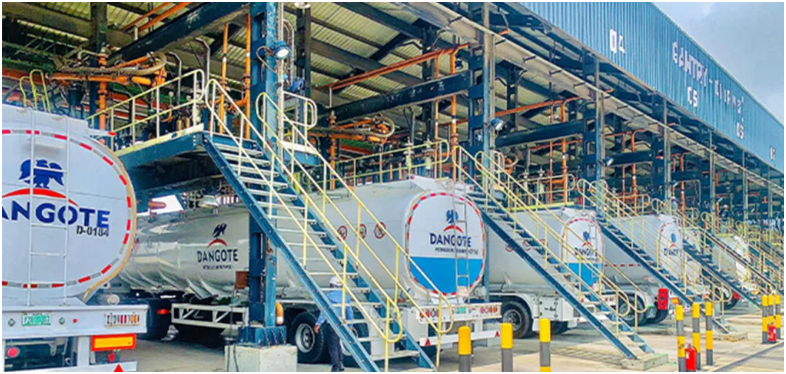
At key depots in Lagos and Calabar, fuel sold between ₦870 and ₦900, with Aiteo and Pinnacle pricing PMS at ₦890 and ₦870 respectively. In Calabar, Matrix Energy and Northwest Petroleum traded at ₦890 and ₦880, while Sobaz Depot hit ₦900 — the highest mark so far this month.
Retail stations in Lagos and Abuja now dispense between ₦900 and ₦955 per litre, marking a 6.8 per cent rise in one week. Even independent outlets, once expected to undercut majors, have adjusted prices upwards by ₦50–₦70 per litre.
Motorists say they feel trapped in an economic paradox — rising hope and rising costs, both delivered by the same refinery.
“They said Dangote supply would bring relief. Now it’s even higher,” complained John Ogaba, a driver at Karu. “We don’t understand what’s going on anymore.”
Monopoly Myths and Market Shock

The latest price surge has reignited the debate over market liberalisation and Dangote’s growing influence in Nigeria’s energy matrix.
Although the refinery’s direct distribution model — using CNG-powered trucks — was meant to reduce logistics costs, the persistent hike suggests structural price pressures far beyond transport efficiency.
Energy economist Olatide Jeremiah told IDNN that “as long as depot owners still depend on imported supply and exchange volatility remains high, the refinery’s domestic edge will be limited.”
In short, the refinery may be moving clean fuel — but it’s driving through a dirty market.
The ripple reaches deep: marketers fear that continued volatility could deter smaller players from sustaining supply, accelerating consolidation in the hands of a few. For consumers, this means fewer options and rising price uniformity.
Impact Snapshots
- Consumers: Petrol now sells at ₦955 in several cities — effectively raising transport and food costs nationwide.
- Marketers: Struggling to adjust to NNPC Limited’s new depot price of ₦900 per litre, up from ₦850 last week.
- Dangote Refinery: Ramping up domestic logistics with over 650,000 barrels-per-day capacity but still facing market resistance from entrenched import cartels.
- Government: Caught between applauding Dangote’s private sector innovation and defending its deregulation policy amid inflationary backlash.
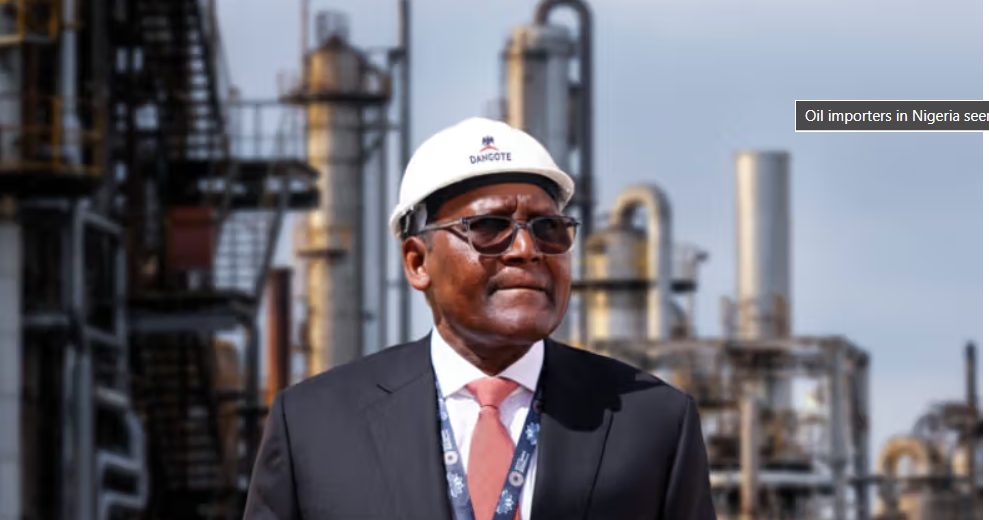
“The narrative that Dangote is a monopoly must die,” the billionaire said through his strategist Aliyu Suleiman earlier this week. “We chose to build here, employ here, and produce here. No one is prevented from investing.”
When Supply Becomes Strategy
Dangote’s CNG rollout is more than logistics — it’s positioning.
By controlling fuel movement through cleaner, cost-efficient trucks, the refinery reduces exposure to diesel inflation while showcasing Nigeria’s gas potential.
But in the commercial ecosystem, perception matters: accusations of monopoly could spook future investors, while sustained transparency could transform the refinery into Africa’s benchmark for energy self-sufficiency.
The ongoing price tension, meanwhile, serves as a real-time stress test of Nigeria’s deregulation reforms — where private dominance meets public expectation
This is IDNN. Independent. Digital. Uncompromising.
