
A Gesture That Disarms — And Deflects
On the surface, Senate President Godswill Akpabio’s decision to withdraw all defamation lawsuits after a church sermon reads as an act of personal reflection and moral renewal. In Nigeria’s highly polarised political environment, such gestures are rare — and that rarity is precisely why the move deserves closer scrutiny.
Critics argue that the timing and framing of the decision matter as much as the decision itself. By anchoring the withdrawal to a religious moment, Akpabio wrapped a legal and political calculation in moral language—one that is difficult to interrogate publicly in a deeply religious society.
In politics, optics are power.
The Optics Are Powerful — Perhaps Too Powerful
By framing the withdrawal as a response to a sermon, Akpabio places the decision in a moral and spiritual context that discourages pushback. Questioning it risks appearing cynical, anti-faith, or insensitive — a powerful shield in a deeply religious society.
“I had almost nine cases in court… but I listened to the priest and realised he was talking to me,” Akpabio told the congregation.
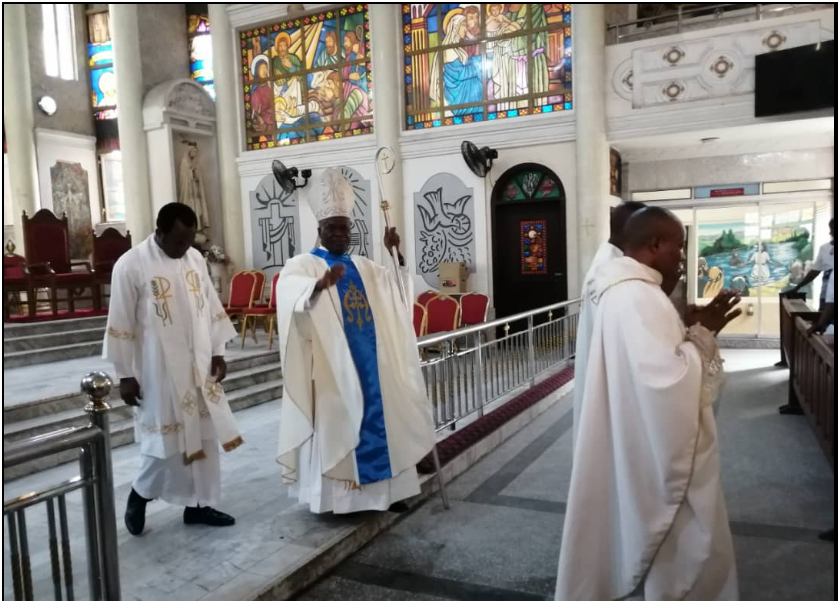
Akpabio made the announcement during a New Year Mass at Sacred Heart Parish, recounting how the priest’s message on forgiveness prompted immediate action
To supporters, it was humility.
To critics, it was narrative control.
Legal Retreat, Political Advance
With multiple defamation suits ongoing, the withdrawals also remove sustained legal and media exposure that had become uncomfortable for the office of the Senate President. Courtrooms keep controversies alive; withdrawals close chapters quietly.
From a critical standpoint, the move:
- Ends scrutiny without addressing substance of the disputes
- Avoids judicial clarification on contested claims
- Resets public perception without conceding wrongdoing
In short, critics see reconciliation optics without accountability.Court cases prolong controversy. Withdrawals silence it.
Among those affected by the decision is Natasha Akpoti, one of the figures named in the disputes. The withdrawal closes the cases—but leaves the underlying issues unresolved.
For critics, this is not reconciliation. It is exit without verdict.
Is This a Pattern or a Pause?
Sceptics also ask whether this marks a genuine shift in Akpabio’s political style or merely a tactical pause at the start of a new year. Nigeria’s political memory is long, and critics will be watching whether future disagreements are handled with dialogue — or with lawyers.
Forgiveness After Pressure
Another layer of scepticism centres on power imbalance.
Akpabio is not a private citizen. He is the most powerful legislator in Nigeria. Critics argue that the very act of filing multiple defamation suits already exerted pressure and signalled consequences.
Withdrawing them later—especially under the banner of forgiveness—does not erase the chilling effect.
In this reading, mercy arrives after authority has been asserted, not before restraint was exercised.
Resetting the Year, Resetting the Image
Politically, the timing is elegant.
The New Year offers symbolism. The church offers moral insulation. The withdrawal offers closure. Together, they allow Akpabio to project magnanimity while turning the page on a contentious chapter.
Supporters see leadership.
Critics see Machiavellian efficiency.
The question now is whether this marks a genuine change in how power is exercised—or merely a tactical pause before the next confrontation.
Why This Moment Matters
This is not just about lawsuits. It is about precedent.
If powerful public officials can:
- Deploy litigation as a political tool,
- Shape narratives through legal pressure, and
- Withdraw cases without judicial resolution,
then accountability risks being replaced by optics-driven absolution.
The courts may be closed.
The implications are not.
This is IDNN. Independent. Digital. Uncompromising.
