
High Petrol Prices Keep South-East Transport Costs Elevated Despite Relief Measures
SOUTH-EAST — Commuters across parts of Nigeria’s South-East are still paying high transport fares as petrol prices remain elevated, limiting the relief expected from federal efforts to reduce transport costs.
Current reporting from Anambra, Abia and Imo shows petrol remaining above ₦1,300 per litre in many locations, while drivers and commuters say fares have either risen or failed to fall materially.
The pressure comes despite two separate interventions: the Federal Government’s push to reduce transport costs through wider deployment of CNG and electric vehicles, and an NNPC petrol discount available to qualifying purchases through the NNPC Fuel App at participating NNPC retail outlets.
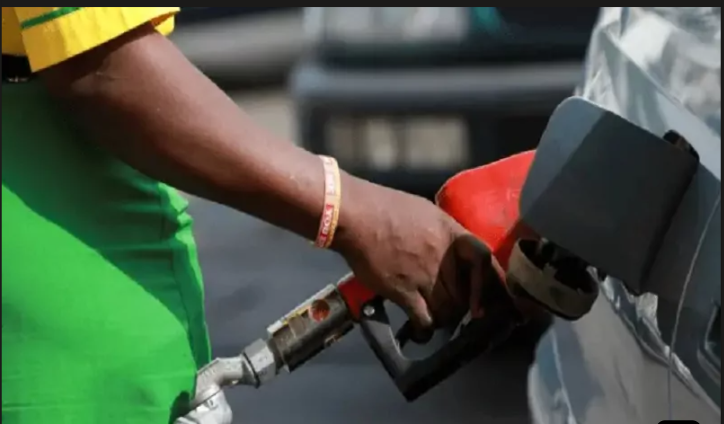
Petrol remains expensive across parts of the region
In Anambra State, petrol was reported at about ₦1,450 to ₦1,500 per litre in Onitsha, Nnewi, Ekwulobia and parts of Awka.
Current reporting also placed prices at about ₦1,370 to ₦1,400 in Abia and roughly ₦1,350 to ₦1,400 in parts of Imo.
Those figures are location-specific observations, not a single South-East petrol price.
In Anambra, drivers interviewed by PUNCH attributed higher fares to fuel prices and other operating costs.
Some intra-city fares previously reported around ₦200 had moved to roughly ₦300–₦400, while some ₦500 journeys were being charged at about ₦800–₦1,000.
On the Onitsha–Awka route, some commuters reported paying about ₦2,000, compared with earlier fares of roughly ₦1,000–₦1,500.
These are route-specific examples and should not be treated as a uniform regional fare.
CNG programme promised transport relief
President Bola Tinubu said in September that more Nigerians should begin seeing measurable reductions in transportation costs from October 1 through the National Affordable CNG Transit Programme.
The initiative is being implemented with state governments and other partners through CNG and electric public transport, conversion of commercial vehicles and development of supporting infrastructure.
The objective is to translate lower-energy transport into lower fares for commuters.
But the programme is distinct from NNPC’s petrol-price intervention.
NNPC discount is a separate measure
NNPC has separately offered a petrol discount tied to digital purchases through its Fuel App at participating retail outlets.
The reported discount is ₦66 per litre for qualifying transactions and was extended through October 31.
It is therefore not an across-the-board reduction automatically available to every customer at every filling station.
The distinction matters.
The CNG programme is designed to reduce transport costs structurally through cheaper vehicle energy and public-transport deployment.
The NNPC measure temporarily reduces petrol prices for qualifying purchases through a specific retail mechanism.
They are not the same programme.
Commuters say relief remains limited
Earlier October reporting from Enugu showed that many commuters had not yet seen substantial fare reductions after the October 1 target date.
Reported examples included about ₦5,000 by bus from Enugu to Umuahia, ₦6,000 to Owerri and ₦4,500 to Onitsha at the time of that reporting.
Those figures are snapshots from specific routes and dates, not current regional averages.
Together with the newer petrol-price reporting from Anambra, Abia and Imo, they show that the impact of transport-cost interventions remains uneven.
The pressure reaches households and businesses
Transport costs affect more than daily commuters.
Workers and students face higher travel expenses.
Traders pay more to move goods between commercial centres such as Onitsha, Aba, Owerri, Enugu and Awka.
Small businesses also face higher logistics costs when fuel and commercial transport prices rise.
Traders and service providers quoted in current reporting have linked some of their higher operating costs to fuel and transportation pressure.
That does not establish petrol as the sole cause of broader price increases.
It does show how businesses and households describe the burden they are carrying.
The accountability test is what commuters actually pay
The public-policy test is increasingly measurable.
The Federal Government has said cheaper-energy transport should produce lower fares.
NNPC has also offered a limited petrol discount.
But current evidence from parts of the South-East shows that many commuters continue to pay high transport fares while petrol remains expensive.
That does not establish that relief measures have failed everywhere.
It does show that their impact remains uneven and difficult to see on some routes.
For commuters, the practical question is straightforward:
Are the prices paid at filling stations and motor parks actually falling?
In several South-East locations reviewed by IDNN, the answer remains mixed.
WHAT TO WATCH
- Petrol prices in Anambra, Abia, Imo, Enugu and Ebonyi
- Expansion of CNG and electric public transport
- Accessibility of NNPC Fuel App discounts
- Verified route-by-route fare movements
- State-government and transport-union responses
- Effects on food distribution and small-business logistics
