
🟥 AGF Backs Court Case Targeting Political Parties
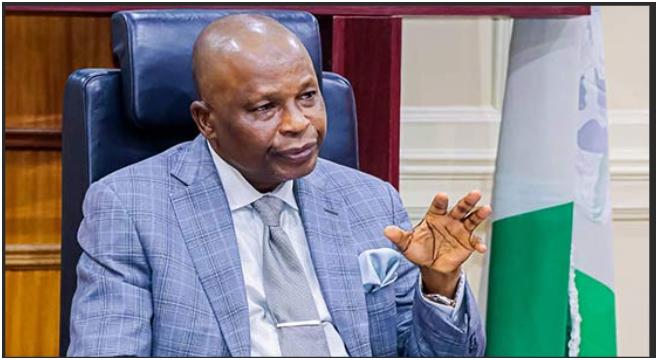
Nigeria’s Attorney General, Lateef Fagbemi, has backed a Federal High Court case seeking the deregistration of several political parties, escalating a constitutional dispute over the powers of the Independent National Electoral Commission (INEC).
Court filings in suit number FHC/ABJ/CS/2637/2026 show that the Attorney General is supporting legal action challenging INEC’s continued recognition of certain parties, including the African Democratic Congress, Action Alliance, Action Peoples Party, Accord, and Zenith Labour Party.
The plaintiffs argue that the affected parties failed to meet performance benchmarks during the 2023 general elections, yet remain on the electoral register in violation of constitutional provisions.
🟨 Constitutional Enforcement or System Reset?
At the centre of the AGF deregistration political parties case is a defining legal question: whether INEC is constitutionally obligated to remove parties that fail to meet statutory thresholds.
In its filing, the Attorney General asserted that his office is “the custodian and protector of the Constitution” and must support actions that enforce compliance.
“It is the constitutional responsibility of the Attorney General of the Federation to bring, defend or support any action for the observance of the provisions of the Constitution,” the filing stated.
The case hinges on Section 225A of the Constitution, which sets minimum electoral performance standards for political parties participating in Nigeria’s democratic system.
🔴 INEC’s Powers Under Direct Challenge
The Attorney General’s position sharply narrows INEC’s room for discretion, arguing that the electoral body has “no residual discretion” to retain political parties that fail to meet constitutional thresholds.
According to the filing, maintaining such parties on the register inflates ballot papers, burdens public finances, and complicates election administration.
“The continued existence of nonperforming political parties will inflate the ballots, burden public funds, complicate election administration,” the notice stated.
This framing places INEC at the centre of a constitutional test that could redefine the limits of its regulatory authority.

08112935565, 08161558757
🟨 Legal Battle Rooted in Electoral Performance
The suit was initiated by the Incorporated Trustees of the National Forum of Former Legislators, who argue that several political parties failed to satisfy constitutional requirements, including securing significant vote share or winning elective offices.
They maintain that allowing such parties to remain registered is unlawful and undermines the integrity of Nigeria’s electoral framework.
The Attorney General aligns with this position, arguing that failure by INEC to deregister non-compliant parties amounts to a continuing breach of constitutional duty.
🔴 Political Space Debate Intensifies
The move is already sharpening divisions across Nigeria’s political space, raising questions about whether the action represents strict constitutional enforcement or a shift that could narrow political competition.
Supporters argue that reducing the number of inactive or underperforming parties will streamline elections, improve governance efficiency, and strengthen institutional credibility.
Critics, however, warn that aggressive deregistration could reduce political diversity and weaken opposition participation, particularly ahead of the 2027 election cycle.
🟨 A Test of Democratic Structure
This case goes beyond deregistration.
It tests how Nigeria defines political participation, balances electoral efficiency with inclusivity, and interprets the constitutional limits of INEC’s authority.
By backing the suit, the Attorney General has elevated what began as a legal challenge into a broader structural question about the future of Nigeria’s multi-party system.
🔴 A Precedent With National Impact
A ruling in favour of the suit could trigger a major reduction in the number of registered political parties, forcing INEC to enforce stricter compliance with constitutional thresholds.
Conversely, a decision against the case would reinforce INEC’s discretion and preserve Nigeria’s current multi-party structure.
Either outcome is expected to reshape the electoral landscape, with significant implications for party participation, governance, and democratic competition ahead of future elections.
This is IDNN. Independent. Digital. Uncompromising.
