
Team Nigeria’s World Relays campaign has moved from planning to pressure after the country’s athletics delegation arrived in Gaborone for the 2026 World Athletics Relays.
The Nigerian squad travelled from Lagos to Botswana for the event scheduled for May 2 and 3, with qualification places for major global championships now at stake. What began as a demanding journey has become a serious test of Nigeria’s relay depth, squad discipline and technical readiness.
The trip already asked its first question
The delegation left Nigeria in the early hours of Monday on an Ethiopian Airlines route that included a long stopover in Addis Ababa before the final leg into Botswana.
The travel schedule was not light. According to the team details, the journey involved more than 12 hours in the air, a 19-hour-and-30-minute layover in Ethiopia, and a stop in Victoria Falls, Zimbabwe, before Gaborone.
Relay events are not forgiving. Fatigue, poor adjustment and disrupted rhythm can affect baton exchange sessions, warm-up quality and early competition sharpness. Nigeria must now turn travel stress into competitive focus.
Why Team Nigeria World Relays timing matters
The World Athletics Relays in Gaborone is not just another international outing.
World Athletics has confirmed the competition will run on Saturday, May 2 and Sunday, May 3, 2026. It also brings together a deep field, with 723 athletes from 40 nations entered for the championship.
For Nigeria, the stakes are direct. The event serves as a qualification pathway for the 2027 World Athletics Championships in Beijing and the World Athletics Ultimate Championship.
That means every baton change now carries more than national pride. It carries qualification value.
The system will punish loose details
Relay success is not built only on speed. It depends on selection balance, baton chemistry, lane discipline, changeover timing and trust between runners. A country can have fast sprinters and still lose races through poor exchange zones or weak team rhythm.
That is why this Nigerian campaign is a test for the Athletics Federation of Nigeria.
The AFN has pushed Nigeria into all six relay events after initial qualification in three disciplines. That gives the country wider opportunity, but it also increases the demand on coaching, athlete recovery and technical planning.
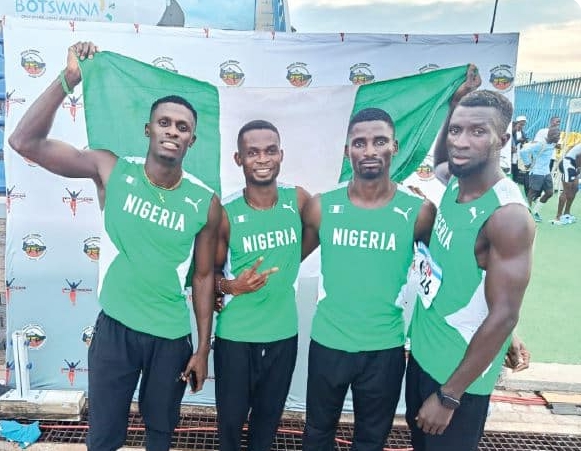
Nigeria will compete in the men’s and women’s 4x100m, men’s and women’s 4x400m, and the mixed relay events.

Ashe’s return changes the sprint picture
Nigeria received a major boost before departure with Favour Ashe joining the Lagos camp.
Ashe, who has a personal best of 9.94 seconds in the 100 metres, had been at the centre of uncertainty following reports linking him with a possible switch of allegiance to Qatar. PUNCH earlier reported that World Athletics had confirmed no formal application had been submitted by Ashe or any other Nigerian athlete.
His inclusion strengthens Nigeria’s men’s 4x100m pool, where he has been listed alongside Enoch Adegoke, James Emmanuel, Chidera Ezeakor and Tejiri Godwin.
That gives Nigeria speed. The question now is whether the team can convert that speed into a clean relay race.
The women’s group carries its own burden
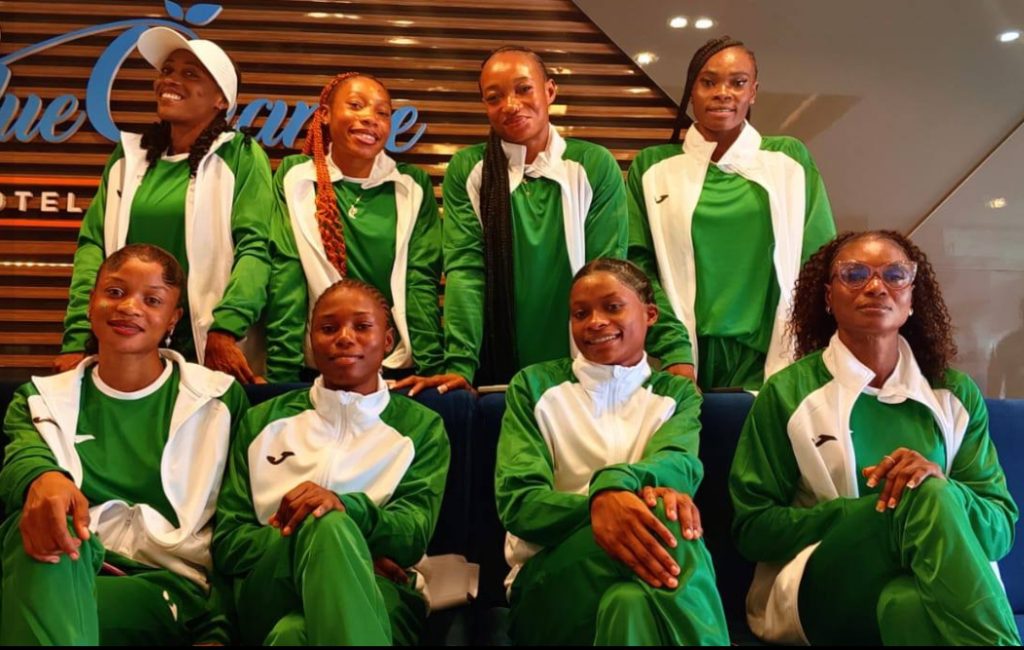
Team captain Patience Okon-George leads the women’s contingent, with Nigeria also expecting key athletes to connect from different bases.
Chidi Okezie is due to link up from Pretoria after competing in South Africa, while Blessing Ogundiran and Rosemary Chukwuma are expected from the United States.
Nigeria’s relay program is no longer built from one camp alone. It depends on athletes arriving from different competition environments and becoming one unit quickly.
That can work if the technical sessions are sharp. It can fail if timing is left too late.
Gaborone will reveal more than form
Nigeria’s aim in Gaborone is not only to appear on the track. It is to secure qualification, measure the strength of its relay pool and prove that recent athletics momentum can survive under pressure.
The country has the speed to compete. It has the names to attract attention. It has the event access across all six relays.
Now it needs execution.
If the batons move cleanly, Gaborone can become a platform for Nigeria’s next global athletics push. If they do not, the result will expose the same problem that has hurt Nigerian relay teams before: talent without technical control.
This is IDNN. Independent. Digital. Uncompromising.
