
🟥 Minister Cites 5,000MW Output — But Supply Remains Unstable
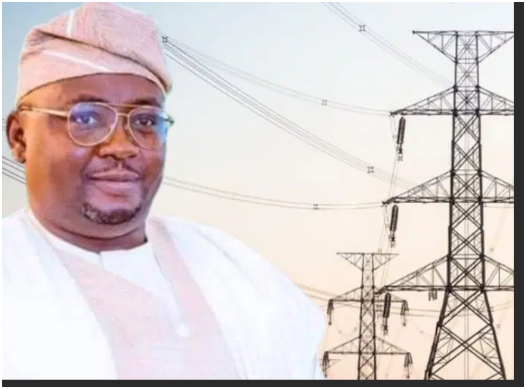
Nigeria’s Minister of Power, Adebayo Adelabu, has said electricity generation has improved to around 5,000 megawatts (MW), describing the increase as progress in the sector.
“We have seen improvements in generation… output is now around 5,000MW,” Adelabu said in a recent briefing.
However, despite the reported increase, consumers across multiple states continue to experience prolonged outages and unstable supply.
🟨 Power Is Up — So Why Are Nigerians Still in the Dark?
The Adelabu power generation claims have triggered renewed scrutiny over the disconnect between electricity produced and electricity delivered.
Households and businesses in cities including Lagos, Abuja, and Port Harcourt report erratic supply, with some areas experiencing daily outages lasting several hours.
The contrast has sharpened public frustration, as improved generation figures fail to translate into consistent power availability.

🟥 Where the System Breaks — Transmission and Distribution Bottlenecks
Industry analysts say the problem lies beyond generation.
Electricity produced at power plants must pass through the Transmission Company of Nigeria before reaching consumers via Distribution Companies (DisCos).
Limitations within transmission infrastructure and inefficiencies in distribution networks often result in:
- load rejection
- grid instability
- reduced supply to end-users
🟨 Policy Push Meets Structural Reality
The government has introduced reforms aimed at stabilising generation and improving grid performance, but experts warn that gains remain uneven.
Without significant upgrades in transmission capacity and distribution efficiency, increased generation may continue to have limited impact on actual electricity supply.
🧠 Why This Gap Persists
Nigeria’s power crisis is not just about generation—it is a transmission and distribution failure, where electricity produced does not consistently reach consumers.
Even when output rises, bottlenecks across the value chain can reduce effective supply, creating a mismatch between official data and lived experience.
Progress Meets Public Frustration
Until electricity generated consistently reaches homes and businesses, claims of improvement may continue to clash with the daily reality of outages across the country.
For millions of Nigerians, the question remains unchanged: not how much power is generated—but how much actually gets delivered.
This is IDNN. Independent. Digital. Uncompromising.
