
🟥 FG Announces Tariff Cut and Excise Hike — Policy Reset Takes Shape
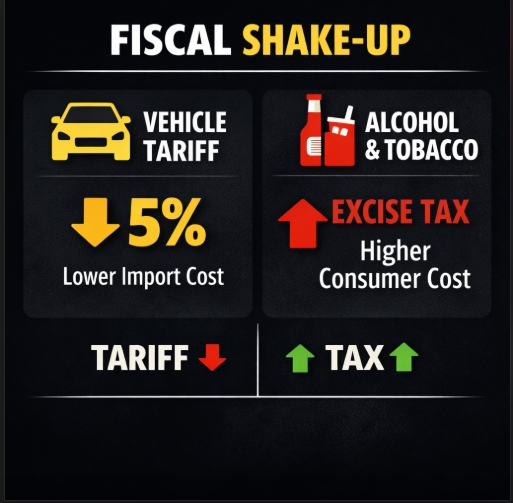
The Federal Government has reduced import tariffs on vehicles to approximately 5%, while increasing excise duties on alcoholic beverages and tobacco products, according to recent fiscal policy updates from the Ministry of Finance.
The move forms part of a broader strategy to rebalance revenue sources while easing cost pressures in key sectors of the economy.
🟨 Wale Edun Signals Policy Intent — Revenue and Behaviour Both Targeted
At the centre of the fiscal shift is Wale Edun, who has been leading efforts to strengthen non-oil revenue and align taxation with economic and public health objectives.
Speaking on the policy direction, Edun stated:
“This adjustment is designed to improve revenue efficiency while encouraging more responsible consumption patterns.”
Officials say the reforms are part of a wider fiscal consolidation plan aimed at reducing reliance on oil revenue.
🟥 What the Numbers Mean — Relief for Vehicles, Pressure on Consumption
Under the new framework:
- Vehicle import tariffs reduced to ~5%
- Excise duties on alcohol increased (rate adjusted upward across categories)
- Tobacco products face higher tax burdens
The reduction in vehicle tariffs is expected to:
- lower import costs
- improve access to automobiles
- stimulate activity in the transport and logistics sectors
Meanwhile, higher excise duties on alcohol and tobacco are aimed at:
- boosting government revenue
- discouraging excessive consumption
- aligning with public health policy
🟨 Implementation Timeline — Immediate Fiscal Cycle Impact
Officials indicate that the policy adjustments are expected to take effect within the current fiscal cycle, with implementation tied to ongoing budget execution measures and regulatory updates.
This places the impact of the changes within the near-term economic environment.
Selective Taxation Strategy at Play
The FG vehicle tariffs alcohol tobacco duties shift reflects a broader fiscal logic:
👉 reduce tax burden on productivity-linked assets
👉 increase taxation on discretionary consumption
This strategy allows government to:
- support economic activity
- widen revenue channels
- avoid across-the-board tax increases
👉 In effect, the system redistributes fiscal pressure rather than removing it.
🔴 A Rebalancing with Trade-Offs
The policy creates clear winners and losers.
👉 Vehicle buyers and importers may benefit
👉 Consumers of alcohol and tobacco will face higher costs
But beyond immediate impact, the deeper question remains:
EVERY TAX SHIFT REDISTRIBUTES PAIN — JUST NOT EQUALLY
Whether this recalibration strengthens revenue without distorting consumption patterns will determine its long-term success.
🟥 This is IDNN. Independent. Digital. Uncompromising.
