
🟥 ADC Rejects INEC Position — ‘We Will Proceed’
The African Democratic Congress has openly rejected the position of the Independent National Electoral Commission over its planned congresses, describing the Commission’s interpretation of a Court of Appeal directive as a “willful distortion.”
In a strongly worded statement issued by its National Publicity Secretary, Bolaji Abdullahi, the party insisted it would proceed with its scheduled congresses and national convention, arguing that no court order explicitly bars its internal processes.
“The determination of the status quo lies with the courts, not INEC,” the party said, pushing back against the Commission’s warning that proceeding could violate judicial directives.
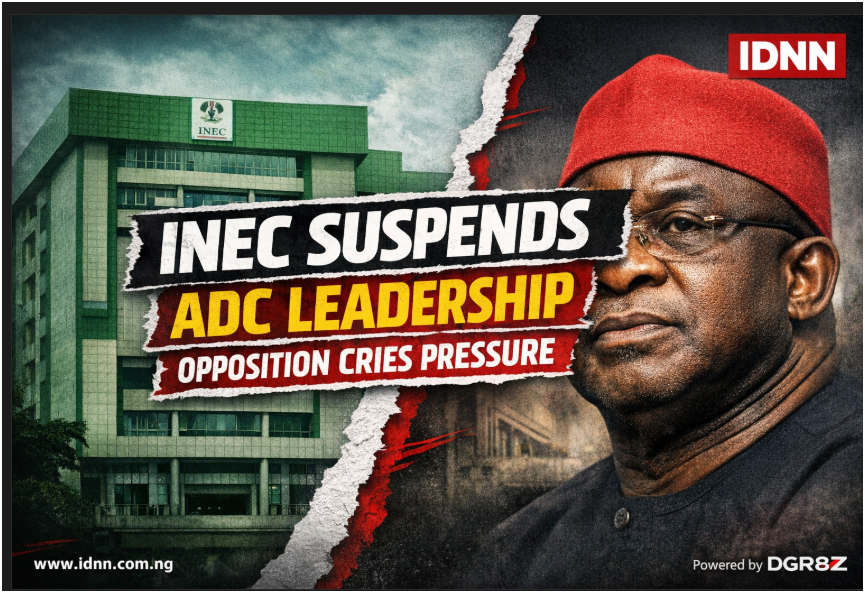
🟨 Court Order Sparks Power Struggle — Who Controls Interpretation?
At the heart of the ADC INEC congress crisis is a Court of Appeal ruling directing parties to maintain the status quo — a legal phrase now triggering a fierce institutional standoff.
INEC had moved to invalidate the David Mark-led leadership structure within the party, citing the same ruling, and warned that conducting congresses under that framework could amount to contempt of court.
However, the ADC maintains that the directive does not freeze party activities but rather preserves the subject of litigation pending final determination.
The party argued that interpreting “status quo” as a blanket prohibition of party functions amounts to regulatory overreach and misapplication of judicial intent.
🔴 Institutional Clash Deepens — Autonomy vs Oversight
The confrontation now raises broader constitutional questions about the limits of electoral oversight and the autonomy of political parties in Nigeria’s democratic system.
While INEC is empowered to regulate party activities, the ADC insists that such powers do not extend to halting internal processes without clear and specific judicial backing.
This tension places the judiciary at the centre of what is rapidly becoming a defining test of institutional boundaries.
Why This Crisis Matters Now
This is no longer just a party dispute.
The ADC INEC congress crisis reflects a deeper structural issue:
- Who interprets court orders in politically sensitive cases?
- How far can INEC go in regulating party affairs?
- Can internal party democracy proceed during litigation?
The answers will shape not just this dispute, but the operational space of all political parties ahead of future electoral cycles.
A Collision Course With Legal and Political Fallout
With the ADC vowing to proceed and INEC maintaining its position, the stage is set for a possible escalation into full legal confrontation.
If the party goes ahead with its congresses, the outcome could trigger:
- fresh litigation
- possible sanctions
- deeper fractures within opposition ranks
More importantly, it could establish a precedent on the balance of power between electoral authorities and political institutions in Nigeria.
