
Nigeria’s electoral umpire says the era of technical uncertainty is over. As debate intensifies around the 2027 general election, INEC 2027 transmission glitches eliminated became the defining assurance from Chairman Professor Joash Amupitan at a Citizens’ Townhall on the Electoral Act 2026 in Abuja.
Amupitan declared that the commission has drawn hard lessons from the 2023 presidential election and is redesigning its deployment strategy to prevent a repeat of system failures that triggered nationwide controversy.

A promise forged from 2023 lessons
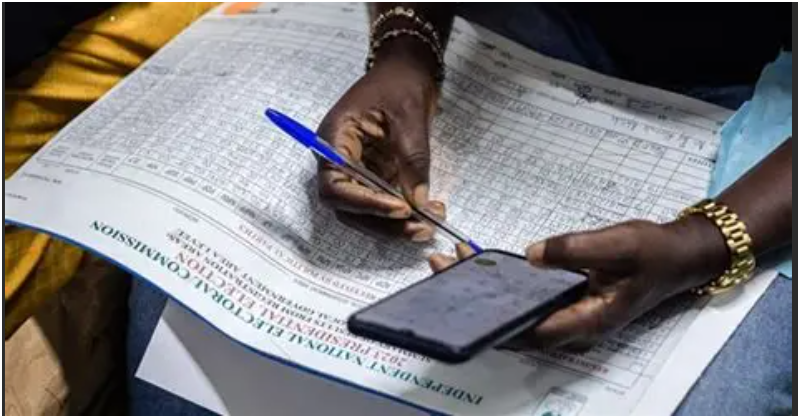
The chairman acknowledged that while the Bimodal Voter Accreditation System (BVAS) performed effectively during isolated state elections, it was not stress-tested adequately for inter-state presidential transmission in 2023.
“So, my own audit of the 2023 election,” he said, “is that while the BVAS was tested within states, when it came to the federal election, especially the presidential election which became inter-state, it was not properly tested.”
To close that gap, INEC will conduct what he described as a “mock presidential election” ahead of 2027 — a nationwide simulation aimed at testing real-time result transmission across states.
“One of the things we are trying to do before the election is to have a mock presidential election,” Amupitan said, “so that we are sure that this transmission across the states must not fail.”
Technology is the battleground
Amupitan framed elections globally as technology-driven processes where credibility increasingly depends on infrastructure reliability.
“Election anywhere in the world is now about technology,” he stated, stressing that no system should be deployed at scale without rigorous testing.
However, he clarified that the main challenge is not electronic transmission itself but network availability and operational logistics.
“Result management and logistics are two basic issues that we are trying to manage very well to enhance transparency and credibility,” he added.
INEC’s new timetable already reflects adjustments triggered by President Bola Tinubu’s assent to the Electoral Act 2026 amendment. Presidential and National Assembly elections are now fixed for January 16, 2027, with governorship and state assembly polls scheduled for February 6, 2027.
What is at stake beyond software
The stakes extend beyond digital architecture. The controversy surrounding Section 60(3) of the Electoral Act 2026 — which guarantees electronic transmission of results — has polarised political actors.
Opposition parties previously described aspects of the amendment as skewed. Meanwhile, INEC insists the goal is not perfection but legitimacy.
“We will try to give Nigerians a near-perfect election,” Amupitan said. “Credible elections remain the lifeblood of democracy.”
He also pointed to growing voter awareness, arguing that 2027 could redefine public trust if institutional reforms are executed properly.
The system credibility test begins early
Under Blackfire’s systemic framing of institutional risk, elections are rarely lost on polling day — they fracture during preparation.
The mock presidential exercise is therefore not symbolic; it is structural. A nationwide test reduces exposure to inter-state bandwidth inconsistencies and stress-load collapse, the two vulnerabilities that destabilised public confidence in 2023.
If transmission infrastructure withstands that simulation, INEC moves from reactive defence to proactive assurance.
If failure returns, legitimacy suffers
The credibility of 2027 will hinge on whether the commission’s promise translates into execution.
Should technical disruptions resurface, the political cost would extend beyond reputational damage. It would erode democratic confidence at a moment when public trust is already fragile.
Conversely, a seamless transmission framework would reposition INEC as an institution that absorbed institutional shock and emerged stronger.
For now, the commission has set the bar high — and the clock to 2027 is already ticking.
This is IDNN. Independent. Digital. Uncompromising.
