
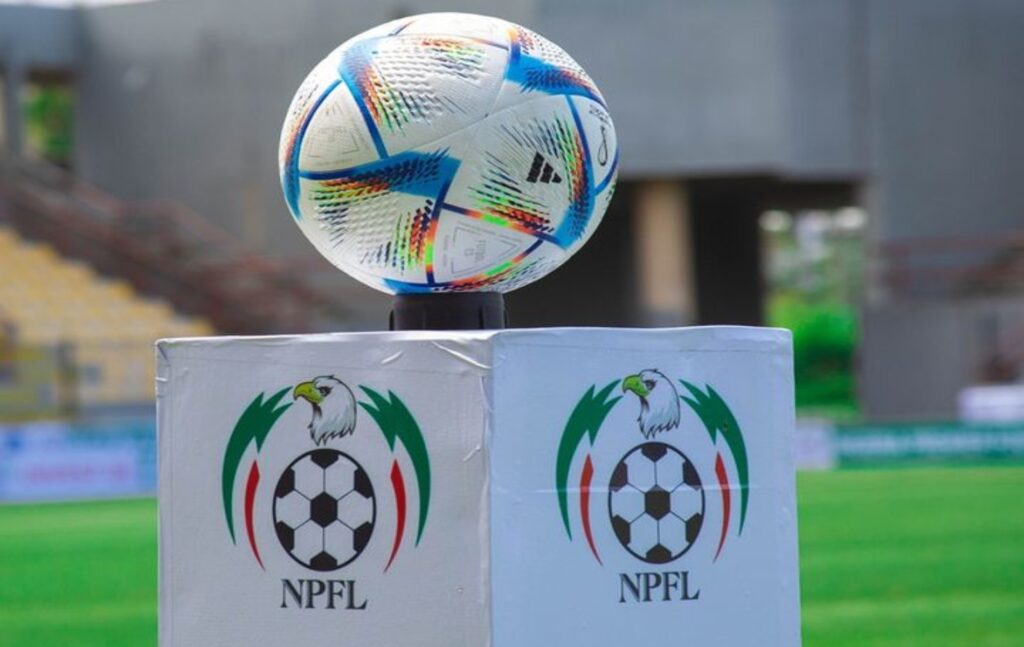
The Nigeria Professional Football League (NPFL) has slipped to 91st place in the latest global rankings by the International Federation of Football History and Statistics (IFFHS), a 15-place drop from its 2024 ranking of 76th.
The 2025 rankings reveal the NPFL’s accumulation of 171.75 points, which places it outside the world’s top 90 domestic leagues. This decline underscores a downturn in the league’s comparative strength, with analysts attributing the drop to inconsistent performances by Nigerian clubs in continental competitions and the rising competitiveness of other football markets, particularly within Africa.
Africa’s shifting dominance
Within Africa, Egypt’s Premier League continues its dominance as the continent’s strongest, holding its position for the sixth consecutive year. Morocco’s Botola has maintained its place among Africa’s elite, consistently ranking on the podium since 2018, while South Africa’s Premiership has returned to the top three for the first time in 21 years. Algeria and Tunisia round out the continent’s top five leagues, further cementing North Africa’s footballing influence.
In contrast, Nigeria’s NPFL, once a dominant force in African football, now occupies 12th place in the Confederation of African Football’s (CAF) five-year ranking system. This position allows Nigeria to maintain two slots in each of the CAF interclub competitions.
Global dominance and competition
Globally, European leagues continue to dominate the IFFHS rankings, accounting for 12 of the top 20 leagues and 29 of the top 50. South America placed five leagues in the top 20, while two leagues from Asia secured spots. The English Premier League held its place as the world’s highest-ranked league, followed by Spain’s La Liga and Brazil’s Campeonato Brasileiro Série A.
Italy’s Serie A and France’s Ligue 1 saw slight adjustments in rankings, while Portugal’s Primeira Liga, Argentina’s Liga Profesional, and Colombia’s Categoría Primera A completed the global top ten.
The need for structural reforms
Observers argue that the NPFL’s decline is indicative of persistent issues within Nigerian football, particularly in terms of competitiveness, infrastructure, and international visibility. Football analyst Tunde Adeyemi emphasized that while the league has significant potential, structural reforms are necessary to reverse its current trajectory.
“The NPFL has the capacity to compete at a higher level,” Adeyemi noted. “However, the rankings reflect structural challenges and the urgent need for coordinated efforts to improve club performances and overall league quality.”
As Egypt, Morocco, and South Africa continue to strengthen their continental positions, the pressure is mounting on Nigerian football authorities to implement reforms that can restore the NPFL’s competitive standing in both Africa and the global football arena.
This is IDNN. Independent. Digital. Uncompromising.
