
A calculated arrival in Bauchi
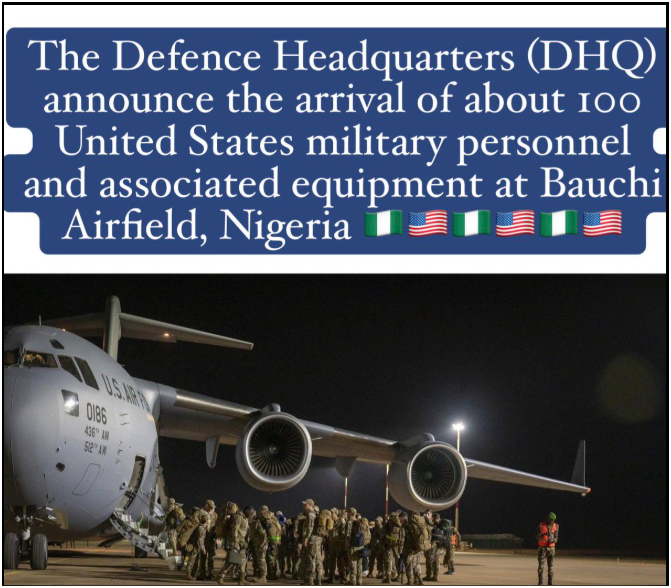
When US deploys 100 soldiers to Nigeria, it signals more than routine military cooperation. The personnel and associated equipment arrived at Bauchi Airfield in the northeast, entering a country battling overlapping insurgencies, banditry networks, and cross-border militant spillovers from the Sahel.
Nigeria’s Defence Headquarters confirmed the deployment, stressing that the American personnel are technical advisers serving strictly in training and intelligence-sharing roles. Officials were emphatic: they are not combat forces.
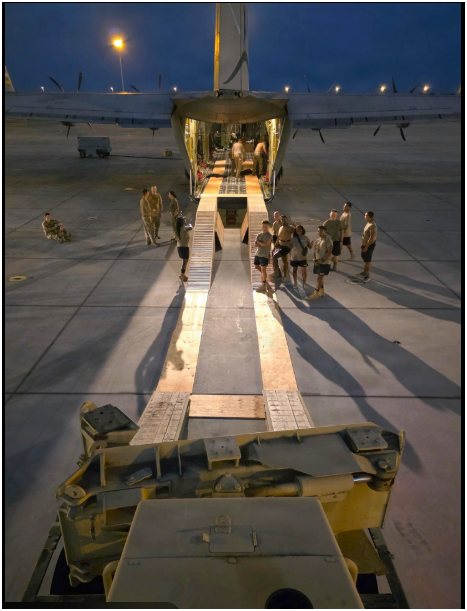
Advisory mission under Nigerian command
Maj. Gen. Samaila Uba, spokesperson for the Defence Headquarters, stated that the US troops would operate under the full authority, direction and control of the Nigerian government.
Defence Minister Gen. Christopher Musa (rtd) reinforced that position, noting that collaboration focuses on technological support, including drone capability and satellite intelligence — tools considered critical in tracking armed groups operating across difficult terrain.
The minister described the partnership as temporary and agreement-based, assuring Nigerians that sovereignty remains intact.
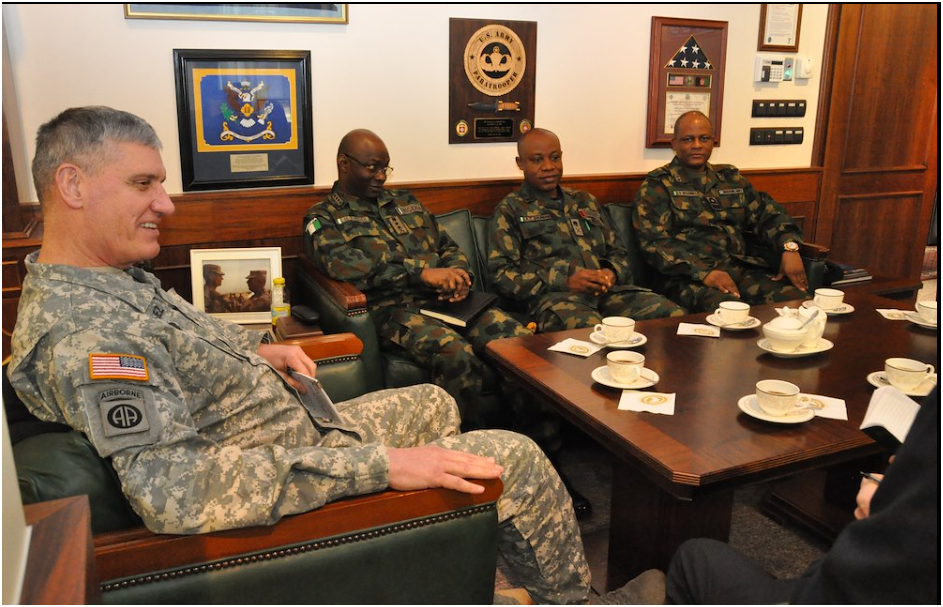
Why the timing matters now
The deployment follows months of escalating violence across northern Nigeria. Armed groups, including Boko Haram, ISWAP, and Lakurawa factions, continue to mount attacks on villages and security formations. Meanwhile, bandit groups specialising in kidnapping and illegal mining have expanded operations.
Recent massacres in Niger State and persistent assaults in Zamfara and Sokoto underscore the widening security strain.
The US Africa Command had earlier confirmed that a small advisory team was already present in Nigeria. The current arrival formalises and expands that engagement.
Regional instability reshaping the fight
Security analysts link Nigeria’s intensifying crisis to instability across the Sahel. Since the fall of Libya and the proliferation of illicit arms, militant networks have strengthened across porous borders.
Groups affiliated with Jama’at Nusrat al-Islam wal-Muslimin have reportedly extended operations into Nigerian territory, adding another layer to an already complex security architecture.
For Nigeria, the battlefield is no longer confined to a single insurgency; it is a multi-front conflict involving ideological militants, criminal networks and transnational actors.
Technology versus terrain
At the heart of the collaboration is surveillance superiority. Nigerian officials argue that improved satellite intelligence, drone monitoring and signal tracking could significantly degrade extremist mobility.
Yet critics question whether intelligence advantages alone can resolve structural security failures, including slow response times, local trust deficits and terrain familiarity among insurgents.
The central challenge remains operational follow-through.
What this means for sovereignty and stability
Foreign troop presence on Nigerian soil has historically triggered political sensitivities. Previous tensions between Washington and Abuja — particularly over allegations regarding religious violence — added diplomatic friction.
However, both governments now frame the relationship as pragmatic security cooperation. The emphasis remains on capacity building, not intervention.
The outcome will be judged not by optics, but by measurable reductions in attacks.
If training fails to shift the tide
Should the advisory mission fail to produce visible security gains, pressure will intensify on Nigeria’s military leadership and political class. The stakes are high: civilian protection, territorial integrity and investor confidence all hinge on whether improved intelligence translates into decisive action.
In a nation of over 240 million people facing layered insurgencies, incremental progress may no longer be enough.
This is IDNN. Independent. Digital. Uncompromising.
