
🔥 The Moment of Impact: “Keep Quiet!” — “I Won’t Shut Up.”
At Plot 1946 (Gaduwa District), an FCTA enforcement visit escalated fast. Minister Nyesom Wike demanded access to stop what he called an illegal development; a naval team on site, led by Lt. A.M. Yerima, blocked entry, citing orders and valid documents. Cameras rolled. Voices spiked. The exchange went viral.
Wike: “You will never develop this plot.”
Yerima: “I am an officer. I act on orders.”
Between those lines: the state, the uniform, and the law—colliding in public.
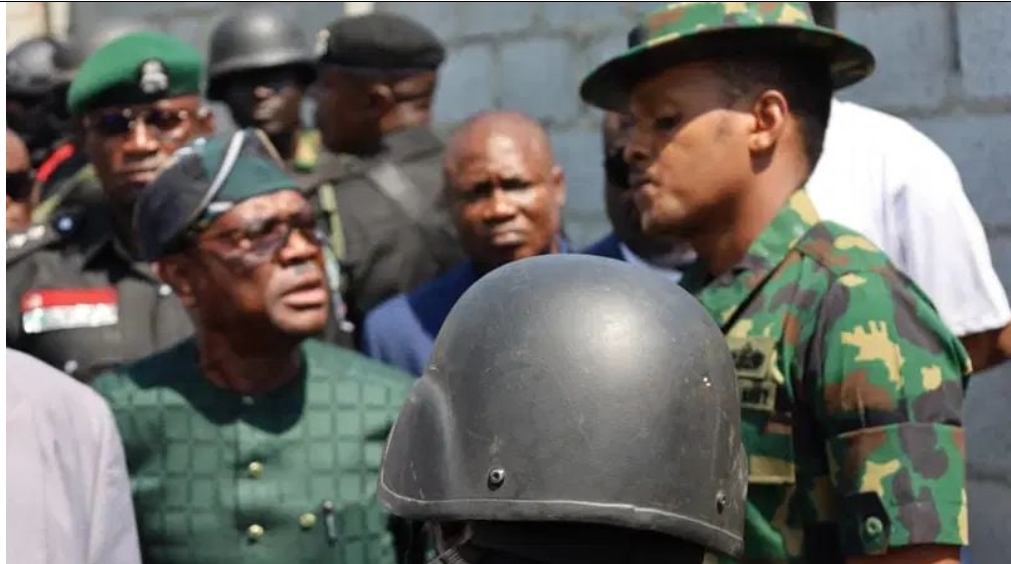
🧭 Inside the Wike Navy land dispute Abuja: Papers, Power, and a Plot Called 1946
FCTA’s Development Control classed the site a buffer/green area with no building approval on record. Wike says prior visits requested documents that “never surfaced.” Yerima counters that the land belongs to a former Chief of Naval Staff with complete papers.
The minister insists the Abuja Master Plan takes precedence; the officer insists lawful orders do.
This is no simple trespass story—it’s a jurisdiction knife-edge: land-use law vs. chain-of-command obedience.
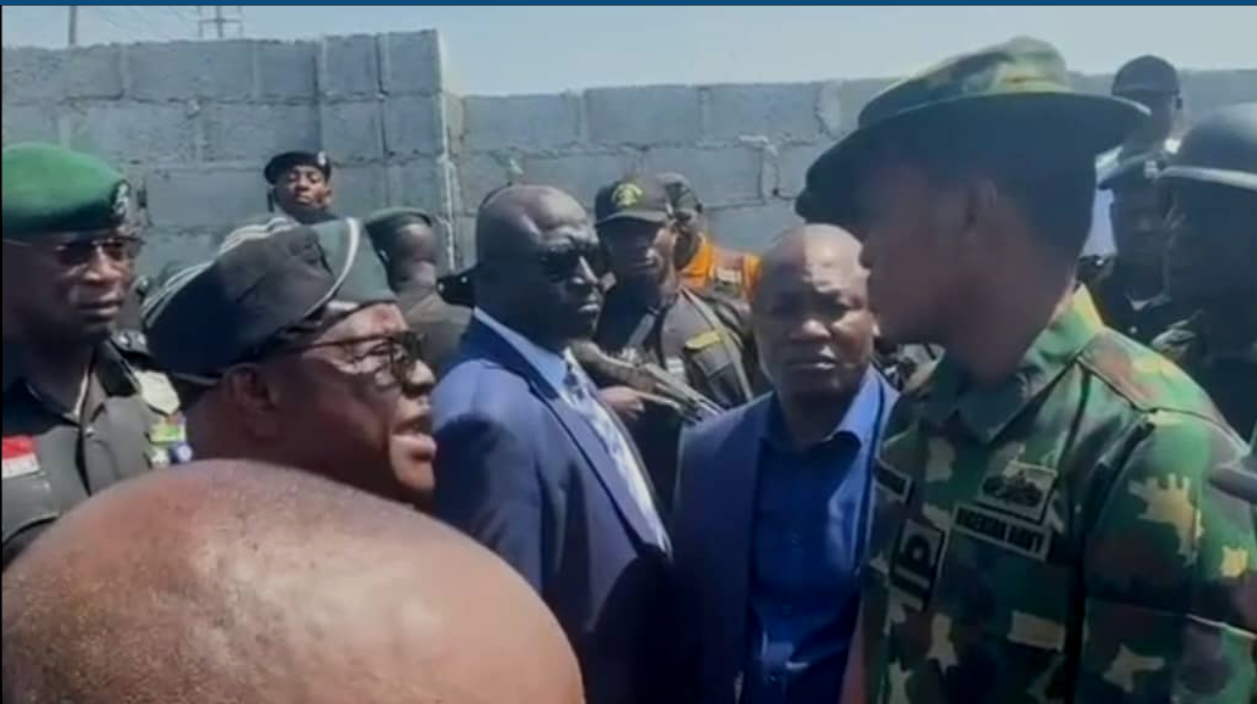
💣 The Quiet War Behind the Data: Veterans, Lawyers, CSOs Enter the Arena
- Coalition of Military Veterans: Condemns Wike’s language, threatens mass action if Yerima is punished; says insulting a uniform “demeans the state.”
- CISLAC (Rafsanjani): Calls the minister’s conduct “disgraceful and unbecoming”, urges the Presidency to caution him.
- Legal Voices (Akinlaja SAN; Jibrin Esq.): Say building needs prior approval, but the confrontation should have been avoided; process over presence.
- Osita Chidoka: “Ministers act through institutions, not personal enforcement. The uniform represents the Republic.”

🕳️ Allegations with Consequence: Revocations, Reallocations, and a Political Shadow
A detailed allegation now trails the drama: a legal source told reporters that ~30 hectares initially allocated to military personnel were revoked and reallocated to political allies—including (allegedly) the current INEC Chairman, Prof. Sam/Joash Amupitan.
These claims, published by a media outlet, remain allegations, not court findings. They amplify public suspicion and raise discovery stakes: files, memos, titles, approvals, and timelines will matter.

⚖️ Due Process vs. Deterrence: Where the Lines Truly Are
- If no building approval exists: Development Control can stop works and demolish structures—but not revoke title; that’s a separate legal pathway.
- If title/approvals exist: Enforcement must proceed by notice, hearing, and court orders, not on-site confrontation.
- Uniformed presence: The officer answers up the chain, not to civilian shouting; conversely, the civilian authority must act via lawful instruments.
🧨 What Changes by Morning
- Governance Optics: Executive temper vs. institutional decorum becomes the headline risk.
- Civil–Military Relations: A rare, public face-off tests respect, restraint, and operational discipline.
- Legal Discovery: Expect document dumps—R of O, building approvals, land-use conversion records, memos.
- Security Protocols: DSS/Police VIP extraction doctrine will be reviewed after the viral tape.
- Public Trust: Master Plan enforcement wins fans; style of enforcement risks erosion of goodwill.
💼 Land, Liquidity, and the Abuja Premium
Every public demolition or dramatic seizure reprices risk in Abuja’s property market.
- Developers demand clearer SLAs on approvals and land-use conversion.
- Financiers recheck title chains before disbursements.
- Valuations on greenbelts, buffers, and setbacks tighten.
If allegations of political reallocations gain traction, counter-party risk and litigation reserves rise across the board.
🧱 The Chain of Command vs. The Minister’s Pen
Wike says he called the CDS and CNS; both assured de-escalation. That’s how institutions should talk.
The lesson: the minister’s pen (memos, orders, court papers) must move faster than his presence (cameras, convoy, confrontation).
🗂️ What a Proper Resolution Looks Like (Playbook)
- Freeze works on Plot 1946 via formal stop-work order (served, acknowledged, timestamped).
- Secure the corridor: police perimeter, no show of force.
- Produce documents: R of O, FCT titles, approvals, land-use conversion; lodge certified copies.
- Convene tripartite review: FCTA–Defence HQ–AGF (legal advisory).
- Litigate or Arbitrate: fast-track court action or binding arbitration on title and approvals.
- Communicate a joint brief; defuse optics; protect troop morale and civil authority alike.
🎬 Power, Paper, and Public Eyes
Abuja has seen bulldozers before. What it hasn’t often seen is the Republic argue with itself on camera.
This ends, not with a microphone, but with documents, dates, and signatures—and with both sides remembering they wear the same flag.
This is IDNN. Independent. Digital. Uncompromising.
