
Nationwide Health Crisis
President Bola Tinubu on Monday ordered an immediate end to the indefinite strike by the Nigerian Association of Resident Doctors (NARD), which has crippled public hospitals for over 72 hours.
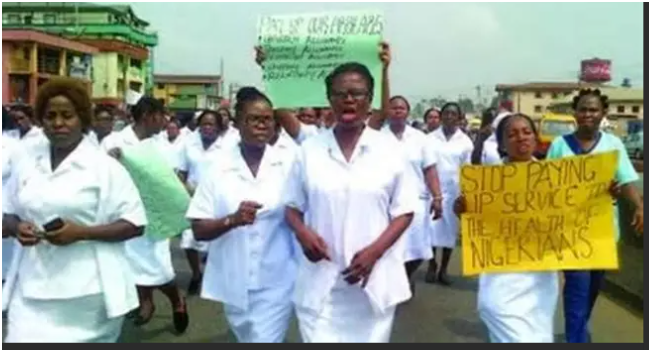
Minister of State for Health and Social Welfare, Dr. Iziaq Salako, disclosed the presidential directive during a press briefing in Abuja, describing the situation as “deeply regrettable” and urging doctors to return to duty “in good faith.”
“Mr President has expressly directed that we do everything possible and legitimate to ensure the resident doctors are brought back to their duty posts,” Salako stated.
The minister apologised to Nigerians who were unable to access medical care since the strike began, assuring that the government had not ignored the doctors’ grievances.
Ripple — 19 Demands, 1 Fragile Sector
NARD had tabled 19 demands ranging from pay parity and hazard allowances to manpower shortages and career progression.
The ministry confirmed that most of these issues are already under negotiation through the Collective Bargaining Agreement (CBA) process, which includes the Nigerian Medical Association (NMA), the National Association of Nigerian Nurses and Midwives (NANNM), and the Joint Health Sector Unions (JOHESU).
Salako revealed that the government approved recruitment for 23,059 new health workers in 2025 alone, with 71 per cent of them clinical staff. He said ₦21.3 billion had also been released to clear wage arrears, with another ₦11.9 billion earmarked for follow-up payments.
Despite these moves, NARD accuses the government of reneging on agreements and failing to implement key aspects of the 2023 Medical Residency Training Fund.
“We have been patient enough,” a senior NARD executive told IDNN. “Doctors are working 100-hour weeks under unsafe conditions. The strike will continue until we see tangible results.”
Hospitals Under Strain
- Clinical Slowdown: Outpatient clinics in Abuja, Lagos, and Kano remain closed; consultants handle only emergencies.
- Recruitment Data: 14,444 health workers hired in 2024, 23,000 more approved this year.
- Policy Reforms: Retirement age for doctors raised to 65; internship inclusion debate continues.
- Public Sentiment: Patients express frustration at “recurring strikes” that cripple access to basic care.
Health, Governance, and Credibility
The confrontation between doctors and government underscores Nigeria’s long-standing struggle to stabilise its healthcare workforce.
For the Tinubu administration, resolving the crisis is a credibility test — balancing fiscal prudence with human capital reform.
Experts warn that prolonged disruption could damage investor confidence in Nigeria’s emerging medical tourism initiatives and ongoing private hospital partnerships.
This is IDNN. Independent. Digital. Uncompromising.
