
Why This Moment Matters
The ₦58.4 trillion 2026 budget second reading sailed through Nigeria’s House of Representatives without debate—no back-and-forth on assumptions, no floor interrogation of priorities, no public testing of trade-offs. That silence isn’t a footnote; it is the story.
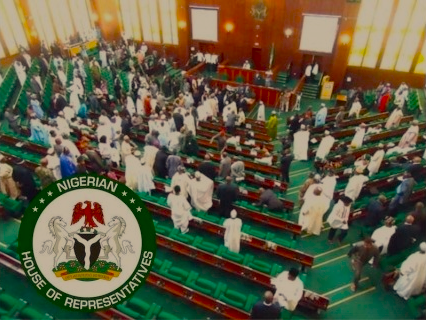
The Procedural Flashpoint Behind the ₦58.4 Trillion 2026 Budget Second Reading
Second reading is where lawmakers typically debate a bill’s broad principles before detailed committee work begins. In this case, the House moved on after a closed-door meeting and remarks led by the House Leader, then referred the proposal to the Appropriation Committee and adjourned for two weeks. IDNN NEWS 30.1.26
What Was Said — And What Wasn’t Tested
House Leader Prof Julius Ihonvbere highlighted the government’s economic claims—growth, easing inflation, stronger exports and reserves—arguing the budget is designed to consolidate stability, strengthen human capital and manage debt. IDNN NEWS 30.1.26
What didn’t happen was just as consequential: those claims were not stress-tested on the floor.
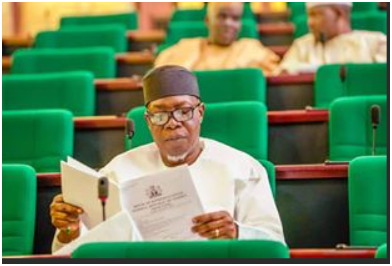
Where Scrutiny Goes When Debate Disappears
When a budget advances without floor debate, oversight doesn’t vanish—it moves.
1) The Appropriation Committee Becomes the Real Parliament
The committee phase will determine whether scrutiny was merely deferred or quietly diluted. The quality of hearings, openness of engagement, and seriousness of amendments will now carry the weight that plenary debate typically shares.
2) Transparency Shifts From TV Clips to Committee Minutes
The public often “sees” oversight through live plenary moments. Without that, the next visibility point becomes:
- committee hearing records
- invited stakeholder submissions
- published breakdowns and justification notes
- how hard MDAs are questioned
If those aren’t robust, the perception problem deepens.
3) The Signal to MDAs Changes
A no-debate second reading can communicate: “Committee will handle it.”
It can also communicate: “This will pass—don’t worry.”
In budget politics, that difference shapes how agencies prepare, defend, or quietly lobby.
The 2027 Shadow Over the ₦58.4 Trillion 2026 Budget Second Reading
The file itself raises the concern that legislative oversight may be yielding to executive dominance ahead of 2027. IDNN NEWS 30.1.26
Even if lawmakers insist the real work starts in committee, the optics matter:
- Speed = unity, to supporters
- Speed = surrender, to critics
In an election-adjacent cycle, perception travels faster than committee reports.
What IDNN Will Watch Next
These are the accountability pressure points that decide whether the ₦58.4 trillion 2026 budget second reading was efficient… or evasive:
A) Committee Depth
Are allocations challenged or simply rearranged?
B) Amendment Footprint
Do amendments materially change priorities—or just tidy line items?
C) Oversight Proof
Are there measurable guardrails for releases, implementation reporting, and audit visibility?
D) Public Justification
Does the House clearly explain why the bill moved without debate—and what safeguards replace that missing stage?
This is IDNN. Independent. Digital. Uncompromising.
